


Hinfolk
Biology
Stature and Build
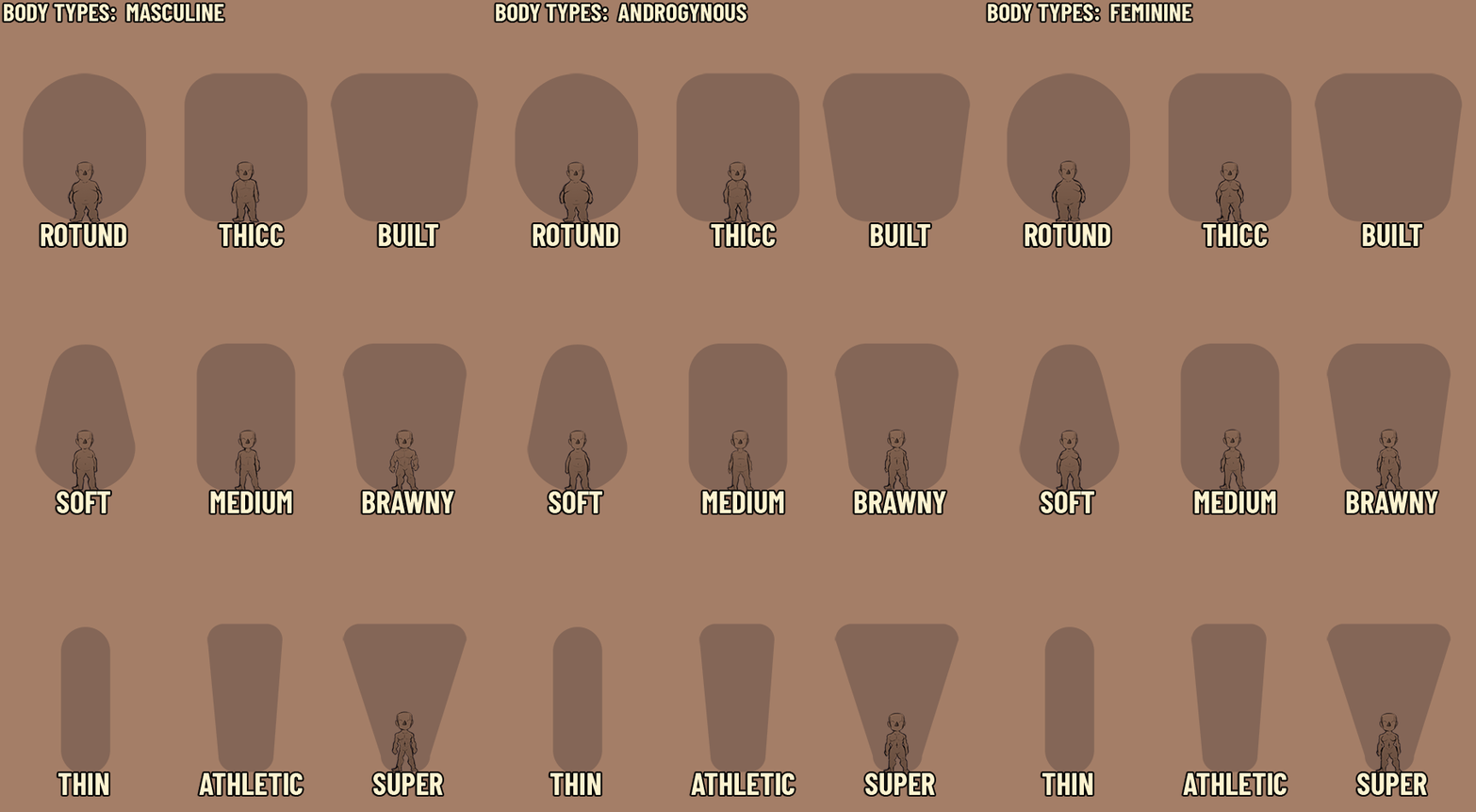
A fairly jovial and comfort-driven nature has predisposed the Hinfolk towards softer and more leisurely body types. While they are not all fat and sassy, the highest populations of the Hinfolk are the Hearthie people, who are generally older, more comfortable, and well-fed. Those who are of more active lifestyles and cultures will be more fit or muscular, but it is extremely improbable for a Hin person to be actually thin.
Most Hinfolk are between 2’6″ and 3’6″ tall (~76 – 106cm)
Skin & Complexions
While not nearly as diverse as the complexions of Willonians, the Hinfolk still have a broad range of warm skin tones thanks to their worldwide integration with other cultures and settlement in their drastically different homelands. Traditionally, Hinfolk were confined to the equatorial regions of the Hinlands, which is a hot, sunny, grassland region, so the majority of Hinfolk trend toward mid- to dark-toned skin. Those who live in temperate, cooler, or even darker regions may not develop as much depth of color, but their Heritage may also affect this. In the modern day, it is not uncommon to see Hinfolk of any complexion, but the palest shades are very rare.
Hinfolk usually have more flushed, colorful noses, cheeks, and ears, giving them a permanent-blushing appearance. This is often believe to be a result of increased blood-flow to their faces from their historically jolly demeanors, but some assume that all Hinfolk simply consume an inordinate amount of wine and berries (which, in a cultural sense, is not untrue). Skin details such as freckles, moles, and birthmarks are incredibly common for Hinfolk as well, occurring in well over three-quarters of the population.
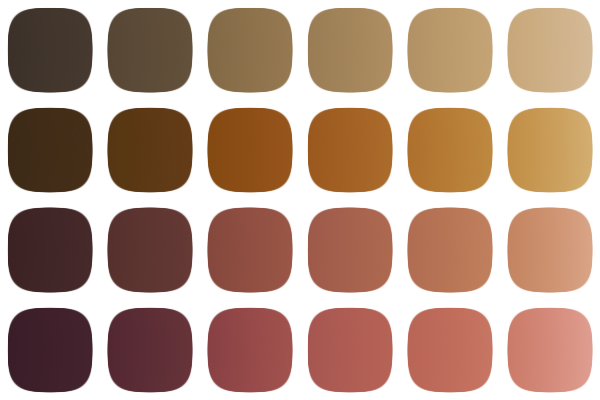
Brushtail
Dunestrider
Plainswood
Riverland
Hair
Contrary to real-life humans, although the Hinfolk have traditionally lived in hot, dry environments, this has not confined their hair colors to darker shades. In fact, as long as the tone is warm, Hinnish hair colors range from blonde all the way to black. An individual Hin’s heritage may affect their potential for other hair colors, but most natural real-life human hair colors are possible in any Hin.
The most common hair types of Hinfolk are thick and highly-textured and/or curly. However, due to their diverse locations in the world, other hair textures are not uncommon.
Eyes
Hinfolk almost always have darker shades of irises, but they can be just about any hue. Most often in deep, dark tones that only show in bright light, the Hinfolk’s eyes tend to have a more innocent, “puppy dog” look to them. This is most likely an effect that is exaggerated by their tiny stature compared to other people of the world.
Ears
Hinfolk have traditional, rounded Varian ears much like real life humans.
Reproduction
Traditional Reproduction
The Beanut Lands does not have half-species for mechanical clarity, but it is possible for some inter-species relations to produce offspring. A person with mixed-species parentage may exhibit physical traits from a parent of another species. If you are interested in this level of customization for your image and story, please be sure to examine the Heritage subgroups to determine which groups your parents come from. You may also use Growth Features during character creation to adjust your mechanics to fit your narrative decisions if you are inclined.
Hinfolk can procreate through traditional 2-partner reproduction with any other Varian species. This includes Willonians and Grimkin. They are unable to produce children with Tok or Sylvan people, and will not exemplify unique traits from those species, unless otherwise noted in a Heritage subgroup.
For inter-species parentage, the following biological rules will always apply:
Hinfolk + Hinfolk: a child will always be Hinfolk
Hinfolk + Willonian : a child will be the same species as their female parent
Hinfolk + Grimkin: a child will always be Hinfolk
 The Beanut Lands