

Hinfolk
Overview
Cultural Liaisons
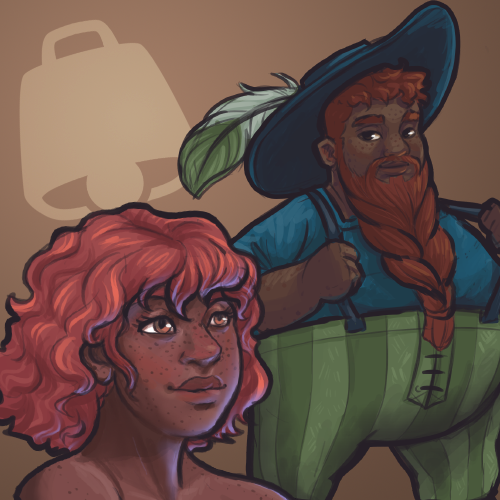
The diminutive Hinfolk survive in a world full of larger creatures by avoiding notice or, barring that, avoiding offense. They are widely accepted around the world and are often jokingly called everyone’s “best friends”. Historically the masters of trade and commerce, the Hinfolk have seen every corner of the continent and have set up communities in any place deemed worthy of trade — even going as far as developing a shared language for all people to aid in trade deals. They have a knack for finding the most straightforward solution to a problem, and have little patience for dithering.
Varian Supergroup
In the present day, Varian people are, as the group name implies, extremely varied. This is most visible in their highly-adaptive bodies, which are the most diverse throughout an individual’s lifetime, unlike the other species groups. They are also linked by their affinity for pursuing personal goals, their desire to experience the world and make their mark upon it, and their undeniable instincts to center their lifestyles around fellowship. The three groups of Varian people includes the Willonians, Hinfolk, and Grimkin
Syntax
pronunciation
[HIN•folk]
n. singular
Hin
“That Hin is strong.“
plural
Hinfolk
“There are many Hinfolk.”
adj.
Hinnish
“That is a Hinnish artifact.“
Etymology
The word Hinfolk comes from a linguistic evolution from the ancient word for Varian, which is believed to have been two words: vari hin, meaning “sprawling people”.
As the original vari-hin people were known for their spacious living styles and desire to integrate with the primal Tok and Sylvan people of the ancient era, they occupied most of the central fertile lands, connecting all peoples of the world. Eventually, as the primal Varian people were split by the central wild lands, they became two distinct people: the southern, savanna-dwelling Varihin folk, and their northern cave-dwelling Varigrim kinfolk. Both names were simplified when the southern groups began developing and spreading the Common language of the modern age. Vari-hinfolk was shortened to hinfolk, and “grimlands kinfolk” was shortened to grimkin.
 The Beanut Lands