


Faekin
Biology
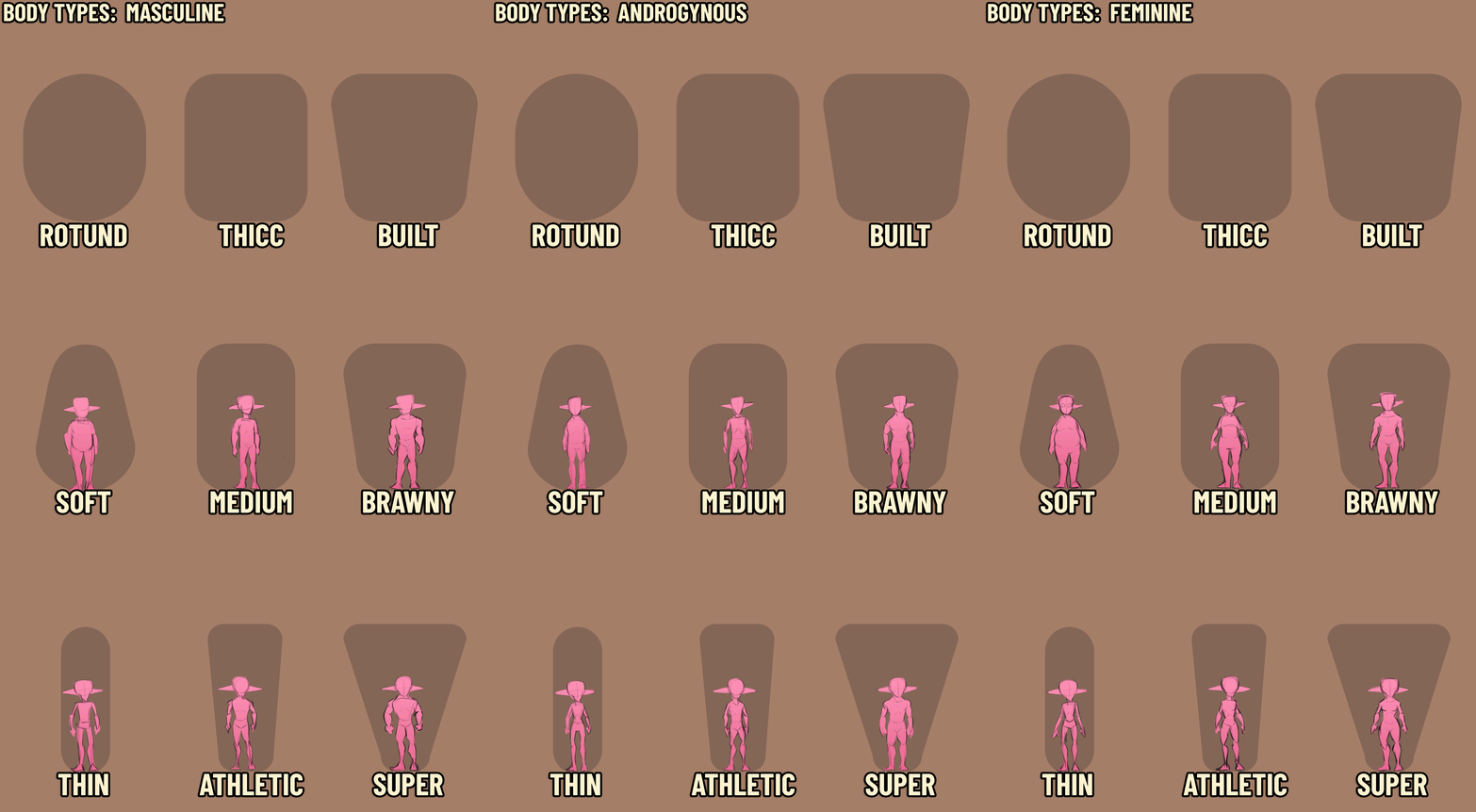
Stature and Build
Because of their history of prioritizing the mobility and agility it requires to maintain flight, Faekin have evolved to maximize lightweight maneuverability in order to be as aerodynamic as possible.
Most Faekin are between 3’6″ and 4’6″ tall (~105 – 135cm)
Skin & Complexions
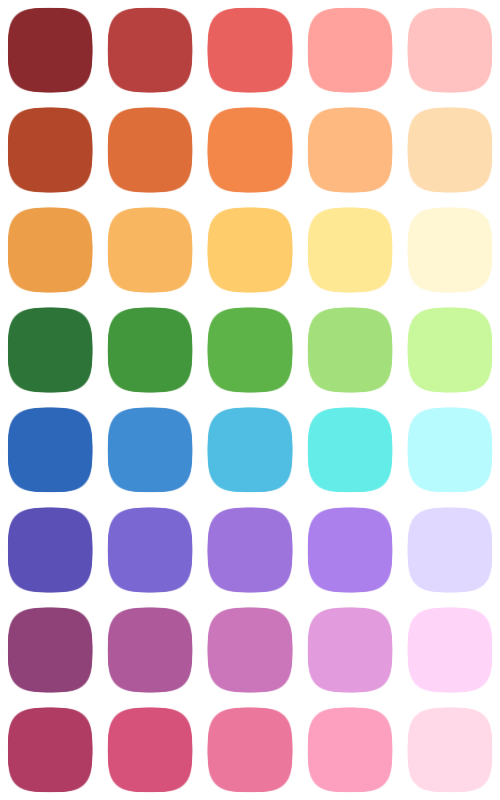
Fae complexions are often bold or bright, displaying the most vibrant colors in nature. Each Fae’s skin is often a signature of their birthplace, their parent’s favorite part of nature, or even a magical ingredient that brought about their existence.
Lighter (right)
colder environments.
Dorstool
Ellyspore
Dandelly
Iveline
Frostbloom
Geilliscap
Viorchid
Cynthie
Darker (left)
warmer or darker environments.
Wings
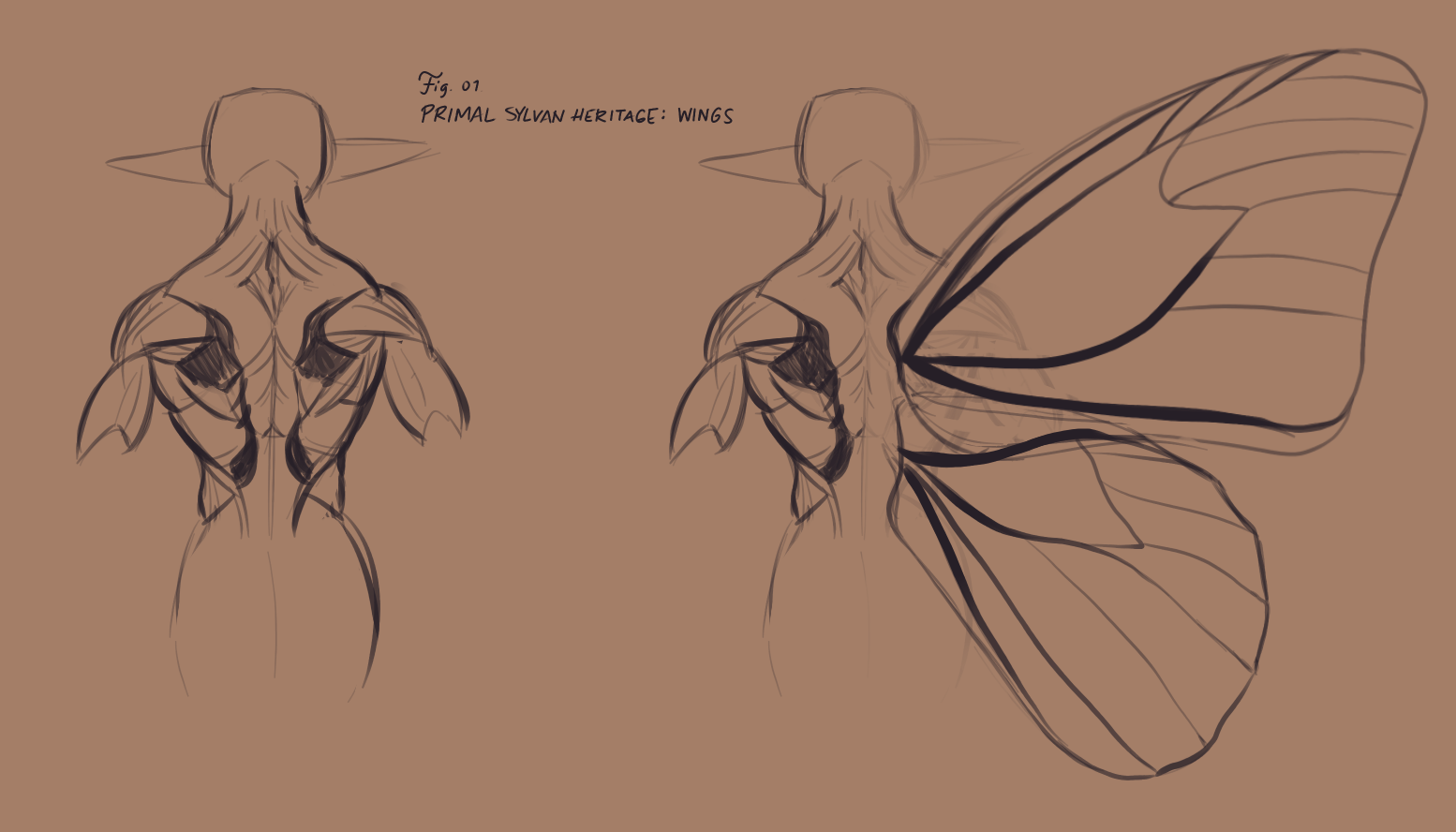
Perhaps the most recognizable part of Faekin is their wings. While the exact aesthetic of each one’s wings is unique and ever-changing, there are a few characteristics that are consistent among all Faekin, no matter how their wings are shaped.
Faekin have uniquely magical wings, which can be used for long-distance flight (flight-form) as well as stabilized hovering (still-form), and they can even be manipulated to fold downward behind their back for times they need to be in enclosed or tight spaces (cloak-form).
The anatomical composition of a Faekin’s wings is entirely based on their heritage. You can see more detailed information about wing types on the Heritage page.
Hair
Fae hair is typically very light. The most common hair color for Faekin is white, but all colors are seen everywhere.
Their hair grows in textures from smooth and thin to highly-textured and thick. All textures are common for all Faekin.
Eyes
A Fae’s eyes are typically large, almost child-like, and commonly have a pointed look, especially accentuated on the outer corners. Some strongly-featured Fae’s eyes may appear even larger and more alien compared to a real life human.
Fae eye colors are just as diverse as their skin tones, and range anywhere from pale grey to pure black.
Ears
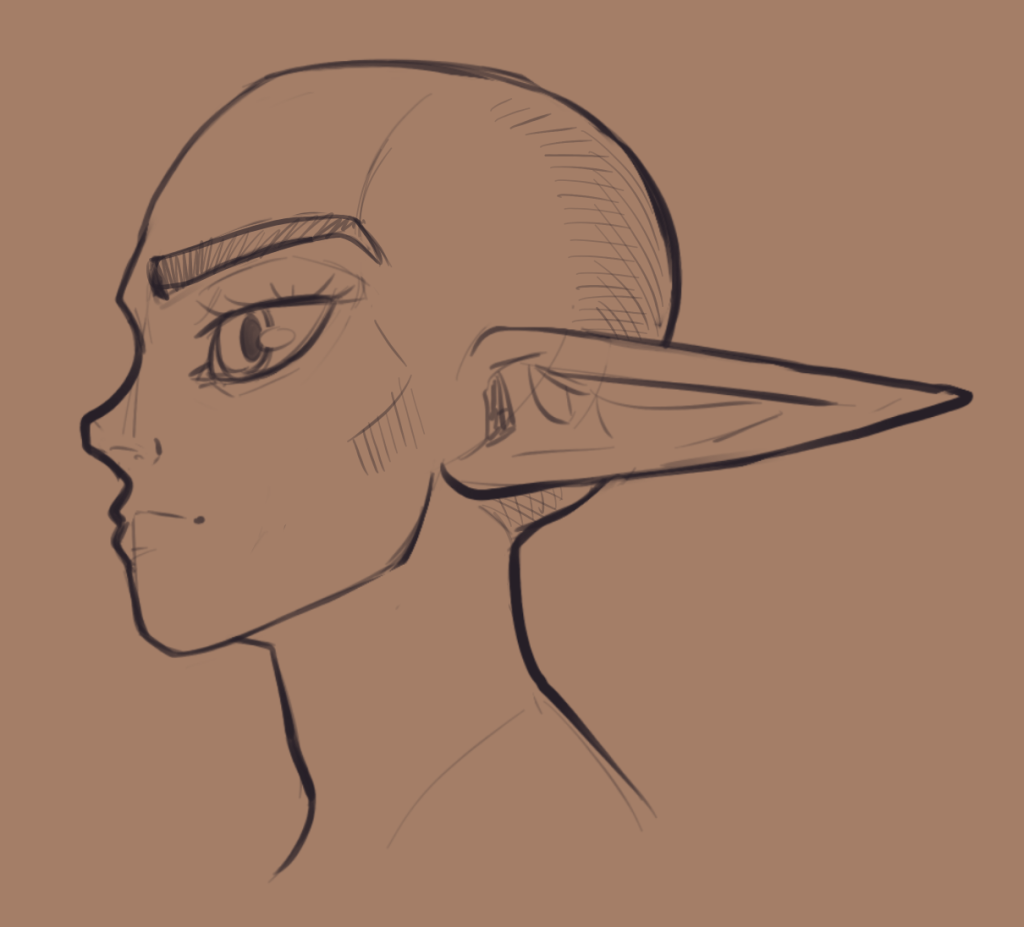
Faekin have long, prominent, pointed ears. The overall curvature and shape is highly dependent on their heritage.(See sub-species characteristics below)
Noses
Faekin often have unique noses, but they are diverse in size and shape. Similar to bird beaks, some are long and prominent, some are sharp and pointy, and some are flat and wide. A Fae’s nose is a distinctive part of their face, influenced heavily by their Heritage group.
Reproduction
Traditional Reproduction
The Beanut Lands does not have half-species for mechanical clarity, but it is possible for some inter-species relations to produce offspring. A person with mixed-species parentage may exhibit physical traits from a parent of another species. If you are interested in this level of customization for your image and story, please be sure to examine the Heritage subgroups to determine which groups your parents come from. You may also use Growth Features during character creation to adjust your mechanics to fit your narrative decisions if you are inclined.
Faekin can procreate through traditional 2-partner reproduction with any other Sylvan species. This includes Bodren and Fangren. They are unable to produce children with Tok or Varian people, and will not exemplify unique traits from those species, unless otherwise noted in a Heritage subgroup.
For inter-species parentage, the following biological rules will always apply:
Faekin + Faekin: child will always be Faekin with a 50% chance to take either parent’s Heritage
Faekin + Bodren: child will be the same species as their female parent
Faekin + Fangren: child will always be Fangren
Sylvan Aurogenesis
In addition to traditional two-parent procreation, the people of the Sylvan species supergroup (Faekin, Bodren, and Fangren) have a unique connection with the Auric nature of magic in the world. This has given their people the ability to produce offspring through the use of naturally Auric objects. To perform this ritual, known as Aurogenesis, requires at least one Sylvan parent and an appropriate Auric resource with high enough magic to complete the ritual.
For Faekin, the most accepted resources come from legendary-level magical creatures, such as bird leaves, magical powders, and carapace from certain winged insects.
 The Beanut Lands