

Canzian
Biology
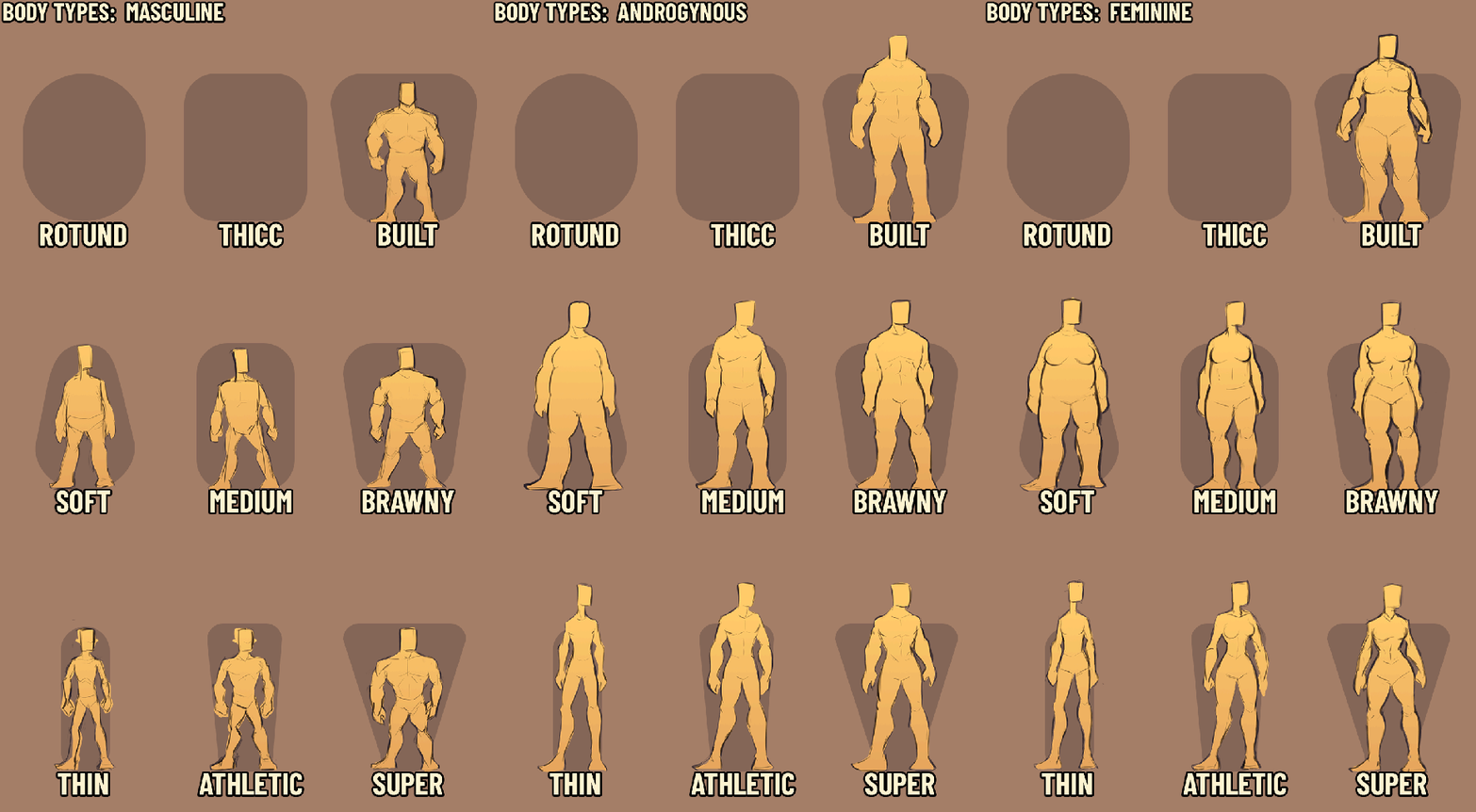
Stature and Build
Canzians have evolved to be lean and agile hunters, gatherers, and scouts. Those who push the boundaries of their physical capabilities are able to gain heavier amounts of muscle, but it is incredibly difficult for Canzians to naturally gain high levels of fat.
Most canzian males are between 6′ and 6’9″ tall (~185 – 205cm)
Most canzian non-males are between 7’6″ and 8’3″ tall (~230 – 250cm)
Complexions
Torgali skin is tough and leathery. Their history of persisting in jungles, tropics, wetlands, and mountain ecosystems means their skin-tones run from very dark to very pale. More often than not, it is their ability to blend with their environment that influences the hue of their complexions. Similar to human skin, the lightness of a Torgali’s skin is heavily influenced by their sun exposure, but in some instances camouflage is more beneficial and some Torgali in darker environments also have darker skin.
Lighter values (right)
common in colder, darker, or high-altitude environments
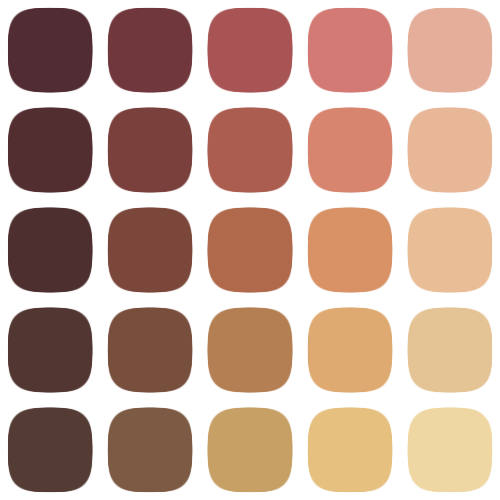
Clay
humid environments
Coral
humid and temperate environments
Savanna
temperate environments
Goldenrod
dry and temperate environments
Dune
dry environments
Darker values (left)
common in hotter and sunnier environments
Hair
Canzian natural hair colors are all warmer hues of red, gold, brown, and orange. The lightness/darkness is directly based on their genetic makeup, rather than their environment.
Each Canzian’s hair color is passed down from their biological mother.
Canzians who assimilate with more urban environments have more human-like hair textures, usually leaning thick and coarse rather than thin or silken.
If their upper body is left exposed to the elements for long enough, Canzians may develop a mane-like hair pattern down their neck and across their upper shoulders.
Eyes
Canzian eyes follow the same warm-tones as their skin and hair. The most common colors are brown and topaz, but they can be bright red, gold, and orange tones as well. Some rarer eye colors include pale yellow, chartreuse, and grey.
Some of the wilder, more primal-influenced Canzian people have elliptical pupils which may contract into vertical slits when exposed to bright light.
Ears
Canzians have typical Tok ears, commonly pointed at a horizontal or upward angle.
Noses
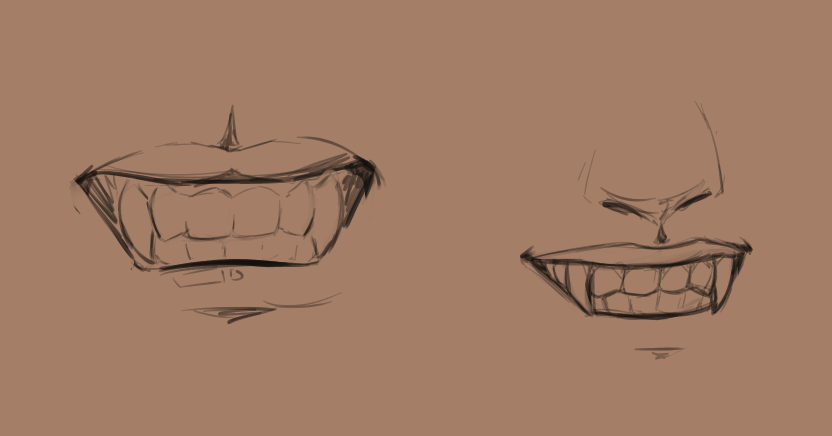
Canzians usually have flat, pseudo-snout-like noses which resemble a feline. Some Canzians may even exhibit a deep groove along the cupid’s bow and a recessed upper lip, further exemplifying these feline facial characteristics.
Teeth
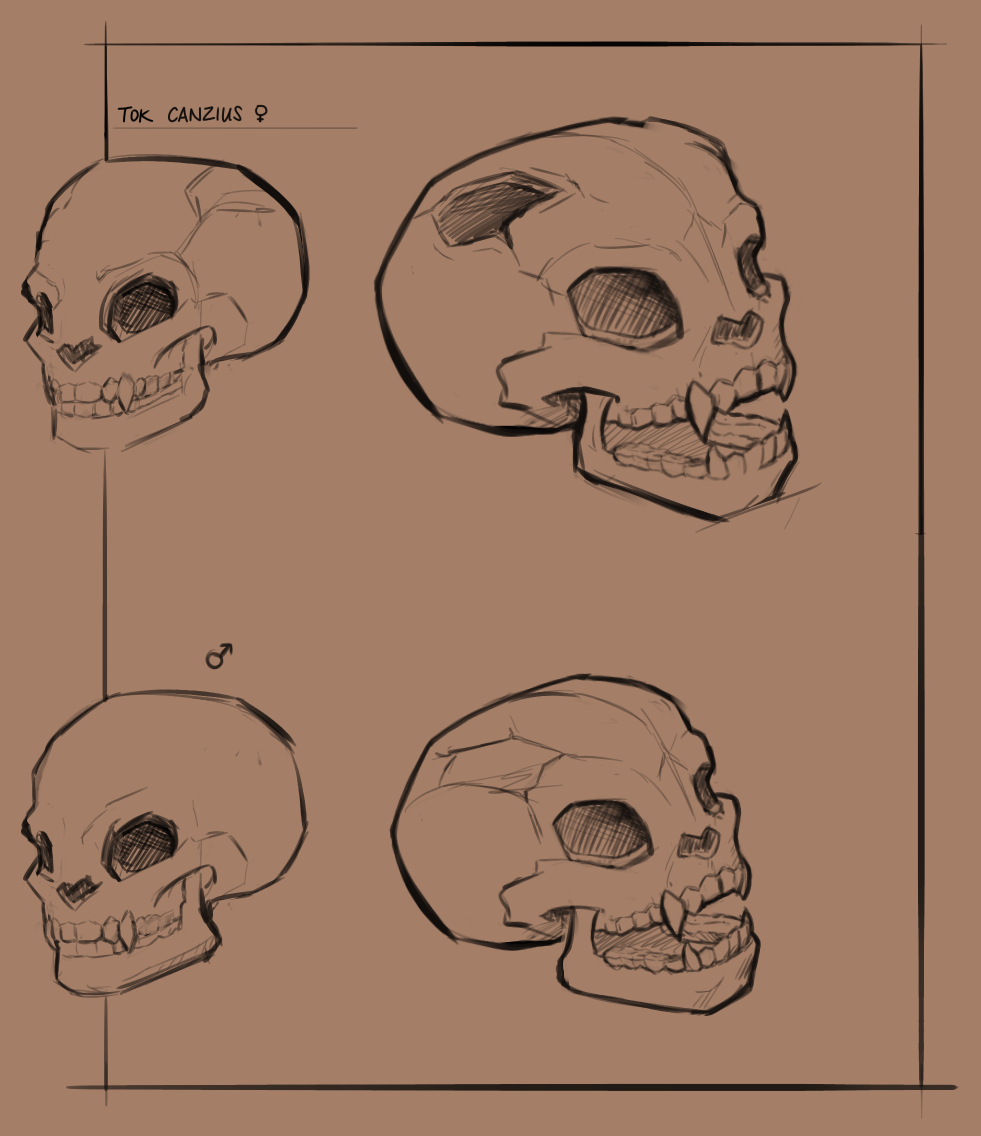
Canzians usually have elongated upper-canine teeth. Though they are not functionally different from other people’s teeth, they may alter a Canzian’s ability to speak certain languages without an accent.
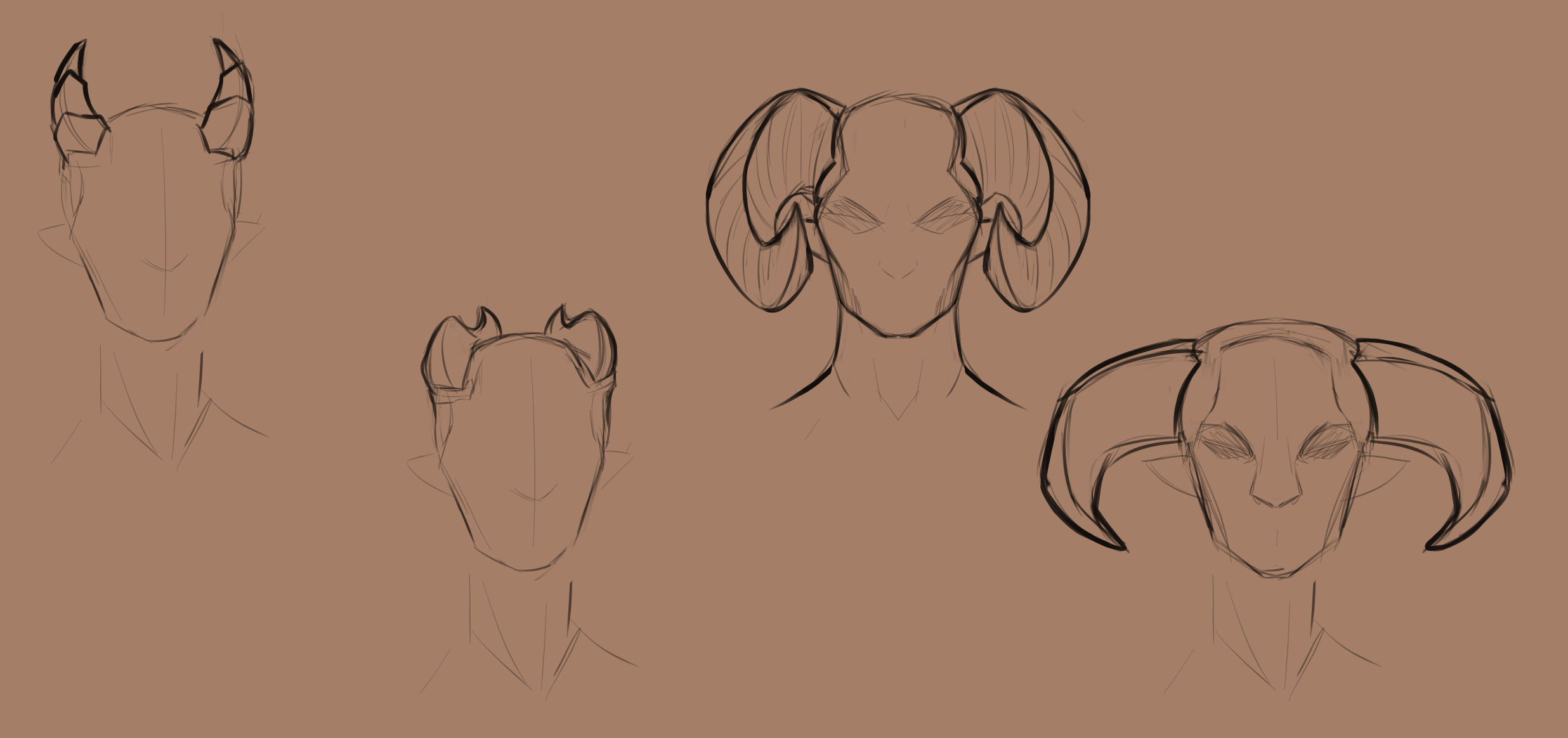
Horns
Non-Male Canzians have the potential to grow horns from their skulls, but they are uncommon. These horns, no matter the size, are seen as an honor from the Great Mother, ancestral matriarch of early Canzian society. The larger the horns, however, the deeper the blessing is said to be, heavily influencing a person’s standing in native Canzian cultures.
Reproduction
The Beanut Lands does not have half-species for mechanical clarity, but it is possible for some inter-species relations to produce offspring. A person with mixed-species parentage may exhibit physical traits from a parent of another species. If you are interested in this level of customization for your image and story, please be sure to examine the Heritage subgroups to determine which groups your parents come from. You may also use Growth Features during character creation to adjust your mechanics to fit your narrative decisions if you are inclined.
Canzians can procreate through traditional 2-partner reproduction with any other Tok species. This includes Torgali, Lovalians, and Dawi. They are unable to produce children with Sylvan or Varian people, and will not exemplify unique traits from those species, unless otherwise noted in a Heritage subgroup.
For inter-species parentage, the following biological rules will always apply:
Canzian + Canzian: a child will always be Canzian, taking the female parent’s heritage
Canzian + Torgali: a child will be the same species as their female parent
Canzian + Lovalian: a child will be the same species as their female parent
Canzian + Dawi: a child will be the same species as their female parent
 The Beanut Lands