

Canzian
Heritage
Regardless of an individual’s Culture, their ancestors likely come from one of the following groups which determines a few of their notable physical characteristics.
For Canzians, this mainly affects their skin and hair tones, as well as their markings such as stripes, spots, or a lack thereof. For non-males who have horns, their blood heritage will distinguish their potential horn shapes.
Note: Your Heritage choice is purely for storytelling and may have narrative implications, but will not affect your characters stats, attributes, skills, or abilities.
The features listed below are the most common for each specific Heritage group, but features that are not mentioned will default to the typical physicality found on the Biology page. You can find the general physical traits on the main Species page.
Legend
✤
Some features are marked with a clover to indicate a unique trait exclusive to that Heritage group.
rare [ Luck test: 8]
Some features may show a test associated with them. These are optional dice rolls, for those who are interested in leaving any features up to chance.
Kikhanzi
“Green Strider Clans”
Location of origin: Oasin clans of Canzia and the Hinlands
Though the Desert of Canzia has been punishing, the Green Strider people have passed down the secrets of how to thrive, taking advantage of the limited resources offered by the mysterious Wandering Oasis and the various, fertile fringe territories in the northern grasslands. In the modern day, now that the Willonian expansion has freed much of the northern grasslands from the dangers of the past, many of the people of these people have naturally expanded northward into the regions of Old Willory, but they all remain connected to the natural energies of the land in a way that could impress even a Fangren.
Kikhanzi are the most genetically diverse of Canzians, with complexions from deep, obsidian browns all the way to soft, sunny yellows. Their hair colors are similarly diverse, except they generally appear more naturally muted, leaning into sandy blondes, terracotta auburns, and rich, dark browns. Kikhanzi have the lightest average eye colors of all Canzians, most commonly in warm hues of topaz, amber, hazel, and greens. It is unusual to see a Kikhanzi with patterned skin markings.
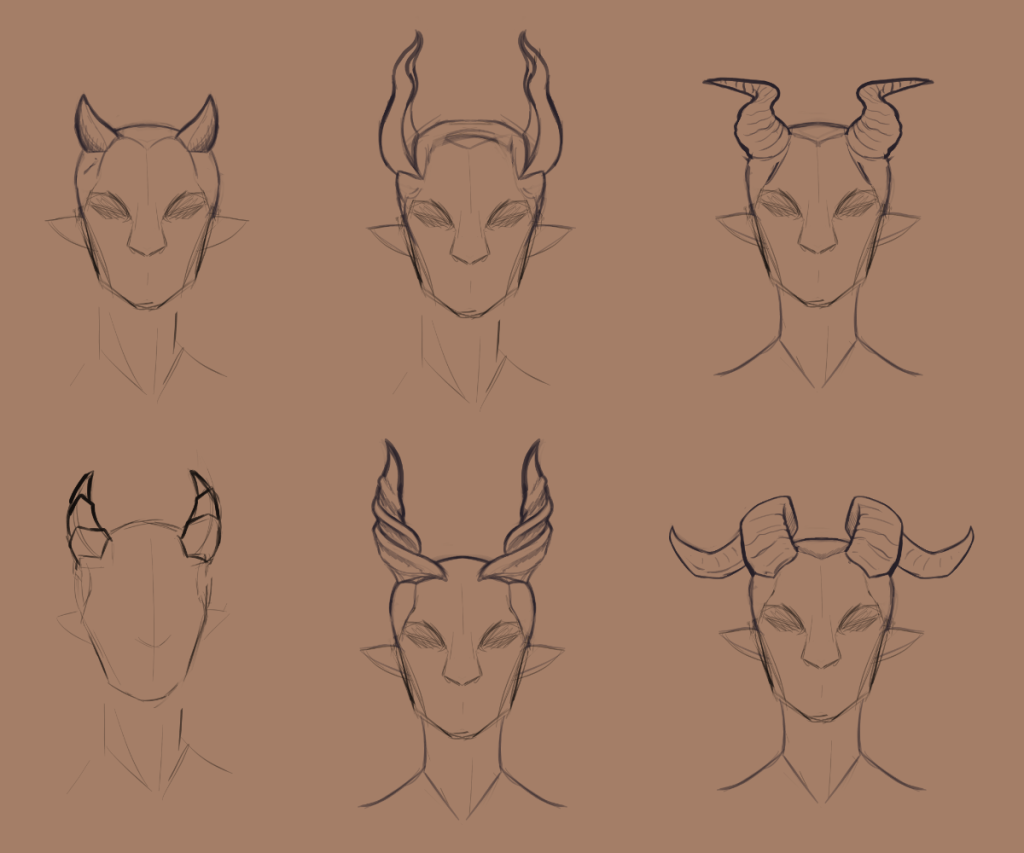
Kikhanzi who have horns will develop straight, or slightly curved horns that either point slightly upward or follow the curvature of their natural head shape backward, extending past the rear of their skull if they are particularly large.

Common Features
HAIR
muted blonde, brown, black
EYES
light
MARKINGS
any type from another heritage
rare [ Luck test: 8]
HORNS
straight/gentle slope backward, textured
rare [ Luck test: 8]
Nyemuni
“Red Manes”
Location of origin: Red Highlands surrounding Mother’s Rest and anywhere in the Sizzling Sands
The matriarchal bloodlines of “The Great Mother of Canzia” are considered the highest of nobility in native Canzian cultures; none are so respected and venerated as the Nyemuni heritage, whose red hair and grey eyes are passed down from mother to daughter. Most Nyemuni exist within the Mkase culture, so their isolated communities avoid overpopulation and unnecessary expansion of bloodlines. Though their traits are genetically dominant, their reservations about overpopulation, and the Mkase traditions of mindfully raising very small generations as a community, has kept this heritage fairly uncommon in the outer world. Concentrated mostly in the highlands surrounding Mother’s Rest, one of the most ancient settlements of the Canzian people, the people of Nyemuni heritage have kept their bloodlines consistent but contained. Were they to integrate more fully with the other Canzian people, it is likely that more Canzians would appear like this group.
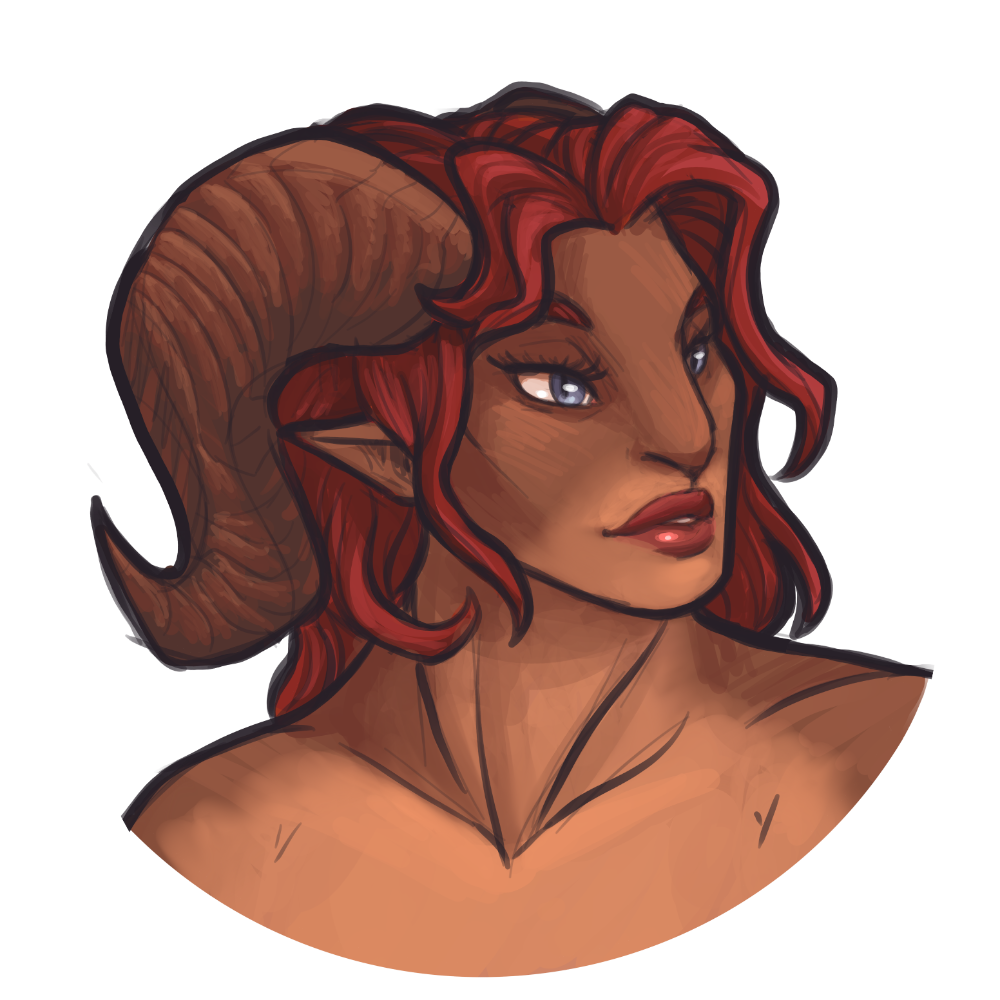
As can be expected, Redmanes majorly grow hair in natural hues of red, from bright scarlet to deep sanguine. While these colors are not exclusive to Redmanes, it is rare to see a Redmane with a hair color more divergent than a warm shade of brown.
While all Redmanes usually stand taller and more muscular than any other Canzians, a bizarre and surprising genetic outlier lies in the Redmane females in particular. They are an average height taller than any other demographic in the entire Beanut Lands. They have been known to grow upwards of 9 feet tall. Most Redmanes (and traditionalist Canzians) attribute this to the direct genetic tie to The Great Mother herself.
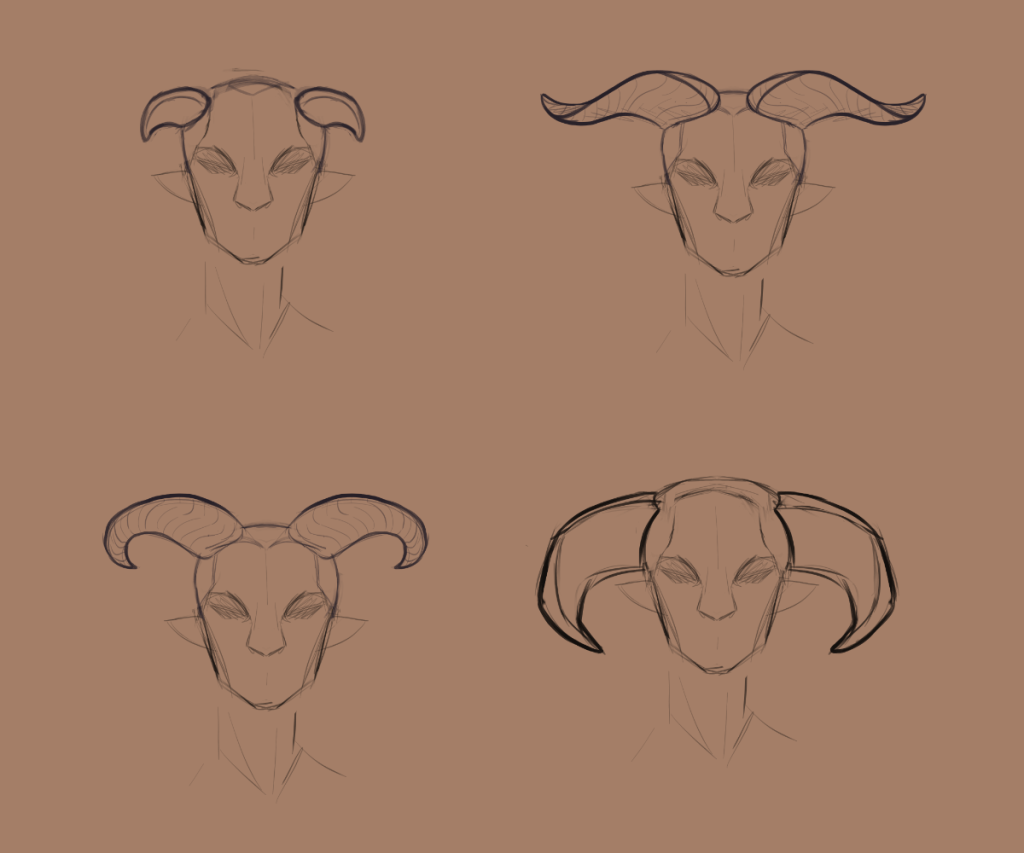
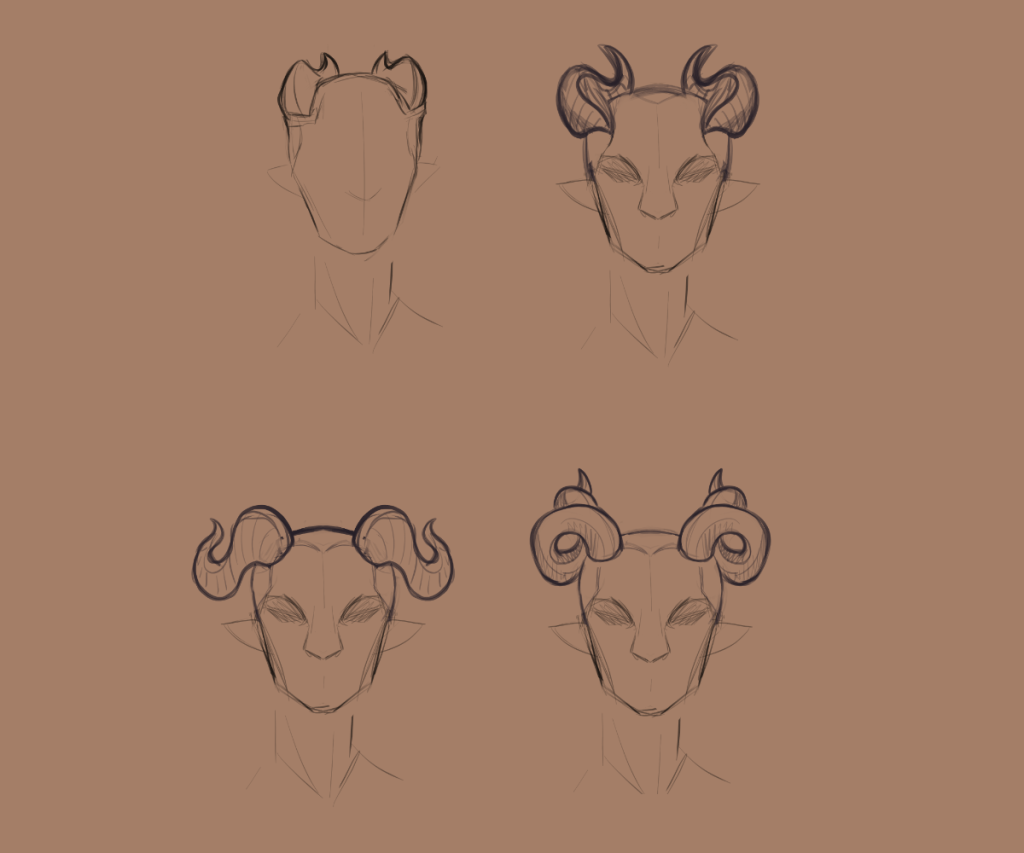
Redmanes develop horns the most consistently of all Canzians, which are large and dramatically curved, growing from just above the ears and rounding forward or outward, like the horns of a Mouflon, Bighorn, or Argali.
Common Features
BODY
✤ world’s tallest average people in their size category
M: 6’3″ – 6’9″ (190 – 206cm)
F: 8’6″ – 9′ (260-275cm)
HAIR
red-tones from muted brown and auburn, to bright crimson and scarlet
EYES
✤ grey
MARKINGS
Two-tone roan, often subtle or gently faded (chest, stomach, palms, soles, neck, and lower face are lighter)
common [ Luck test: 4]
HORNS
Sideways, longhorn, downturned, textured
common [ Luck test: 4]
Graug
“Herders”
Location of origin: pastoral nomad clans of Canzia and the Hinlands
Early in CanTok history, some migratory clans were notoriously lost in a devastating sandstorm that is said to have lasted for over two decades. Most clans assumed the worst. In truth, however, small populations of the lost Graug managed to remain. Those who survived eventually followed their bighorn herds back out of the sandstorm. With their population significantly diminished and their herds on the brink of starvation, the Graug were forced to abandon many of their ancestral and matriarchal traditions, focusing more on their communities.
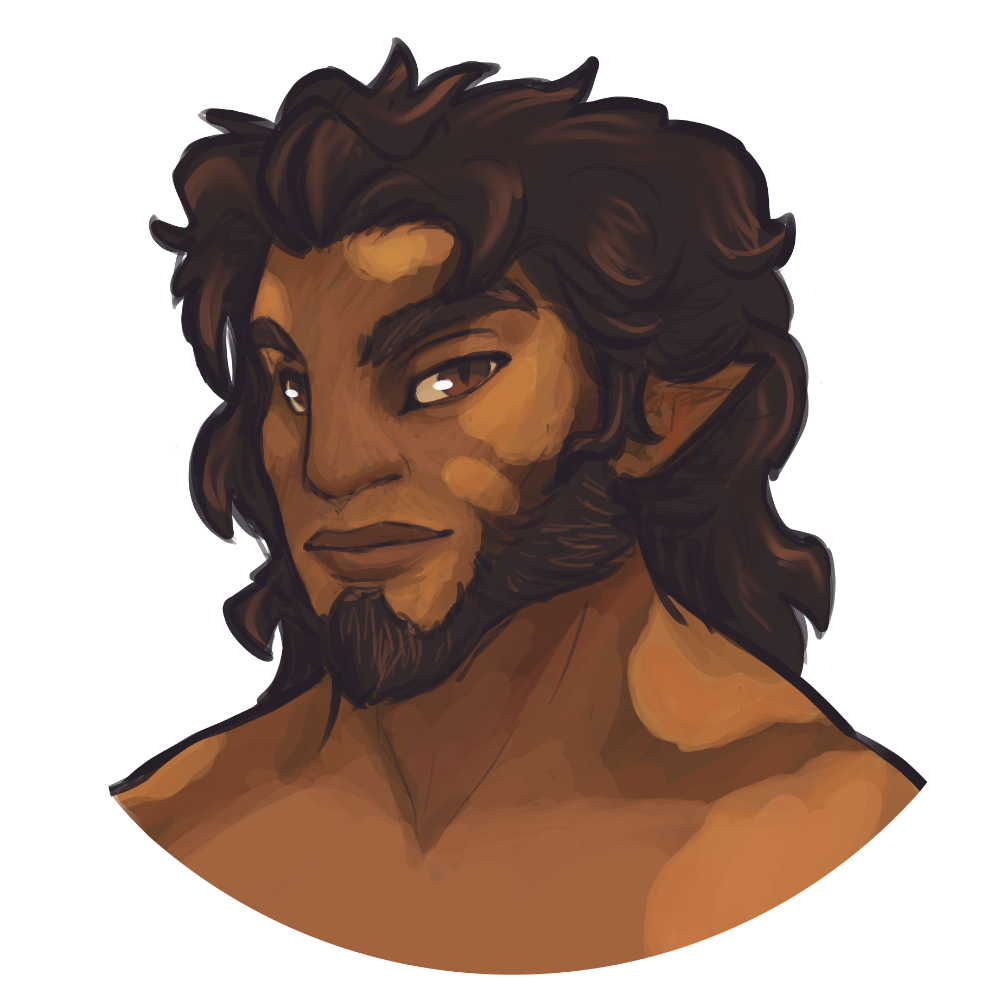
The Graug have integrated into greater clan groups today, though most still exist in their same, isolated migratory groups, but they still remain steadfast, raising and maintaining their beloved bighorn herds, which often outnumber them 10-to-1.
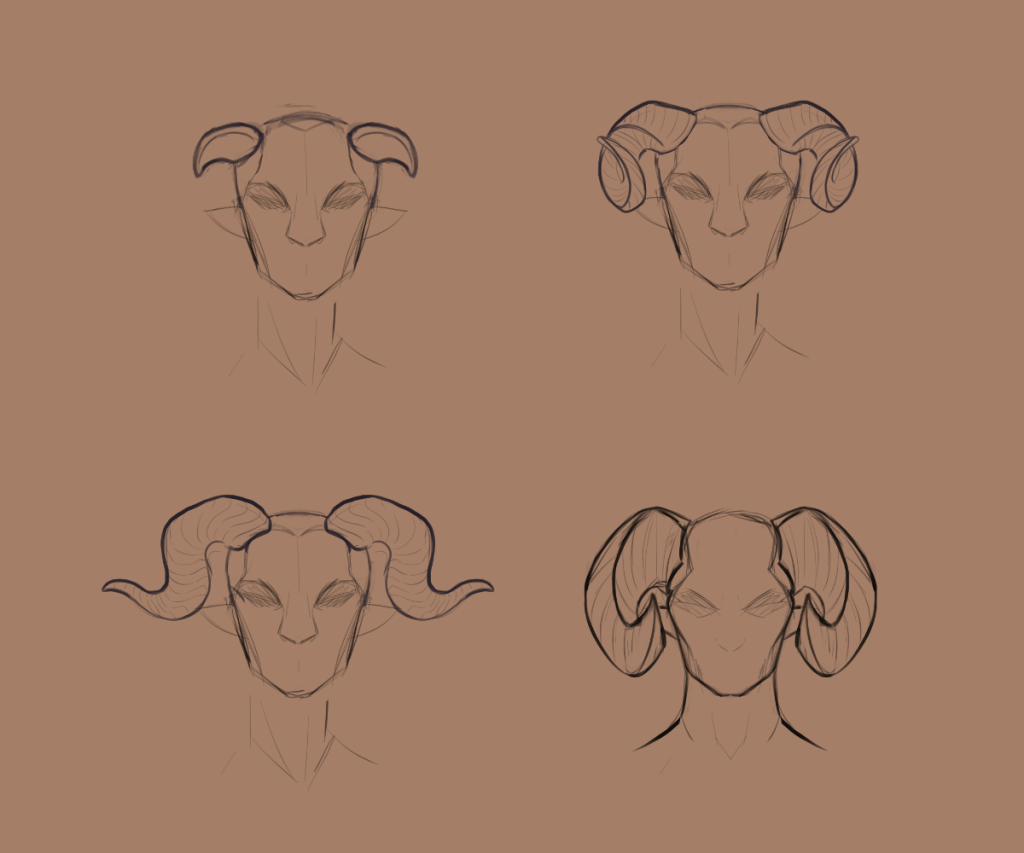
Those who are blessed with horns sport very thick, rounded horns, much like that of a Mouflon, Barbary, or a Bharal.
Common Features
BODY
Females are shorter than average, males are taller than average
Heavyweight [Rotund, Thicc, Built]
HAIR
dark
EYES
dark
MARKINGS
✤ Piebald, calico, vitiligo
common [ Luck test: 4]
HORNS
Sideways, longhorn, downturned, textured
uncommon [ Luck test: 6]
Okuamba
“Rock Claw”
Location of origin: semi-nomadic, and canyon dwelling clans of the Red Highlands
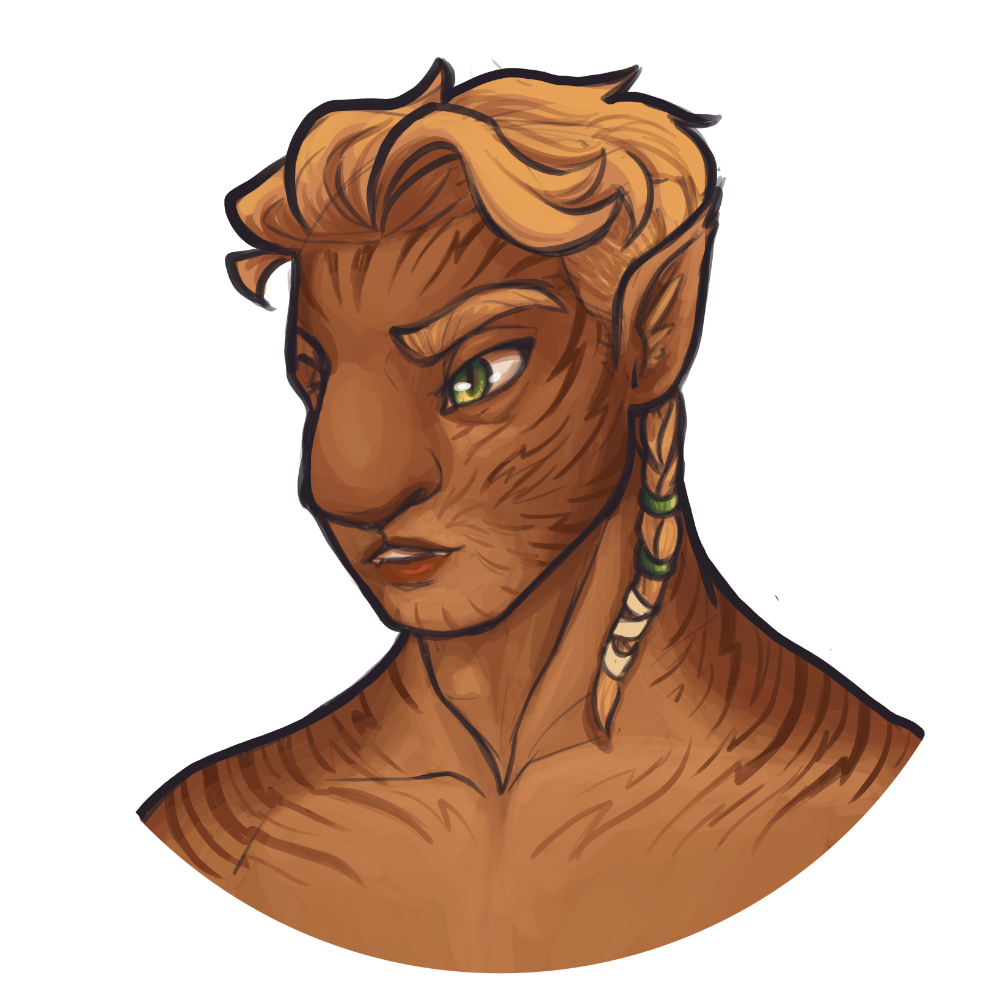
These people are so named for their historical proclivity to persevering in the most vertically-challenging locations in the Sizzling Sands. Located in the southern highlands, deep canyons, and mountain cliffs of the Brittle Spine, the Okuamba have been fairly cut off from even other Canzian groups, causing them to appear the most dramatically feline of all Canzians.
Okuamba skin and hair colors are varied, but they almost always exhibit some manner of markings on their skin. Some clans who travel the dry badlands of the ridges have very dark skin and hair colors, while others who reside on cliff faces in the deep fissures of the canyons have lighter, more yellowed tones. Regardless of the complexions, these hardened people tend to live in some of the harshest environments of Canzia, and have developed thicker hair and manes, more cat-like facial features, and sharper teeth than the average Canzian.
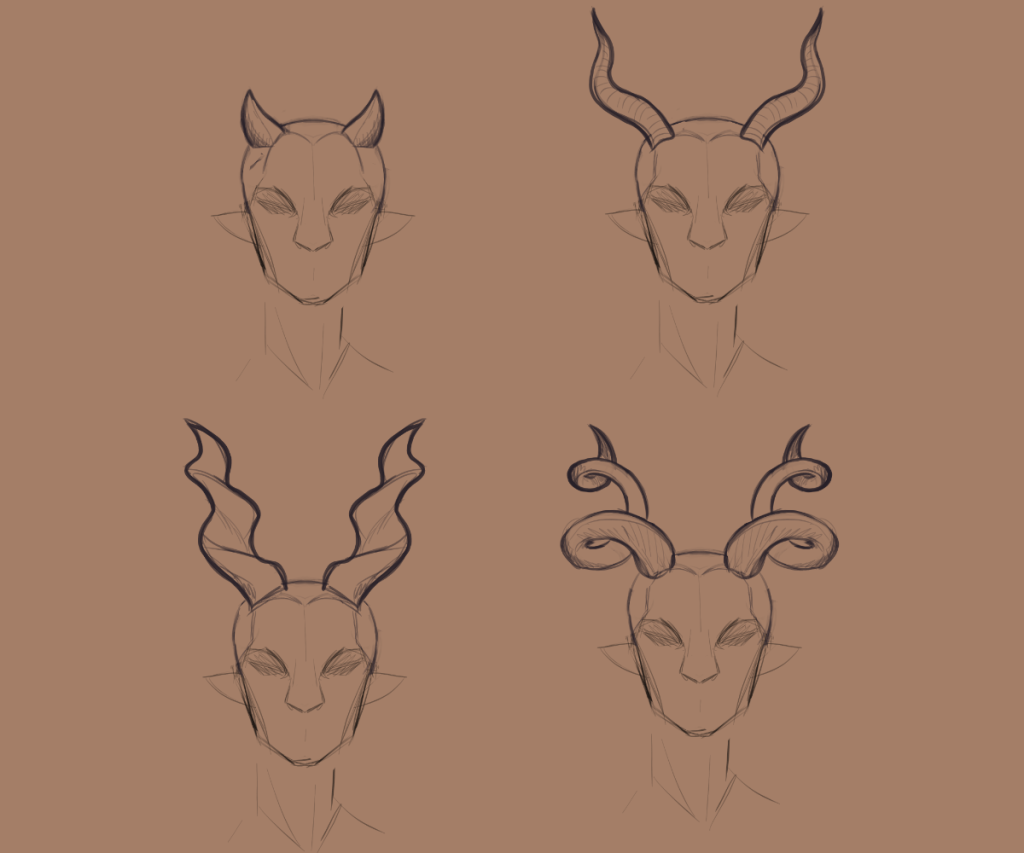
Okuamba don’t often develop horns, but when they do, they are typically spiral in shape, growing primarily from the front part of the temples and angling upward and back over the skull, similiar in shape to that of a Kudu, Marhor, or Addax.
Common Features
BODY
Lightweight [Thin, Athletic, Super]
HAIR
Lighter
FACE
✤ Feline features are more exaggerated, especially snout
Longer upper canine teeth
MARKINGS
✤ Stripes
very common [ Luck test: 2]
HORNS
Sideways, longhorn, downturned, textured
very rare [ Luck test: 10]
Mwonta
“Star Seer”
Location of origin: coastal clans of south Canzia, the Brittle Bay, and Torgalia
The Mwonta, a faction stemming from the original Primal CanTok people, manifested as a distinct group in the aftermath of the Red Highlands’ downfall following the loss of The Great Mother. Mwonta, derived from the CanTok language, translates to “Seer,” implying a unique connection with celestial forces. While they may not necessarily be biologically more connected than other Canzians, the Mwonta people make up most of the Ukamimba culture, in which astrological traditions are highly important.
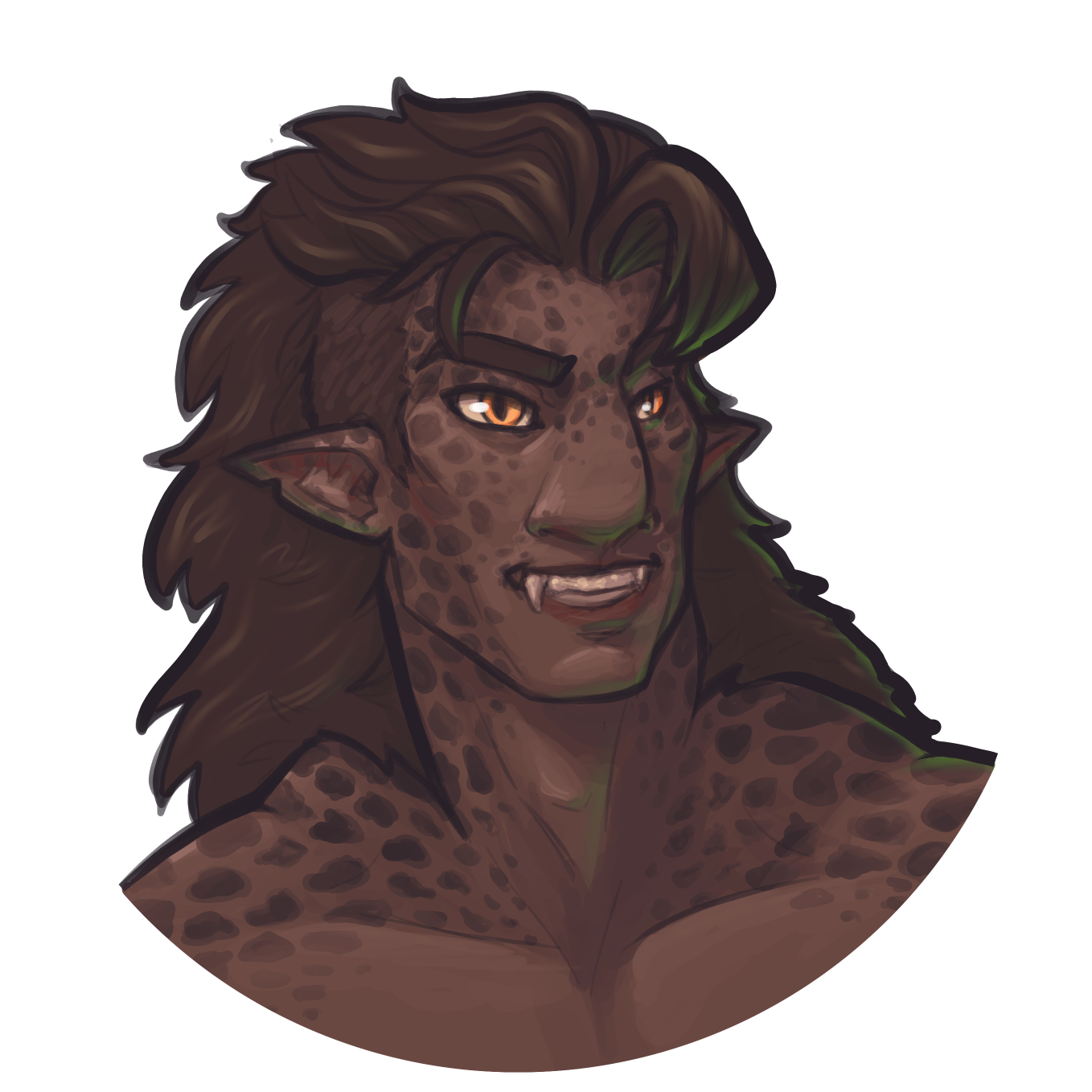
They tend to develop darker skin and hair tones due to their exposure to the sun. They, however, have developed distinctive rounded spots that are seen in no other Canzian subgroup of people. The level of contrast of these spots is varied, but it is only found in this specific regional group.
Mwonta do not develop horns very commonly. The curvature of the horns is more spiraled rather than straight or rounded, growing nearly from the temples. They are shaped similarly to the horns of a Kudu, Markhor, or Addax, but they trail off the back of the head rather than upward or outward.
Common Features
BODY
Lightweight [Thin, Athletic, Super]
SKIN
Darker
HAIR
Darker
EYES
✤ Dark Jewel Tones (blue, purple, green, black)
MARKINGS
✤ Spots
front, palms, soles, neck, and lower face are often lighter
very common [ Luck test: 2]
HORNS
Tight spirals, backward leaning
very rare [ Luck test: 8]
Alkhanzi
“Summit Clans”
Location of origin: Imperial Crownlands and any established settlement
While most of Canzian history has been recorded orally, the unique group of Alkhanzi people have integrated with the Sylvan and Varian people of the Crown Valley for many thousands of years and have written records of the time their people arrived in the western valleys. Originally, these people descend from the western clans of Rafriac, one of the only truly constructed cities of ancient Canzian times, and the southern Sylvan lands, both of which are now ruined and barren locations. In those troubling times following the aftermath of war, starvation, and curses upon the southwestern lands, the few remaining Canzians of the time migrated into the Crown mountains and helped found the start of the city of Altakai. Nowadays, Alkhanzi people are seen just about anywhere there are cities, towns, and villages.
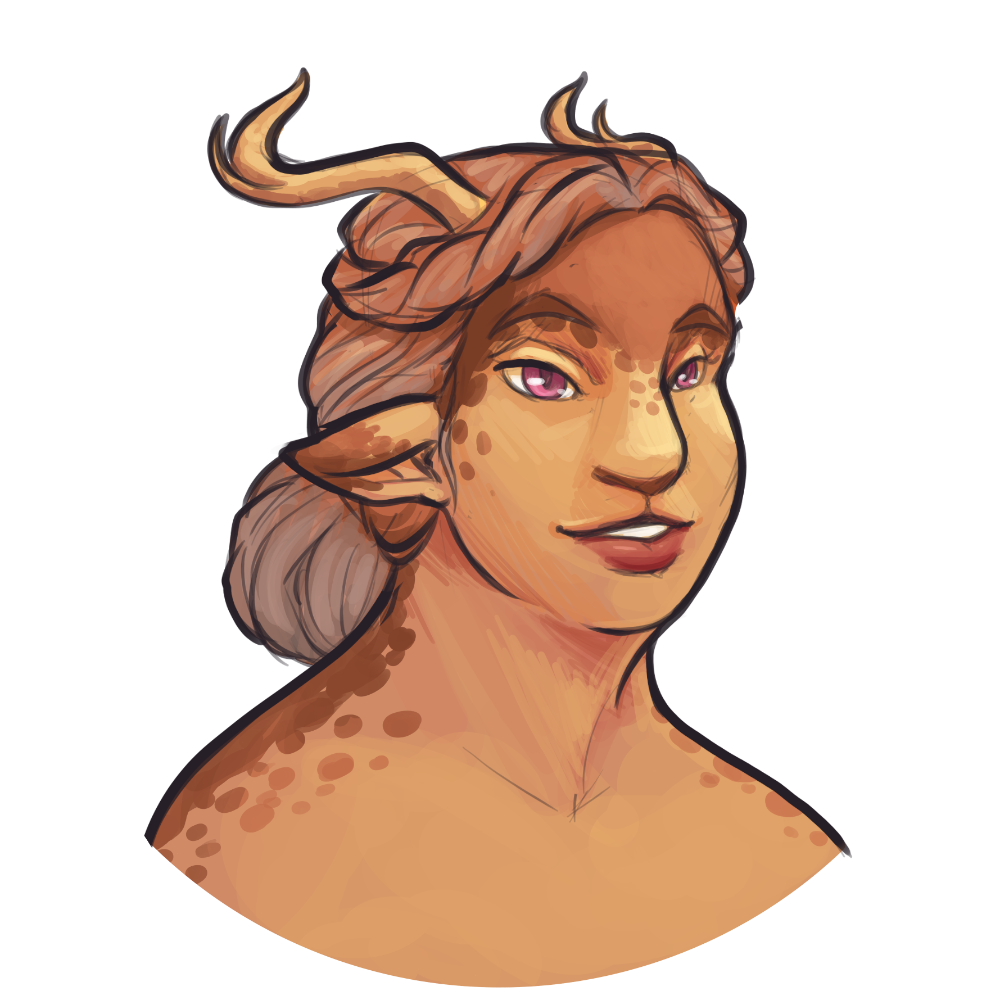
Because they have evolved in mountainous and boreal, evergreen environments, these Canzians are undoubtedly the most unusual heritage group. Their facial features, while still wild and animalistic, lean more into a cervine persuasion, rather than feline. They often evoke more of a faun or deer-like aesthetic, possibly because of their long integration with the Sylvan influence of the valley.
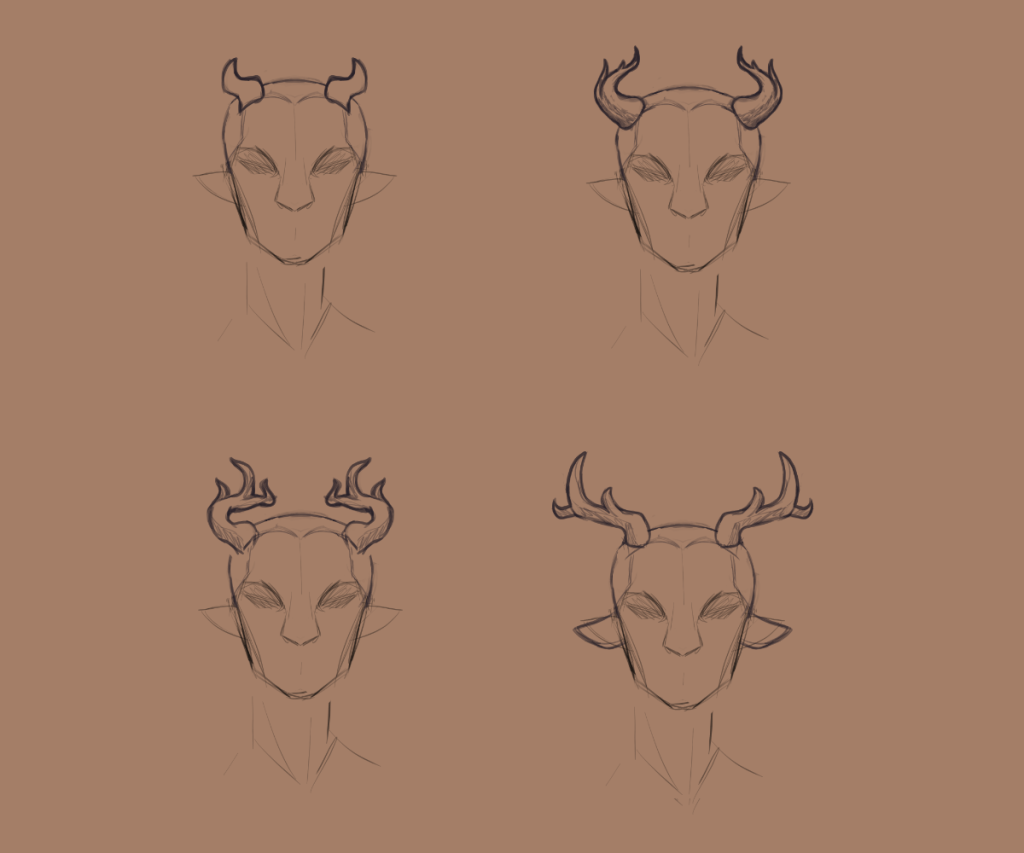
Those who grow horns have thin, multi-pronged protrusions, more akin to thin antlers than traditional Canzian horns.
Common Features
SKIN
Lighter
HAIR
Lighter
FACE
✤ Cervine (faun, deer) instead of feline
MARKINGS
Two-tone roan, often very pronounced and spotted where the colors meet (chest, stomach, palms, soles, neck, and lower face are lighter)
common [ Luck test: 4]
HORNS
✤ Wavy, multi-pronged, smooth or fuzzy texture, backward leaning
uncommon [ Luck test: 6]
Laihizi
“Silk Skin”
Location of origin: anywhere outside of Canzia, and mixed-Tok heritage
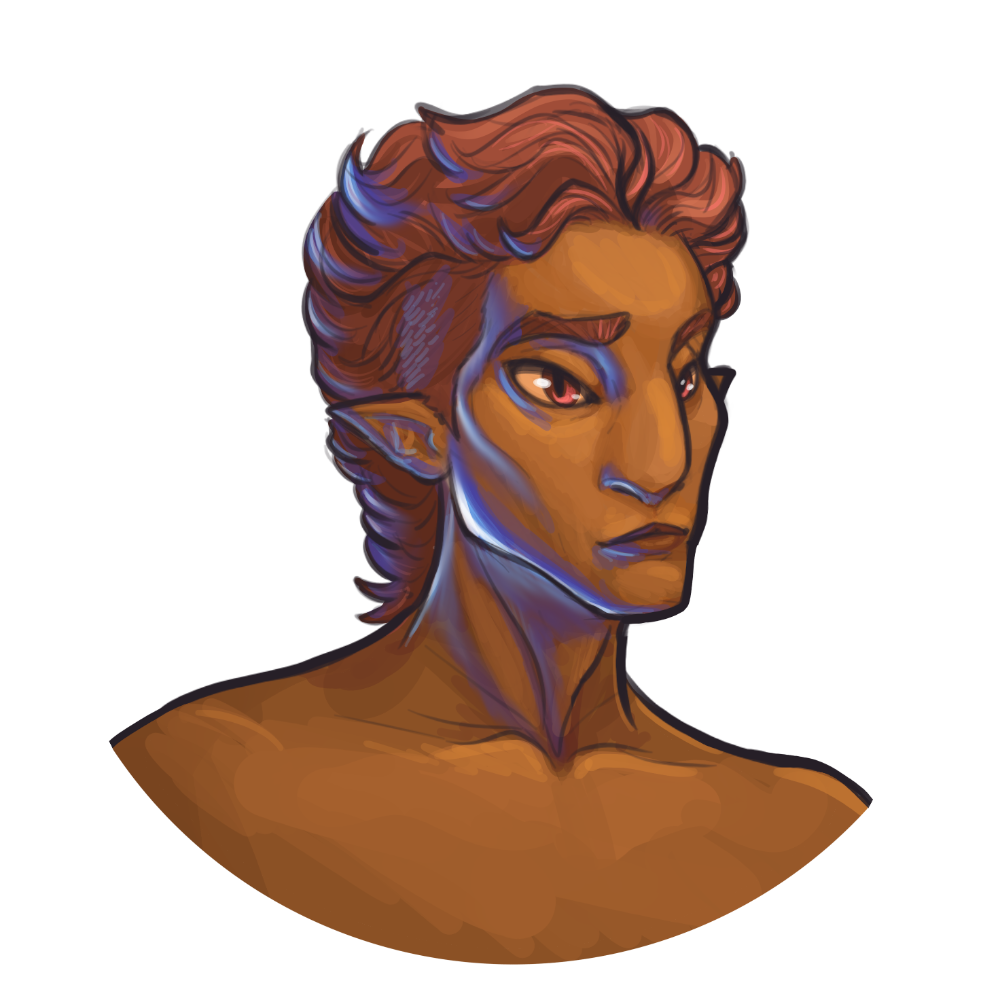
The Laihizi are the least instantly-recognizable Canzian heritage group due to their incredible diversity. This is mostly due to their intermingling with Torgali, Lovalians, and Dawi of the world. These Canzians have the least pronounced of the signature feline look, which is the most clear way to identify one. Found anywhere in the world, these Silk Skin people have integrated with just about any society you can think of, from the frigid northern Frostlands to the eastern Old World.
It is incredibly rare that these people develop horns, and if one does, they are often shorter than average.
Common Features
MARKINGS
any type from another heritage
rare [ Luck test: 8]
HORNS
any type from another heritage
very rare [ Luck test: 10]
OTHER
✤ Face and body features may be influenced by any canzian Heritage, or even other Tok species parentage, if applicable
 The Beanut Lands