

Torgali
Biology
Stature and Build
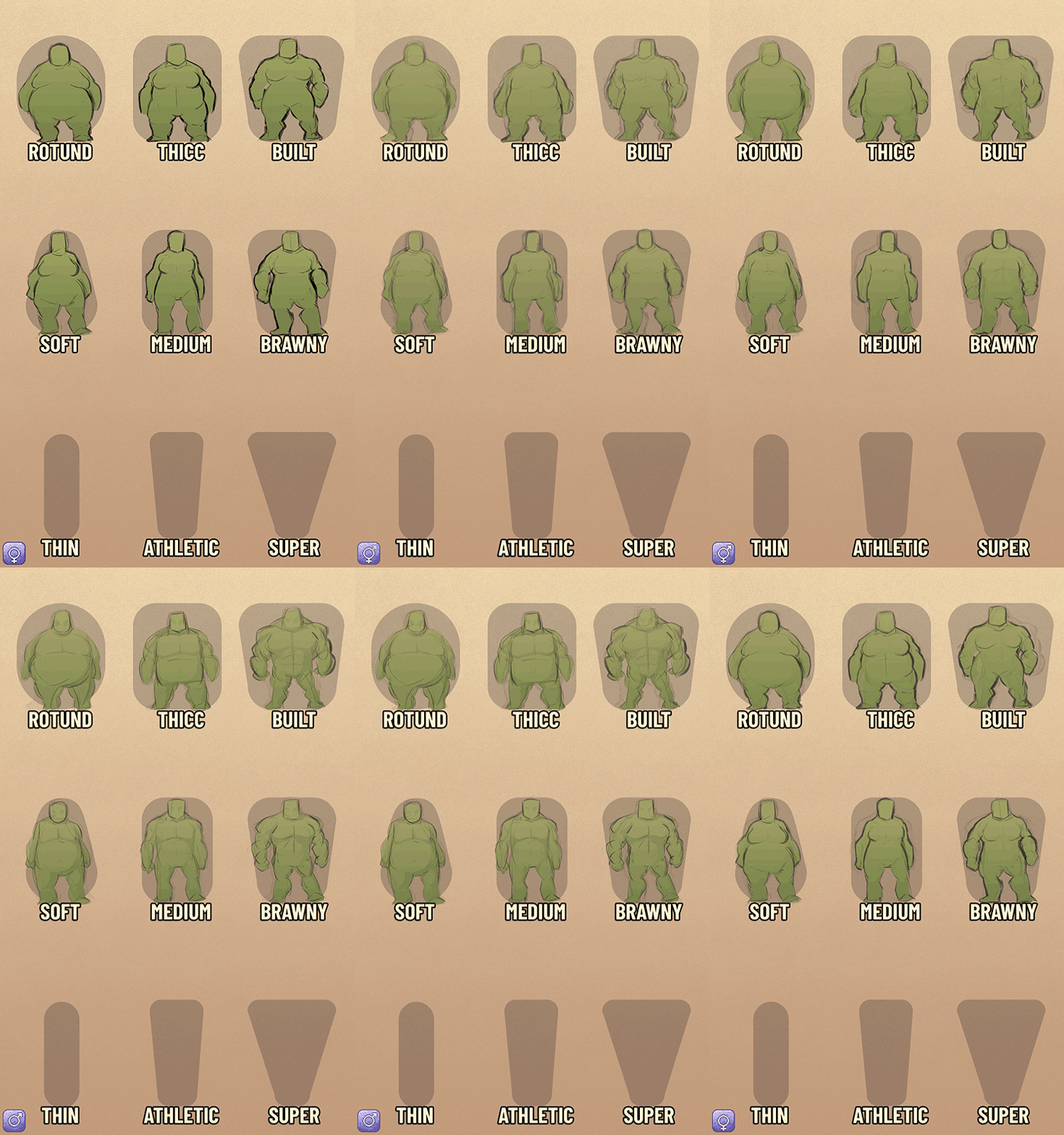
Due to their raw, natural strength and skeletal density, the Torgali are broad and heavy by nature. Though some Torgali live lifestyles that alter their body types drastically, it is improbable for a Torgali to naturally lose both their protective layers of fat and their heavy muscle.
While there is noticeable differentiation between male and female bodies, the Torgali tend to be fairly wide and rectangular in shape, so people who are unfamiliar with Torgali may not be able to immediately discern their sex without closer investigation.
Complexions
Torgali skin is tough and leathery. Their history of persisting in jungles, tropics, wetlands, and mountain ecosystems means their skin-tones run from very dark to very pale. More often than not, it is their ability to blend with their environment that influences the hue of their complexions. Similar to human skin, the lightness of a Torgali’s skin is heavily influenced by their sun exposure, but in some instances camouflage is more beneficial and some Torgali in darker environments also have darker skin.
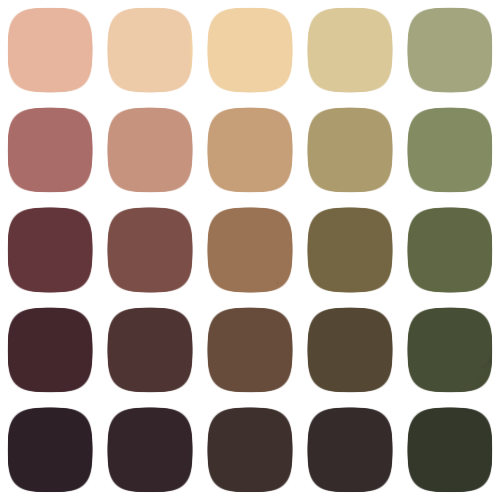
Reddish hues (left) are common in dry, barren, and cold environments.
Olive hues (middle) are common in urban and temperate environments.
Greenish hues (right) are common in lush environments.
Lighter values (top) are common in colder environments.
Darker values (bottom) are common in warmer or darker environments.
Hair
Torgali natural hair colors are dark brown and black. They commonly have thick, full hair that is heavily curled or textured, but some of them have straighter textures as well.
Eyes
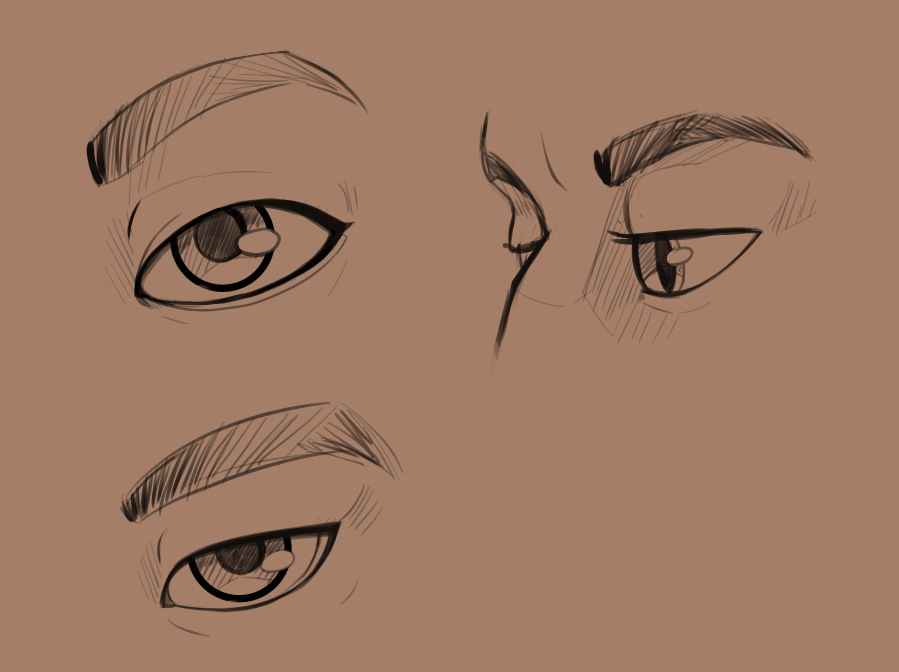
Torgali have dark brown, dark green, and black eye colors. They are the most likely species in the world to exhibit natural epicanthic folds. A person with this feature likely has Torgali heritage, regardless of their species.
Ears
Torgali have typical Tok ears, commonly pointed at a horizontal or slightly downward angle. However, due to excessive, intentional scarification, the lower portion of Torgali ears almost always have a unique shape for each person, such as notable slivers or chunks of skin missing.
Noses
Torgali noses are commonly flat and wide, with prominent nostrils. All other sizes and shapes are not uncommon.
Teeth
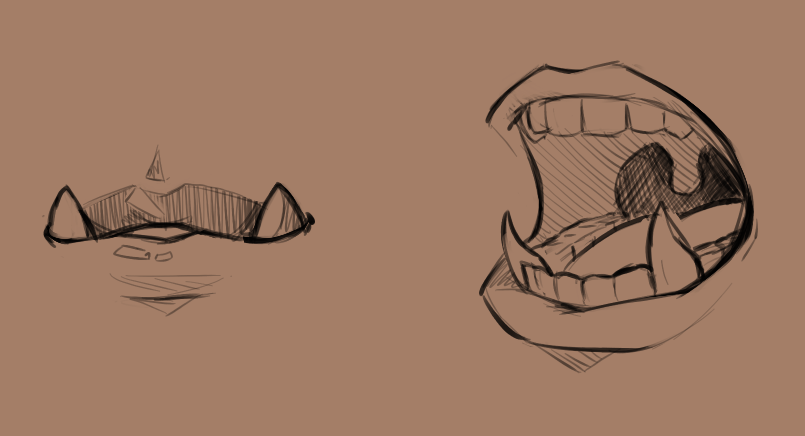
Torgali have enlarged, tusk-like lower canine teeth. Those who live in more challenging environments often develop larger fangs, while those in non-native communities may even have fangs small enough to be able to close their mouths around them. Regardless of whether their fangs are visible or not, most Torgali exhibit a visible under-bite.
Reproduction
The Beanut Lands does not have half-species for mechanical clarity, but it is possible for some inter-species relations to produce offspring. A person with mixed-species parentage may exhibit physical traits from a parent of another species. If you are interested in this level of customization for your image and story, please be sure to examine the Heritage subgroups to determine which groups your parents come from. You may also use Growth Features during character creation to adjust your mechanics to fit your narrative decisions if you are inclined.
Torgali can procreate through traditional 2-partner reproduction with any other Tok species. This includes Canzians, Lovalians, and Dawi. They are unable to produce children with Sylvan or Varian people, and will not exemplify unique traits from those species, unless otherwise noted in a Heritage subgroup.
For inter-species parentage, the following biological rules will always apply:
Torgali + Canzian: a child will be the same species as their female parent
Torgali + Lovalian: a child will be the same species as their female parent
Torgali + Dawi: a child will be the same species as their female parent
 The Beanut Lands