

Dawi
Biology
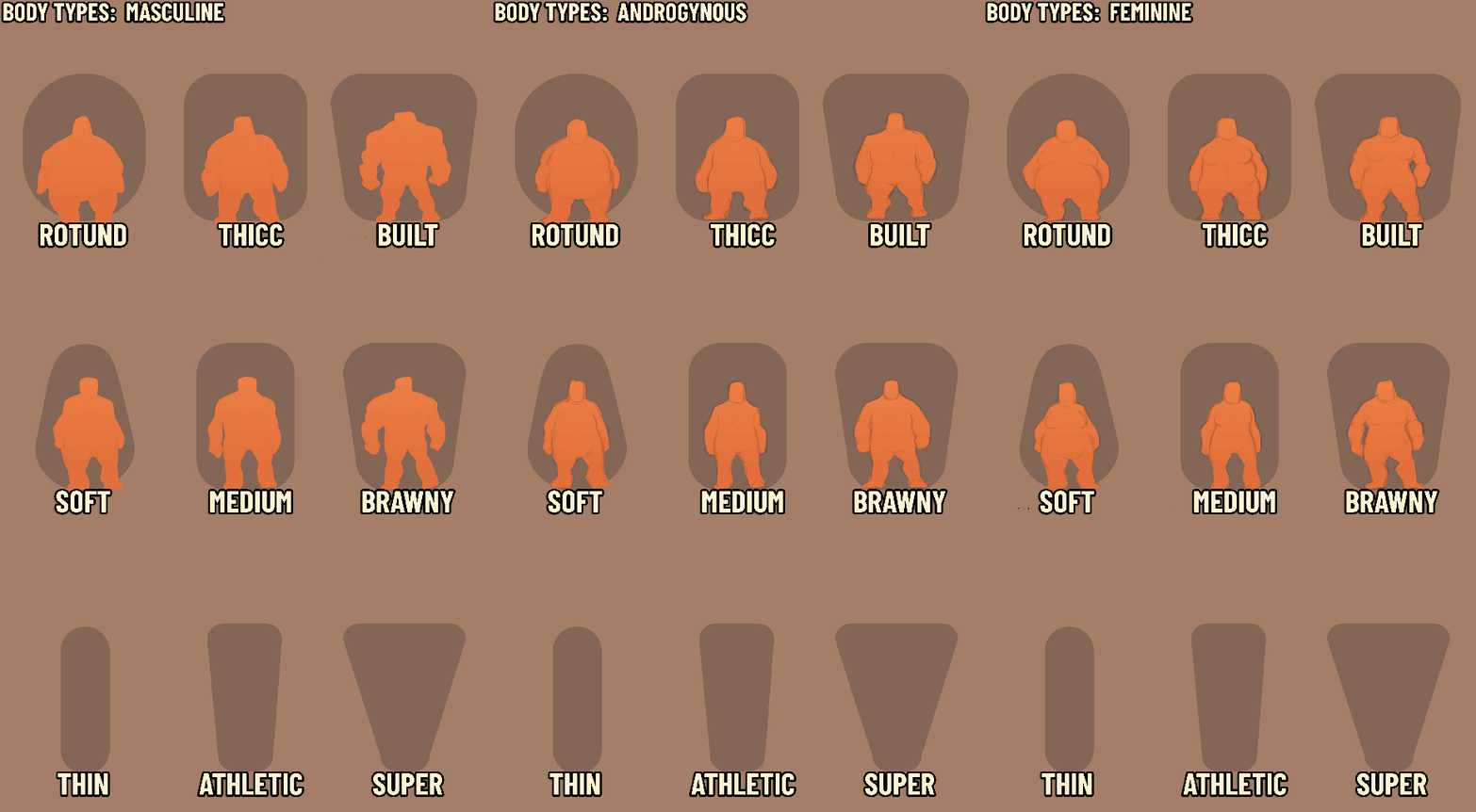
Stature and Build
The gravitational energy of the unusual islands has forced these Tok bodies into even more compact and dense forms, making them physically incapable of being truly lightweight. Though they stand a head shorter than the other Medium-sized people, their densely-packed frames have equivalent weight to their fellow medium-sized people.
Most Dawi are between 4′ and 5’3″ tall (~122 – 160cm)
Skin & Complexions
Dawi complexions are very similar to Canzians, as they live in similarly equatorial environments. It is more common, however, for Dawi to spend greater amounts of time indoors and underground, as they have developed more permanent structures in their native homeland.
In old age, Dawi tend to lose the color not only in their hair, but also in their skin, trending toward more stony neutrals like grey and umber.
Lighter values (right)
colder, darker environments
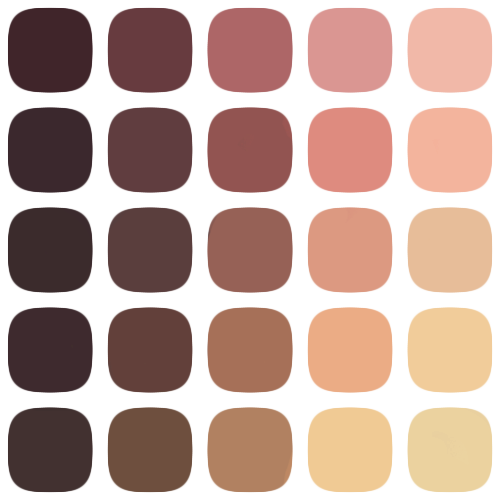
Brick
humid environments
Roserock
humid and temperate environments
Brittleshale
temperate environments
Sandstone
dry and temperate environments
Limestone
dry environments
Darker values (left)
hotter and sunnier environments
Hair
Dawi hair colors are similar in nature to real-life humans. The dominant colors are darker, and tend to be more common but many Dawi have lighter hair tones. Dawi grow thin hair until their adolescence, at which point their hair becomes thick, full, and grows like a weed. Dawi hair begins to lose its color in old age, greying past around 250-300 years.
Most Dawi, regardless of sex, grow facial hair. Native societies of Dawi hold great pride in their beards, caring and shaping them with unique products as well as adorning them with ostentatious jewelry and accessories. Those who live in non-native societies and choose to forego facial hair often need to shave multiple times a day in order to keep with the growth of their hair. Due to this, it is unlikely that a Dawi who can grow facial hair shaves it entirely.
Curiously, there is a unique Dawi genetic feature that causes some of them to be entirely hairless everywhere. There is no explanation and no way to predict this abnormality, and it can happen to any Dawi from any place. Due to native cultural expectations, many of these Dawi resolve to leave the Danuvican islands to seek acceptance on the surface.
Eyes
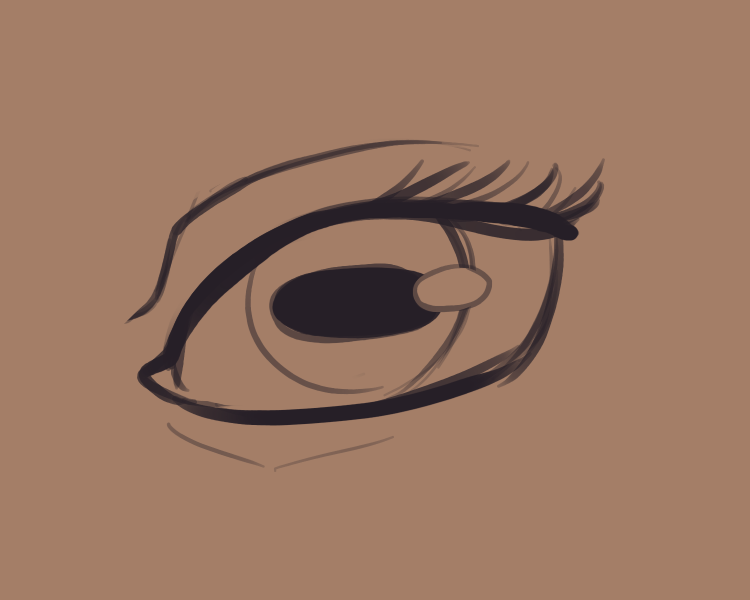
Dawi eyes have strange, oval-shaped pupils tiled sideways, similar to those of bovine creatures like cows and goats. The pupils of the eye encompass the major visible portion of their eye, lending them a very odd look.
Dawi tend to have naturally brown-tinted eye colors from black to topaz, mahogany and rose gold. Though lighter colors are less common, they are not unusual.
Ears
Dawi ears have a similarly pointed look to other Tok ears, but they are notably more prominent from a forward perspective. They are much more akin to the ears of animals such as cows, sheep, pigs, camels, alpacas, hippos, or bison. The style of ears is heavily influenced by their Heritage group.
Noses
Dawi commonly have larger noses than real life humans, often with a wide bridge and outward curve. While some have very bulbous noses, others have more angular, defined features as well.
Reproduction
The Beanut Lands does not have half-species for mechanical clarity, but it is possible for some inter-species relations to produce offspring. A person with mixed-species parentage may exhibit physical traits from a parent of another species. If you are interested in this level of customization for your image and story, please be sure to examine the Heritage subgroups to determine which groups your parents come from. You may also use Growth Features during character creation to adjust your mechanics to fit your narrative decisions if you are inclined.
Dawi can procreate through traditional 2-partner reproduction with any other Tok species. This includes Torgali, Canzians, and Lovalians. They are unable to produce children with Sylvan or Varian people, and will not exemplify unique traits from those species, unless otherwise noted in a Heritage subgroup.
For inter-species parentage, the following biological rules will always apply:
Dawi + Dawi: a child will always be Dawi
Dawi + Torgali: a child will be the same species as their female parent
Dawi + Canzian: a child will be the same species as their female parent
Dawi + Lovalian: a child will be the same species as their male parent
 The Beanut Lands