

Bodren
Biology
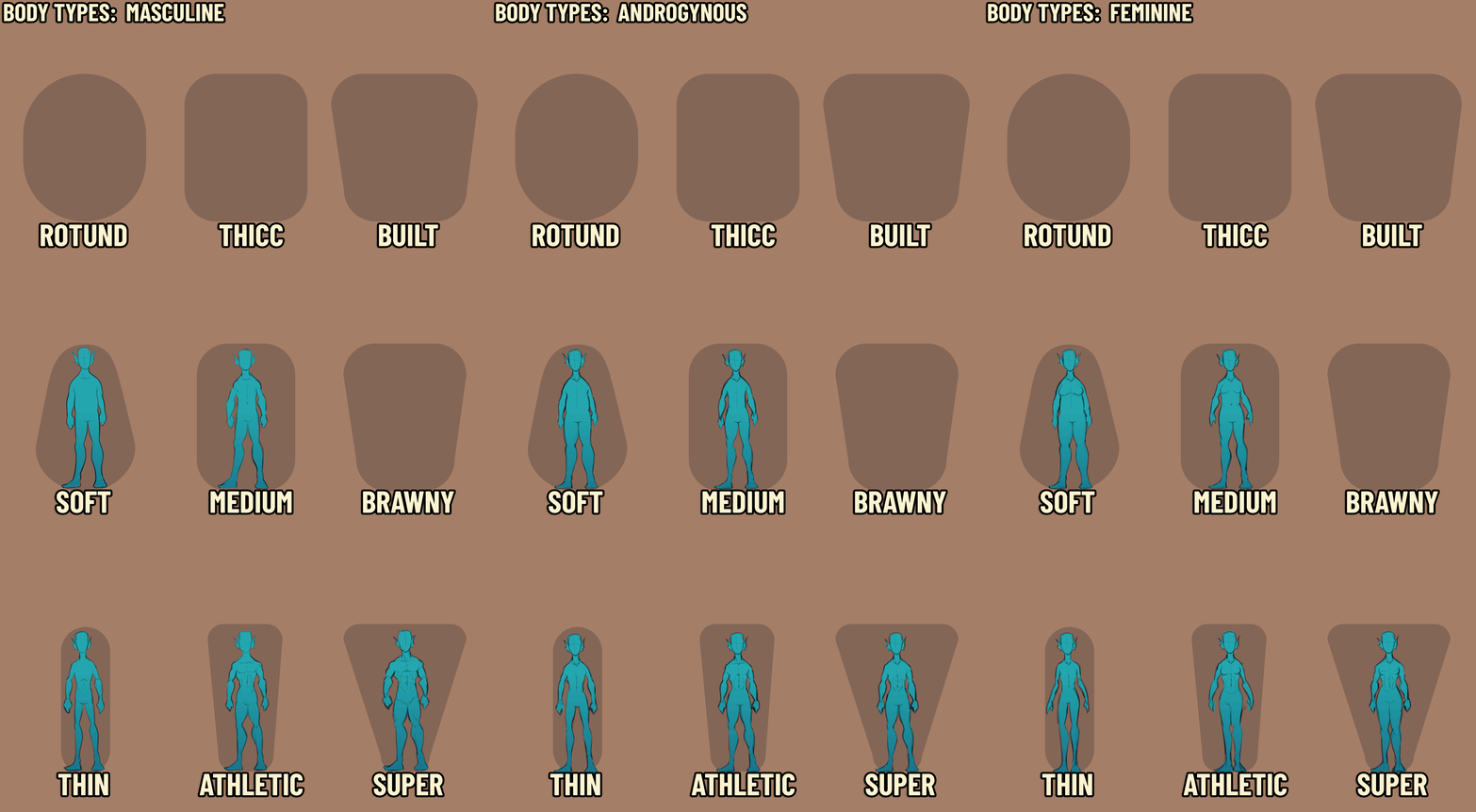
Stature and Build
Because of their history of prioritizing the mobility and agility it requires to effectively swim, Bodren have evolved to maximize lightweight maneuverability in order to be as aquadynamic as possible.
Most Bodren are between 5’6″ and 6’6″ tall (~168 – 198cm)
Complexions
Infant Bodren are born with no color at all in their skin, which is partially translucent, showing the network of veins, vessels and organs beneath. It is their earliest decades of life that influence their complexion the most. The common, cool-toned complexions of the Bodren blend naturally with the native, lush environments of the Brittle Bog and Heartlands. Those who do not grow up in a proper environment conducive to aquatic creatures may even struggle to mature past childhood unless properly cared for.
Below is a typical chart for skin tones of Bodren who are raised in appropriate, temperate environments. Other colors are possible, but highly rare and may come with additional narrative challenges.
Lighter (right)
colder or land-bound environments.

Growth
Clarity
Vibrance
Serenity
Determination
Grace
Poise
Dignity
Darker (left)
warmer, darker, or underwater environments.
Markings
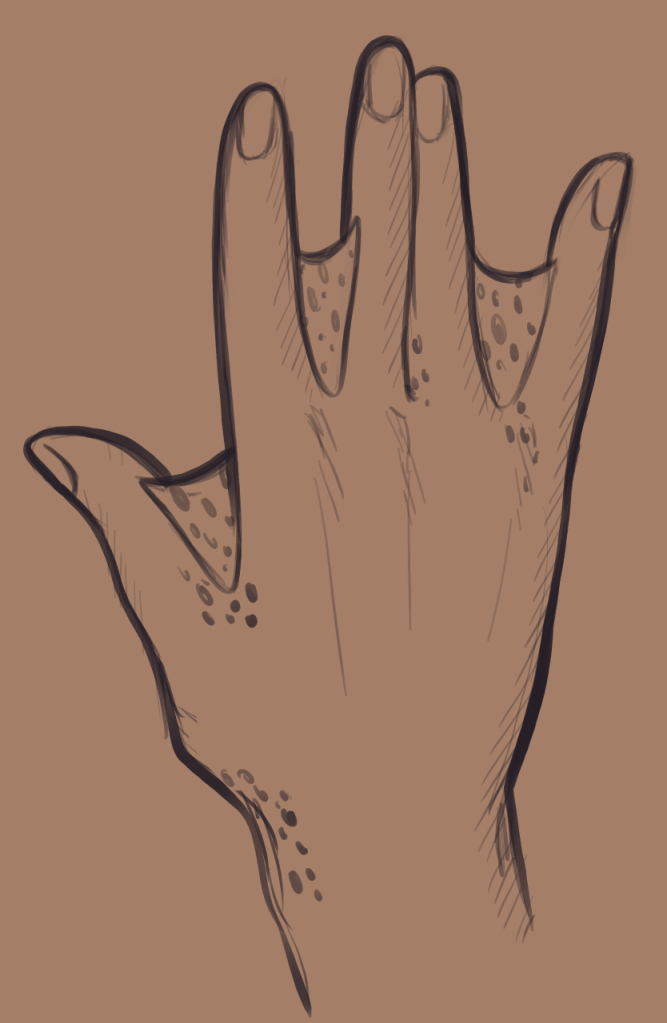
Similar to some seals or sharks, Bodren naturally develop dappled markings upon their skin which most commonly appear in a series of spots or splotches. The markings are typically a similar tone to their base complexion, but slightly shifted in hue or value. Unaltered, these typically manifest in areas of softer skin, such as the temples and ears, around the eyes, neck, palms, wrists, ankles, and groin.
For ages and ages, all of the Sylvan people have cultivated a native ability to alter their bodies. All Bodren have the ability to adjust the color, brightness, coverage, shape, and even visibility of these markings as they see fit.
Hair
Bodren hair is usually dark, in cool tones ranging from greens, teal, blues, and purples, all the way to black.
Their hair commonly grows straight and shiny due to its natural, water-resistant oils. However, more land-bound Bodren have begun to develop wavy and textured hair over time, and it is not rare to see one with one of these other types.
Eyes
Bodren eye colors are commonly light, bright and saturated, and shine vividly in the light. The occasional Bodren may have a deeper eye color, but these are few and far between.
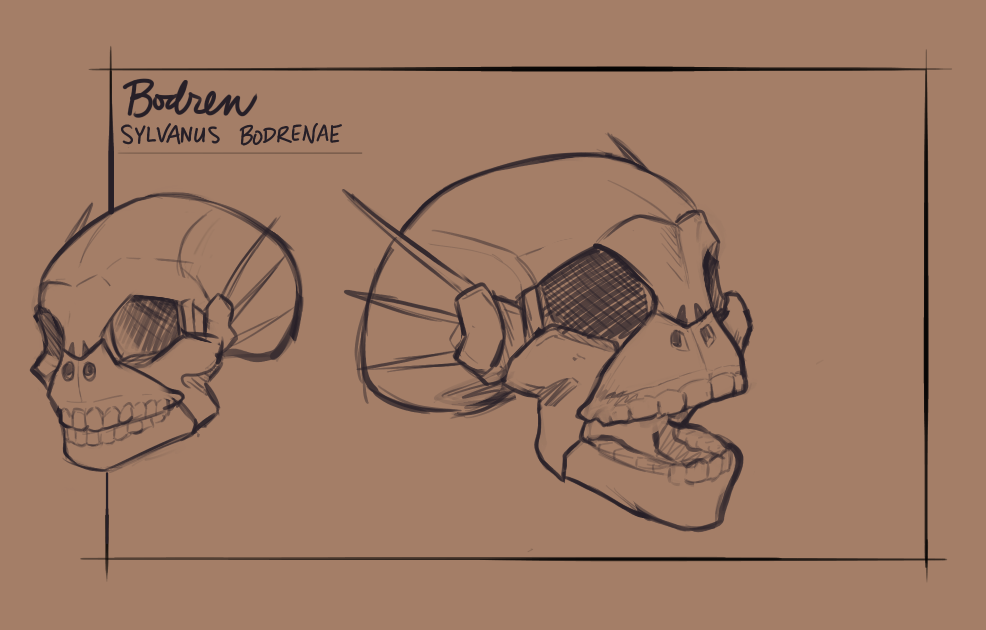
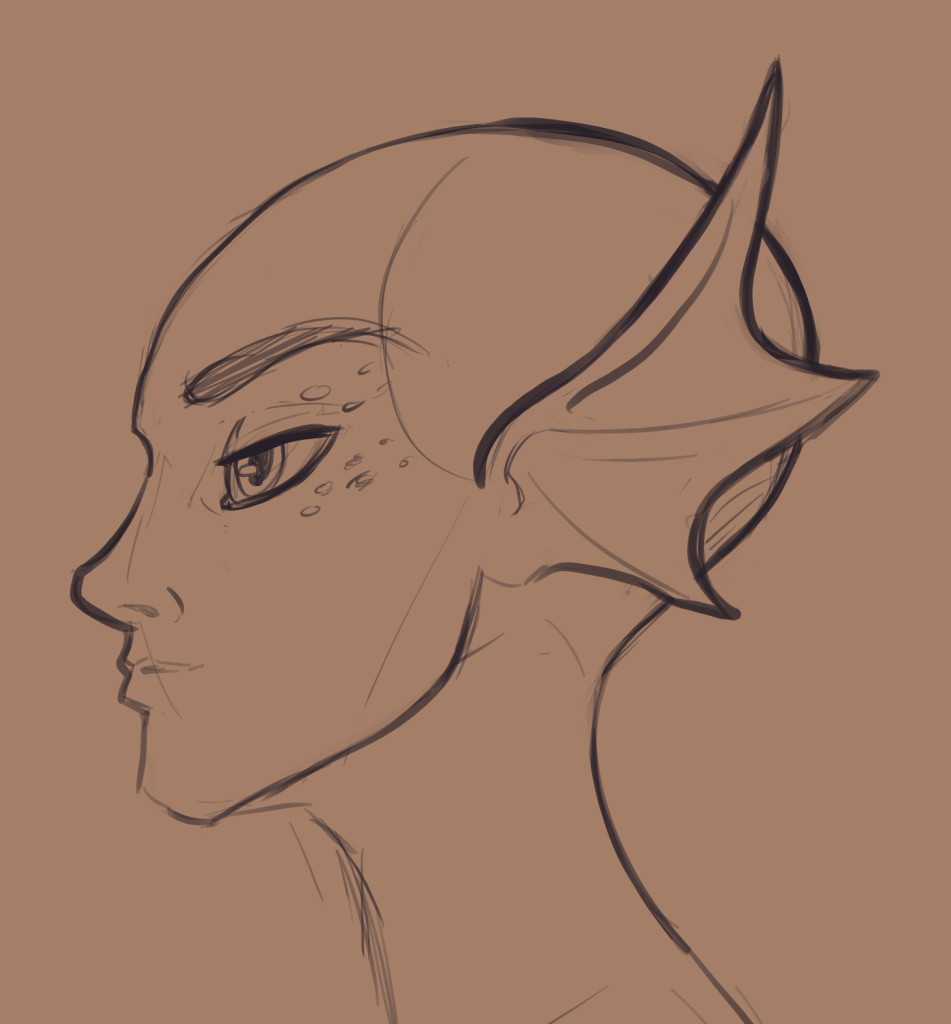
A Bodren’s eyes are typically large, and commonly have a pointed look, especially accentuated on the outer corners. While they do not have a second pair of aquatic lenses, their eyes do seem to be have a naturally-waterproof clear outer membrane.
Ears
Bodren ears typically resemble the fins of a fish, with three or four main spines connected by a webbed membrane.
Some amphibious Bodren have adopted more rounded, frog-foot shaped spines, while other saltwater Bodren have even adopted more decorative fins akin to other fish and aquatic creatures. Most of these ear styles still function to assist with aquatic movement, however.
Noses
Bodren noses are determined mostly by their heritage and lifestyle. Most land-dwellers have developed more humanoid noses that come in a variety of shapes and sizes. Those whose ancestors spent more time underwater likely have shorter, flatter noses. Some Bodren heritage groups even have such flat noses that they appear as simply nostrils on a small bump in their face, even more fish-like in appearance.
Reproduction
Traditional Reproduction
The Beanut Lands does not have half-species for mechanical clarity, but it is possible for some inter-species relations to produce offspring. A person with mixed-species parentage may exhibit physical traits from a parent of another species. If you are interested in this level of customization for your image and story, please be sure to examine the Heritage subgroups to determine which groups your parents come from. You may also use Growth Features during character creation to adjust your mechanics to fit your narrative decisions if you are inclined.
Bodren can procreate through traditional 2-partner reproduction with any other tok species. This includes Faekin and Fangren. They are unable to produce children with Tok or Varian people, and will not exemplify unique traits from those species, unless otherwise noted in a Heritage subgroup.
For inter-species parentage, the following biological rules will always apply:
Bodren + Bodren: a child will always be Bodren, taking their mother’s heritage
Bodren + Faekin: a child will always be Bodren
Bodren + Fangren: a child will be the same species as their mother
Sylvan Aurogenesis
In addition to traditional two-parent procreation, the people of the Sylvan species supergroup (Faekin, Bodren, and Fangren) have a unique connection with the Auric nature of magic in the world. This has given their people the ability to produce offspring through the use of naturally Auric objects. To perform this ritual, known as Aurogenesis, requires at least one Sylvan parent and an appropriate Auric resource with high enough magic to complete the ritual.
For Bodren, the most accepted resources come from legendary-level magical creatures, such as fish scales, pearls, and shells, as well as magical coral and aquatic plants.
 The Beanut Lands