
The Beanut Lands
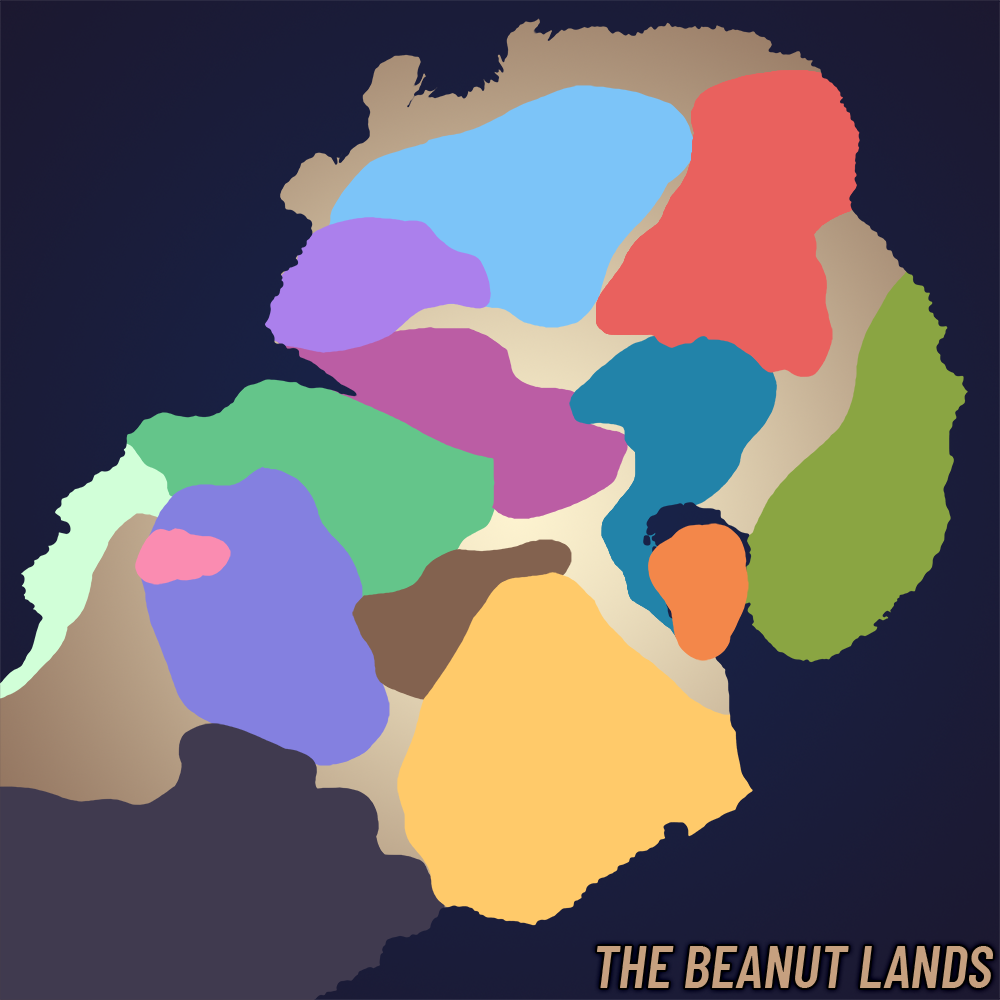
The map here shows the location of the charted territories known as the “Beanut Lands”.
The term “Land” refers to what we on Earth might refer to as “countries” or “nations”. Though these terms would be more familiar to us, it would not be truly accurate to use in this context, as the Lands of the Beanut world are much wilder and far less industrialized. Only a few of the professionally-charted, trade-heavy Lands have even deliberated territorial borders, and even fewer of these Lands have a major desire to enter serious conflicts over such trivial things.
Continue below to see more extensive lore, history, and geographical information about each of the fourteen officially-recognized Lands.
The Imperial Crownlands
The Imperial Crownlands serves as the capital region of the Beanut Queendom, and it houses many of the greatest minds and bodies in the empire who traveled searching for the rich rewards royal appointments can offer. The Imperial Crownlands take up most of the Crown Valley, which is a densely packed taiga, flush with hundred-foot tall pine trees, crystal clear water streams, and the magnificent Great Birds, whose bird leaves serve as the centralized monetary system of the empire. After bringing this alagamation of unorganized, simple village communities together into one larger and organized Land, Eleswynne, the Beanut Queen, began her rule from the Crown City of Altakai at the southern convergence of two mountain ranges.
Major Cultures:
Minor Cultures:

The Harmonious Glen
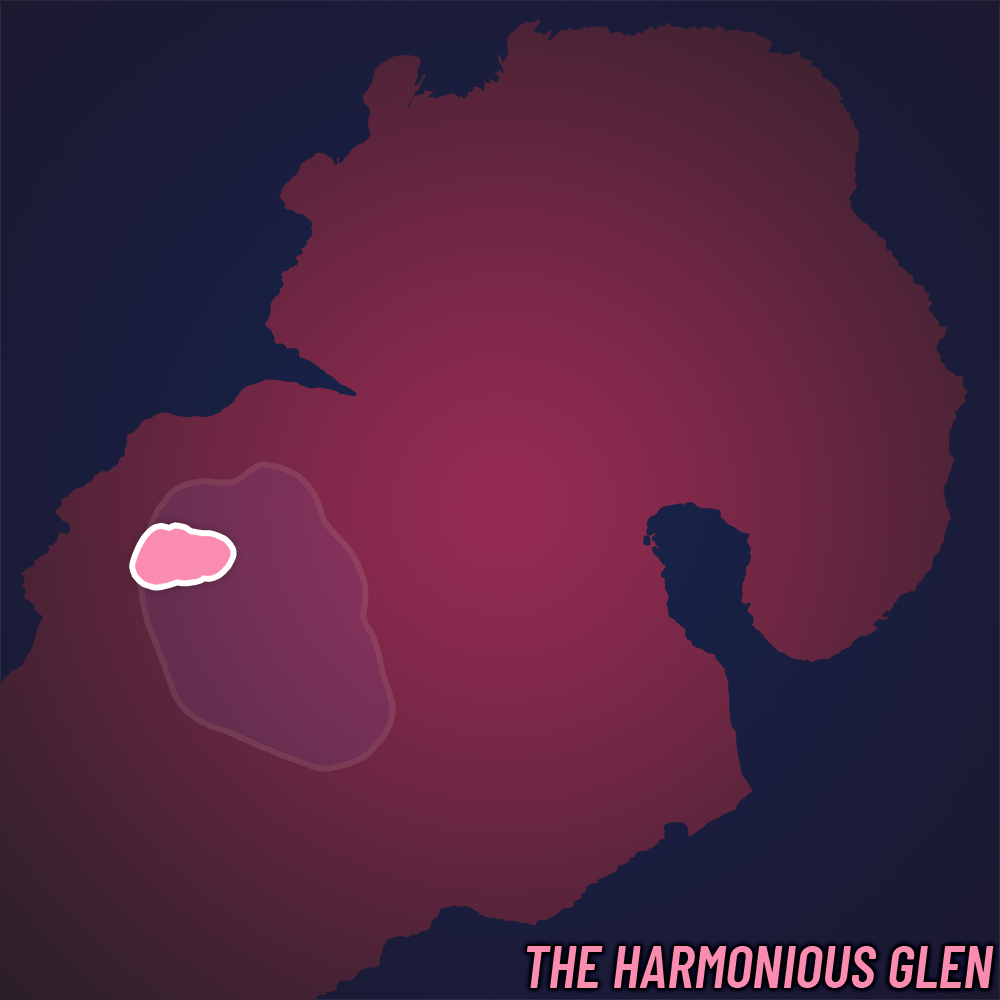
Secreted away on the northwestern edge of the Crown Valley hides what remains of the ancient and magical homeland of the Faekin. Stories can not describe the beauty that is the Glen, a place where both nature and magic, in their purest pristine forms, meld into a perfect harmony. This gorgeous Land was delicately nursed into its awe-inspiring beauty by the Faekin who have lived there since ancient times. Faekin Bards around the world tell the tales of their lives and times in the Glen, inspiring adventurers around the world to take on their own fated journeys. In reality, the Glen is a fraction of the size it once was, with the Imperial Crownlands having annexed a significant portion of its former territory, and the small Land is fairly secluded from outer influence.
Major Culture:
Willonia
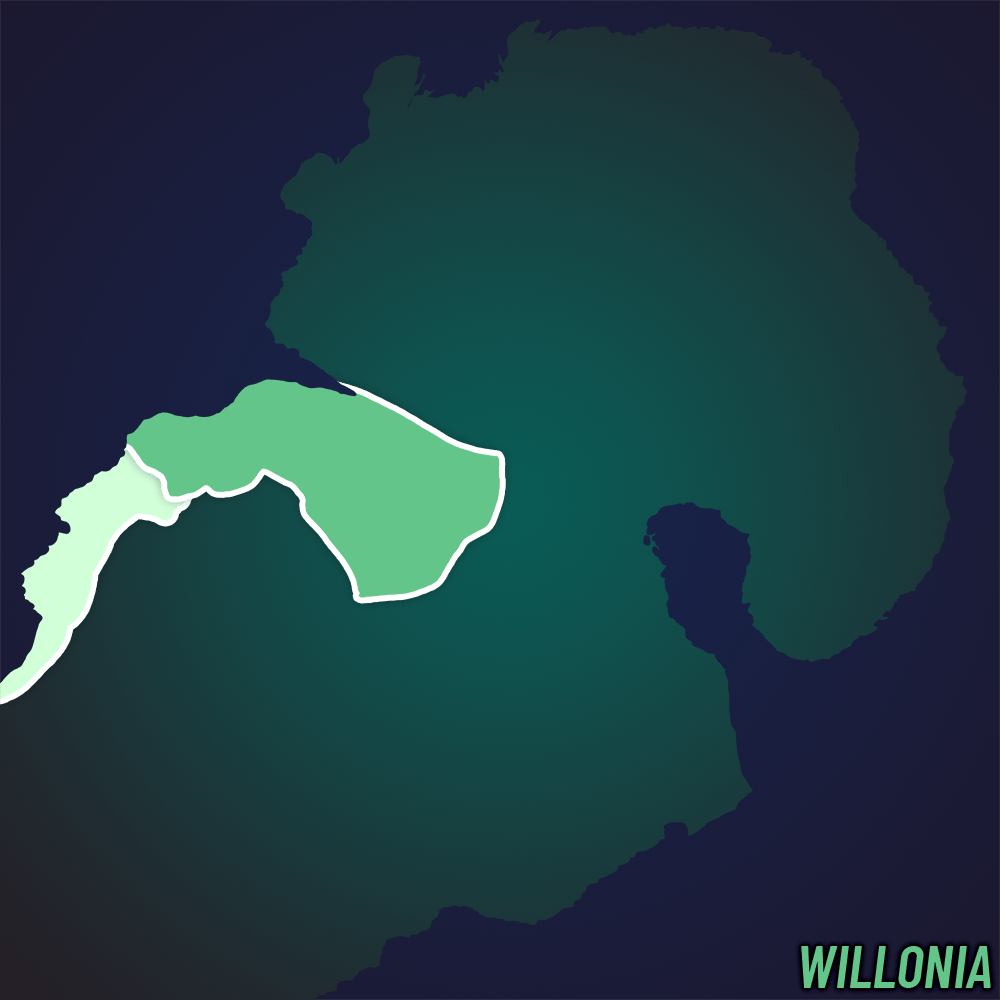
Once a sprawling grassland of great and terrible beasts, this expanse now stands as a symbol of the Willonian world. For centuries the land surrounding this hill was dominated by fierce wildlife, but with the arrival of the Willonians from their distant lands, this untamed crescent made way for the march of progress and civilization. The great city of High Daughton, as well as the major centers of Willonian commerce, Baodet and Shepburg, now stand as symbols of this time of progress but struggle. Sellswords, artists, mages, warriors, and even scholars come together in this centralized trading Land to weave a life unlike any other in the empire. The greatest merchants, nobles, and a rather vivacious religious group live in this bustling community that boasts the most industrially-developed civilized territory in all of the Beanut Lands.
Major Cultures:
Minor Cultures:
Westland
Along the shore lands bordering the northwestern sea are where the original landing settlements of the Willonians, who arrived in the Beanut Lands a mere 500 years prior to the present day. For the most part, these people do not meddle in typical Willonian or Imperial politics, and deign to instead live their lives with focus on provincial, seafaring, and coastal lifestyles. This long, thin region runs from Northern Willonia all the way westward to include the less populated regions around the coastal edge of the Rocky Crown mountains.
Major Culture:
Minor Cultures:
The Heartlands
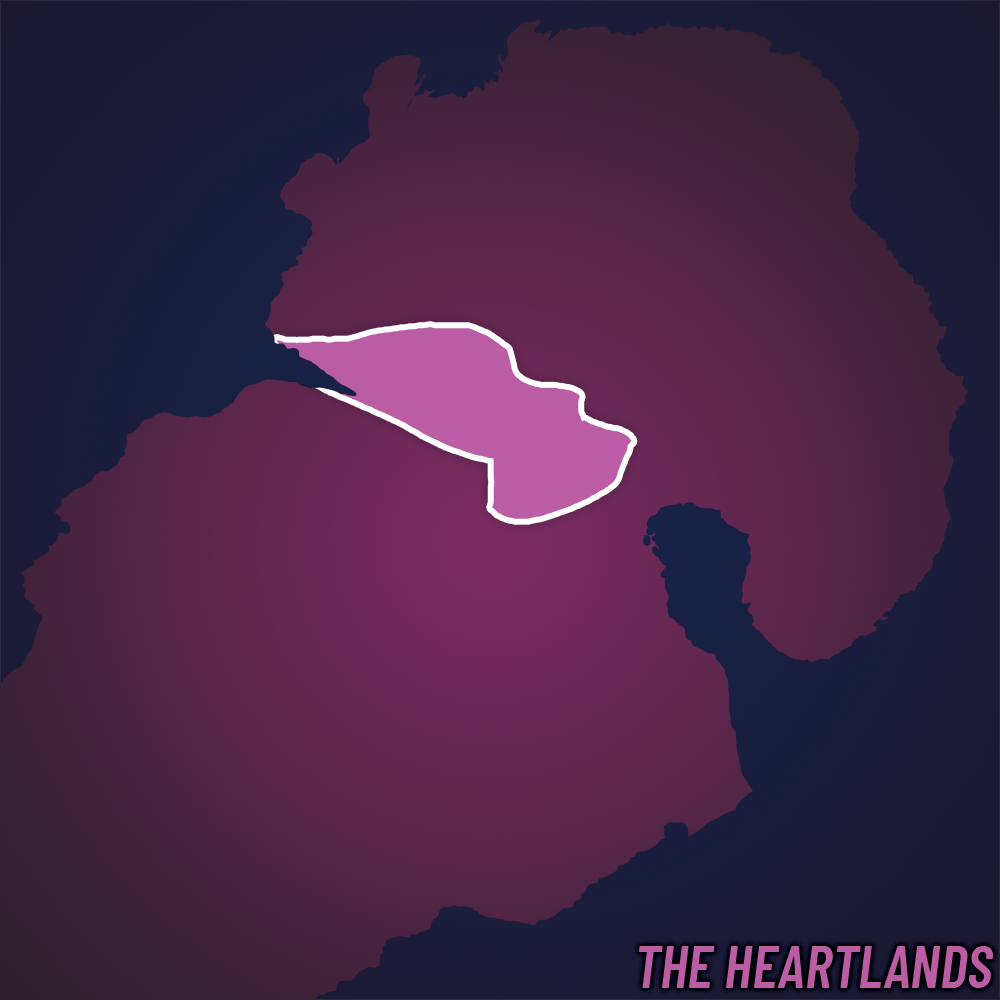
Seated at the center of the Beanut Lands lies the aptly named Heartlands, home to a wide diversity of people and wildlife living in near harmony. Everpetal, the de facto capital of the region, started as a small community of Bodren and Fangren merchants who desired to remain close to their homelands, but needed to widen their clientele, most of whom wouldn’t dare enter the Brittle Bog or Nettle Forest. However, after the establishment of Willonia, Everpetal boomed in population and now is one of the most populous cities in the empire. Due to the diverse influence of the Bodren, Fangren, Hinfolk, Grimkin, and Willonian peoples in this region, the Heartlands have attracted many people looking to live a comfortable life but do not want to live under more restrictive governments. In truth, the laws that pull the most weight in the Heartlands are those that protect the habitats of the continent’s most endangered flora and fauna, many of which may have otherwise suffered under the rapid expansion of the Colonian culture.
Major Cultures:
Minor Cultures:
The Brittle Bog
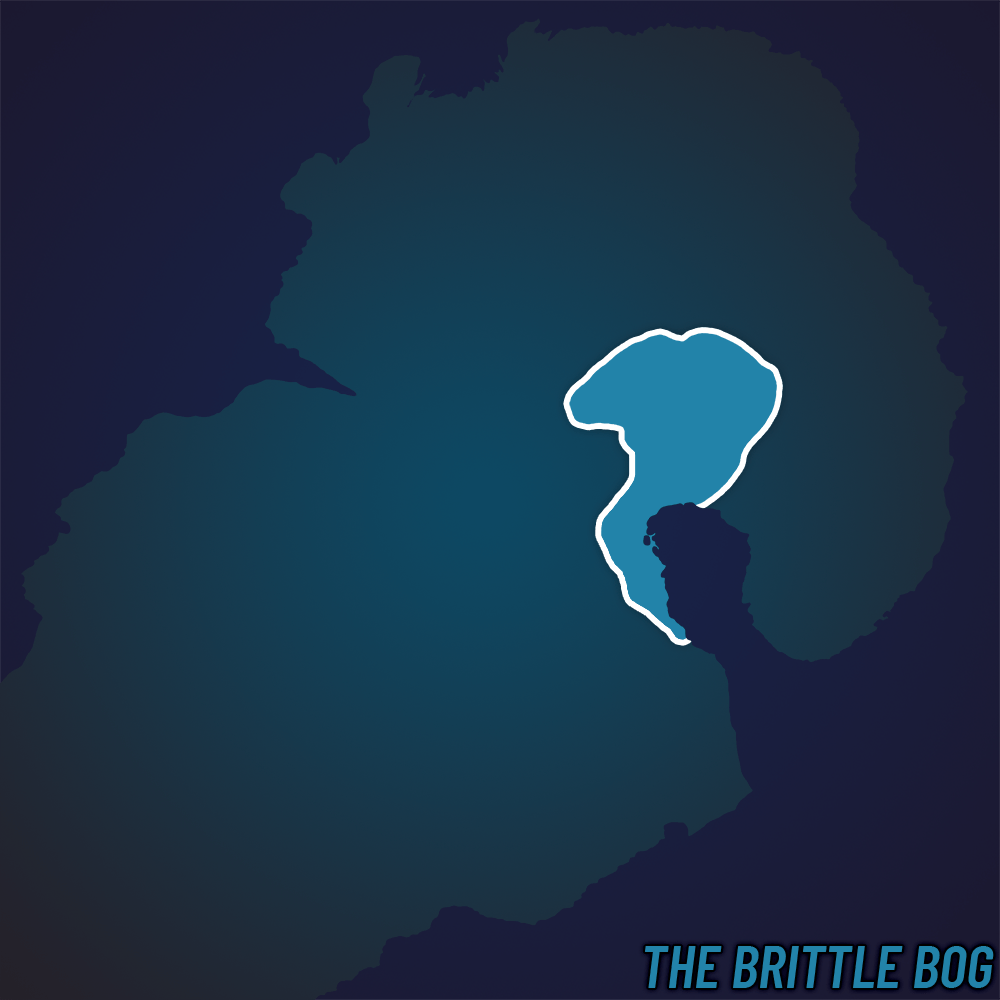
Situated just north of the Brittle Spine mountain range, the Brittle Bog’s land is much more solid on the south and western rims. However, this Land’s primarily muddy and marshy terrain is known for causing more frustration than mystery or excitement. Though it has its share of dangers and treasures, the bog’s reputation is as a pass-through land, rather than a destination for most adventurers. While this land is difficult to traverse and settle, the people of the bog have honed their skills when it comes to natural structures, pushing the boundaries of grown architecture and lifestyle. The people of the Bog have several well-established communities, and though they are not fancy to the eyes of outsiders, they are a unique wonder to behold. Predominantly home to small groups of Sylvan Farmers, Ranchers, Hunters, Mages, and Artisans, the Bog people are often looked down upon for being low-class, but these people are expert naturalists who take care of their own as well as their surroundings.
The Brittle Spine
On the southwestern edge of the Brittle Bay lies the Brittle Spine mountain range, which has historically never been a populated region, but instead has remained charted as the geographic divider of the western industrial New Lands and the Old World to the east. The unstable, fractured earth that makes up the Brittle Spine mountains is wholly unreasonable for establishing permanent structures, and the constant mud and rock slides drive away all but the most determined. While it is nearly deserted, there are still small outposts of Danuvican surface traders, Hydren isolationists, and a small conclave of The Celebrated Order of the Beanut which occupies the Beanut Temple of Determination up in the Spine’s cold, dry peaks.
Major Cultures:
Minor Cultures:
The Nettle Forest
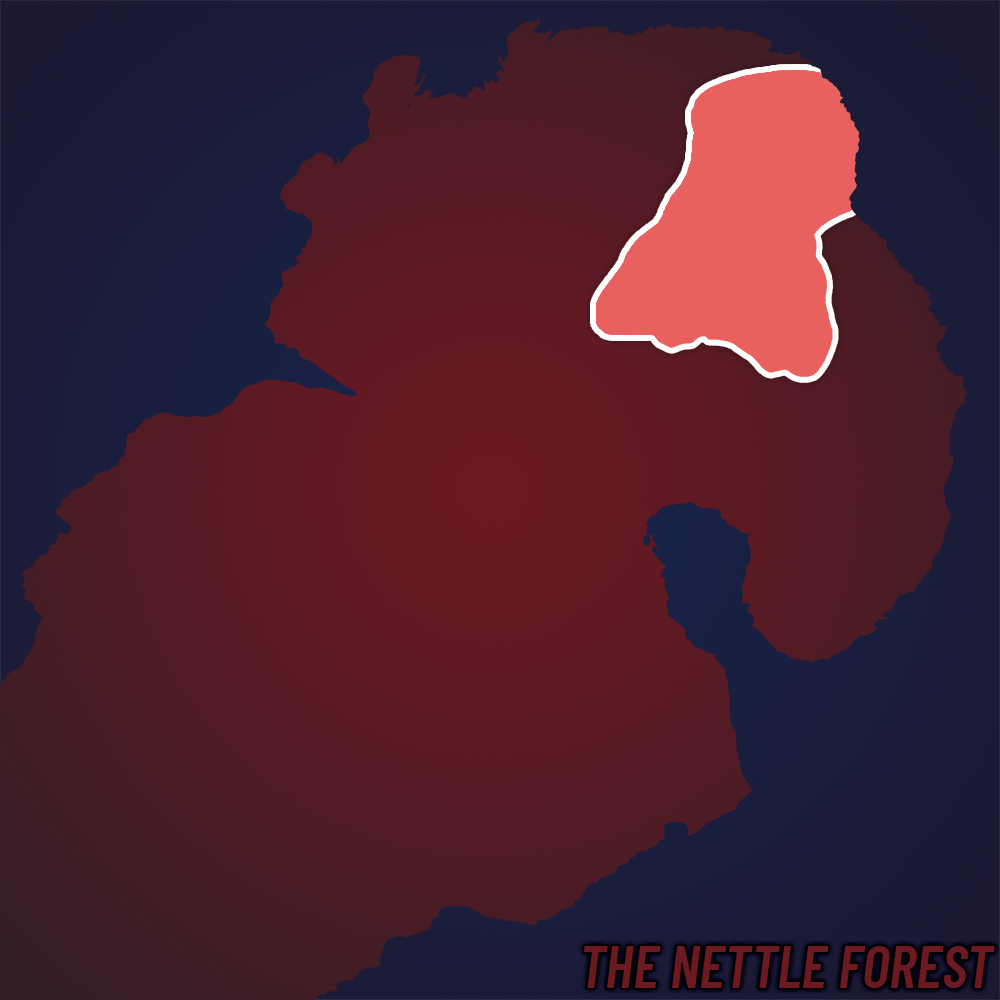
A mysterious, dark wood lies on the northeast border of the Beanut Lands, grown so large that you can hardly see the sky in the height of the day. The forest has never been a safe place to settle down due to the whispers of monstrous plants and walking trees, so any attempts at civilized society were unable to take root. Whether these rumors are true, they are given some credibility by the regular influx of travelers who lose their way venturing under the dim canopy. The forest discourages visitors not only by its poisonous brambles and tricky trails, but its odd people who are known to be as thorny as their homeland. These people seem to have some secret to navigating this land that is irresistible to would-be heroes who are looking to uncover the Nettle Forest’s untold mysteries.
Major Cultures:
Minor Cultures:
The Snowpines
In the northernmost expanse of the Nettle Forest, this was once the outer reaches of the grand Lovalian kingdom, but the Northern Tundra now stands as the last memory and final legacy of the poorly-named, “Penguin Kingdom”. Dominated by blistering cold gales, the flat and featureless wastes offer nothing to those who wander into this forsaken place. Outside of the flocks of white nosed penguins who live in the waters surrounding the coastal regions, only the dwindling remnants of the exiled “Penguin King” and his dynasty survive in the Northern Tundra.
The Bearded Crescent
The Bearded Crescent is composed of fractured remnants of the eastern Loval Mountains. This mountain range, which boasts one of the sharpest altitude changes in the world, separates the Nettle Forest from Lovalia to the west. The prevailing winds that come from the Northern Snowpines region join and strengthen as they whistle wildly through the cliffs, and death is an assured outcome for any amateur climber.
Outside of the native, bearded goats that seem to have the capability to float on these strong winds, most settlers have chosen to circumnavigate these lands regardless of longer journey times. The most gifted Lovalian Monks who have reportedly copied the goats’ talents are storied to live in cliffside nooks, denying themselves all access to the outside world.
Major Cultures:
Minor Cultures:
Lovalia
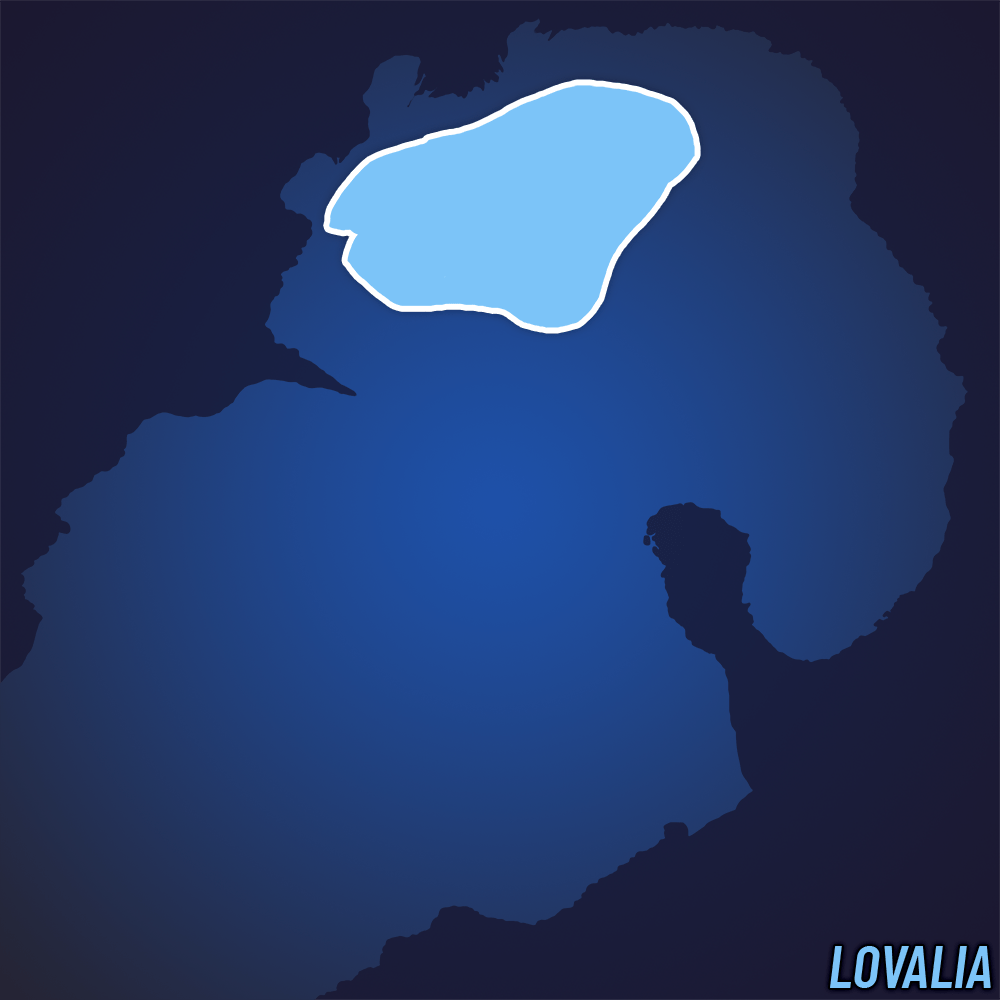
History tells of an ancient feral yeti who threw a tantrum so great that they split a mountain right down the center with their massive fists. One half of the mountain fell down into the Northern Tundra, and the other half still stands today, forming the largest natural structure in the world. The sheer cliff that was created by the destruction, commonly called the Chilly Cliff, acts as a monument towering over the lands below that house a collection of large tribal communities. The once-shining pride of the North, the fallen crown city of Grand Poraval still stands as a shell of its former self, devoid of its once great trade network. Scattered throughout the region, hidden in the hardest to access reaches of the mountains, sit the many Lovalian monasteries that house some of the greatest minds and magics of the empire. A tradition of oneness with the earth and elements and a drive for self-improvement runs strong in the Lovalian people; even those who don’t take to the monastic and druidic lifestyles will find time for missions of improvement. Only the brave however venture out past the protection of the Chilly Cliff, as primeval beasts venture the Wastes beyond.
The White Wastes
Constantly blanketed in endless winter, these treacherous fjords have collectively become known as the White Wastes. Few except the giants call this place home, as the natural terrain is near impossible to traverse during the majority of the year for any “smallfolk”. Great winged beasts flow on winter winds settling roosts high amongst the fjords, inspiring awe amongst the Lovalian people who live south on the high mountains above. Some believe it is the winged beasts themselves that conjure and control the winter storms, fearing one day they may spread out over the greater lands bringing endless storms to the empire. Lovalian Monks who have mastered the art of the winds, may challenge themselves by attempting to conquer the elements of this brutal land.
Major Cultures:
Minor Cultures:
The Grimlands
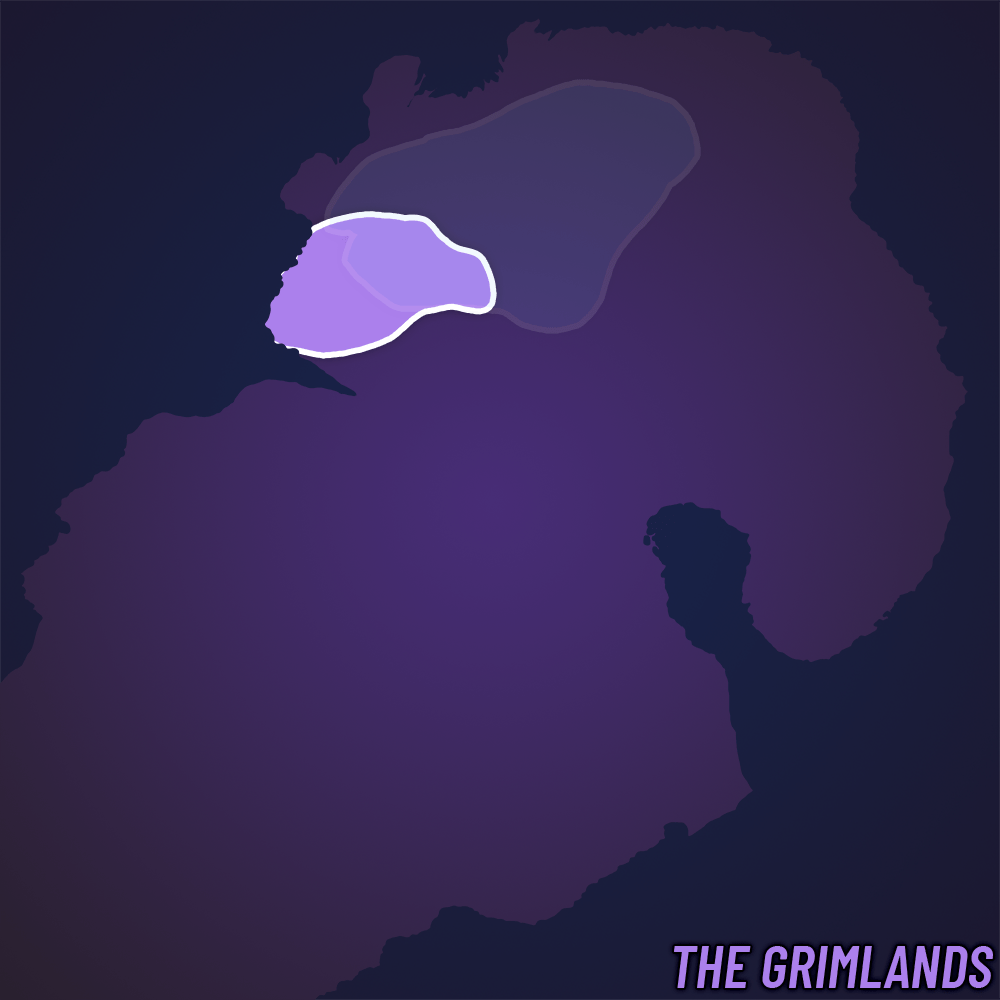
The basalt cliffs of the Grimlands house and hide a diverse and intricate world of caves, karsts, and aquifers. Meticulously sculpted into these subterranean spaces, temples, towns, markets, and aqueducts built by the Grimkin residents adorn the once dreary cave spaces. Significant portions of the Grimlands are not easily navigable, due to both the tight spaces that make up much of the caves and the sheer darkness that permeates them. Despite this, the cliff side cities of Fort Justice and Buckwall welcome folks of all sizes and serves dually as a trading center for the Grimkin living within the lands, and a starting point and resting place for those attempting the treacherous journey to the Beanut Temple of Peace. Blasted by chill winds from the mountains to the north and salty sharp storms from the ocean to the west, the Grimlands spend the majority of the year covered in a layering of semi-frost and glacial freezing. These conditions make any attempts at journeying deeper into the upper caves impossible.
Major Cultures:
Minor Cultures:
Torgalia
Considered the seat of history, the Torgali Jungle is home to some of the oldest surviving ancient cultures and constructions found throughout the empire. The long-time homeland of the Torgali people, the jungle is densely populated but remains rather primal in its existence. The Torgali that live on the jungle floor generally congregate in more open areas, and the large stretches of jungle marshlands that run the lengths of the rivers as they head out to greater waters. With life being a game of survival and challenge, these people maintain their tribal origins and no large scale communities have ever seen long term success. This is more than evident in the many ruins and remains of attempts to create a centralized society throughout the jungle basin. Despite this, amongst the gargantuan and ancient trees of the jungle sit a complex system of towers and bridges that form the canopy culture of Torgali Jungle.
The greatest of these canopy communities sit on the southern shore of the Kartakaum River: The Tangled Towers of Kartakai are comprised of a central massive tower with sky bridge connections to 50 neighboring towers or more, with additions being added to this day. Here, the greatest, and often most respected dynastic civilizations take residence. While by no means a center of organized power, Kartakai serves as a landmark as a site of cultural importance.
Major Cultures:
Minor Cultures:

The Hinlands
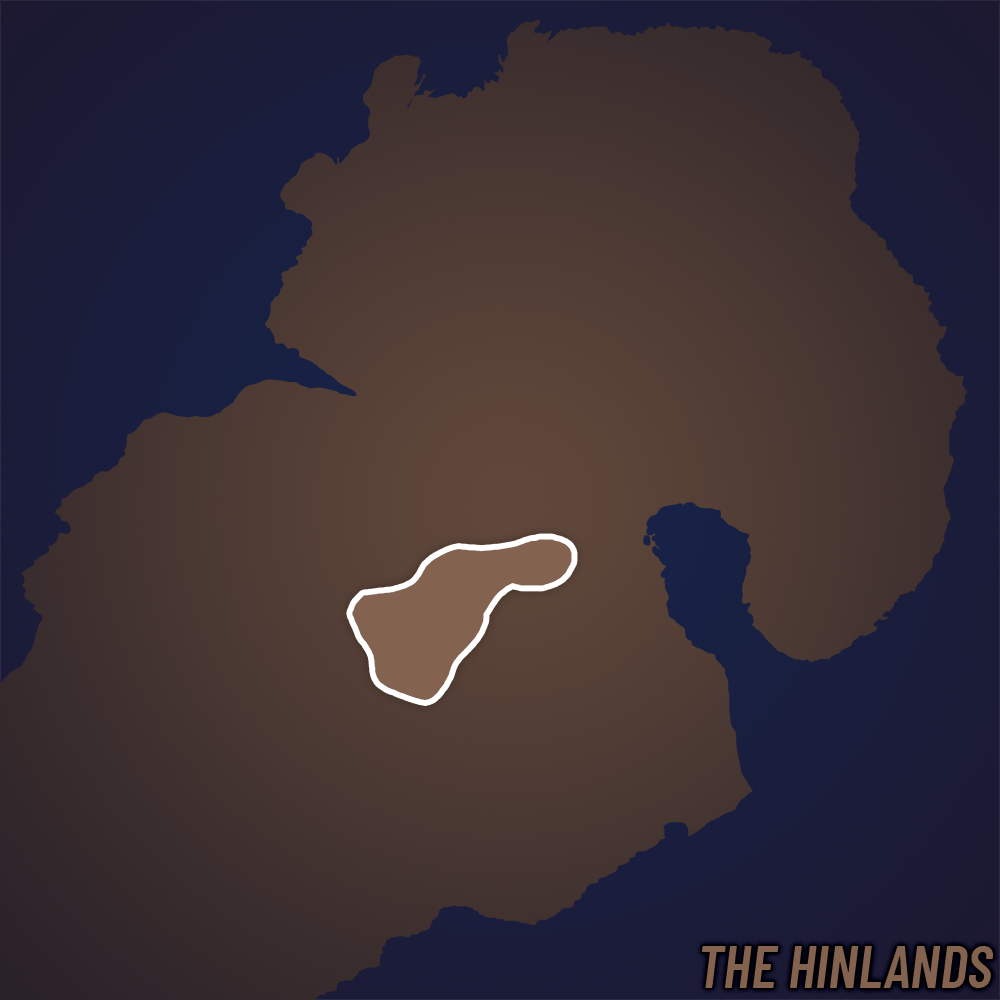
The rolling hills of the Hinlands make up the most historically wealthy lands in the empire, having served as the crossroads of commerce up until the recent rise of Willonia and the Imperial Crownlands. While many Hinfolk take to the wandering lifestyle in foreign lands, as merchants, bards, and teachers, the grand city of Miniopolis serves as a hub for those looking to raise a family in safety, horde their wealth, or those looking for ample warehouse space. All throughout the Hinlands, hidden homes can be found tucked into the landscape, many serving as grazing lands for the smaller creatures that inhabit these lands. Many of these animals are those that escaped the widespread hunting to the north and the harsh conditions of the deserts to the south. The ancient Fae called the land the “Summerlands” as the weather is warm and welcoming, and due to its protected placement rarely sees foul rains, blistering winds, or frigid storms. Few places in the empire have as naturally occurring magics as the Hinlands, and the land’s untainted past has ensured that the magics remain strong, cared for by the many Hinfolk sorcerers that have learned Fae magic.
The Salt Plains of Poshan
The Salt Plains is a lowland valley nestled into the Brittle Spine at the eastern edge of the Hinlands, it is also one of the least populated regions in the world. The first residents of the Salt Plains were Canzian exiles who were sent to this unforgiving land as an act of penance for a variety of crimes. Due to this assumed temporary status, very few ever attempted to establish a permanent residence and communities rarely sprung up in any sense. Offering little of value to any residents, only a small community of hopeful Hinnish merchants ever willfully migrated to the area, establishing the small rural town of Poshan as the center of their salt vending endeavors. As demand for this rare natural salt rose, job opportunities appeared for the exiled Canzians, not only in collecting or manufacturing a product, but as guards and scouts for those harvesting the salt deposits.
Major Cultures:
Minor Cultures:
Canzia
The Desert of Canzia sits at the heart of the Sizzling Sands and is primarily responsible for the region’s name. While known for its harsh and unforgiving climate, the desert is home to many lifeforms both wild and civilized, many centered around the migratory patterns of the “Great Wandering Oasis”. The nomadic town of Canzia that gives the desert its name is one such society. It serves as a centralized trading and holy site for the Canzian People, other nomads, and merchants residing within the Sands. This beautiful oasis that serves as the cultural center of Canzia, is home to a scholarly community of archaeologists, historians, treasure-hunters, and adventurers who all long to uncover new discoveries from the ancient people of the Beanut Lands. Despite the many hardships that come along with surviving within the Desert, the Canzians have found a rewarding and fruitful existence in this challenging climate.
Red Highlands
Sitting just south of the vast Desert of Canzia, rises the rugged Red Highlands, home to many of the region’s most dangerous and vicious creatures. Canzian mythos tells of how the original Torgali settlers of the area followed a pair of Phoenix to the highest peak of the highlands and established their first town, which now serves as the holy gravesite of the “Great Mother”. The temple built at this grave site is also widely known as the Great Temple of Strength, one of the Twelve Beanut Temples of the Pilgrimage. While most of the Canzians have abandoned the highlands for friendlier lands to the north, small communities of devout worshippers and Canzian prize rangers dot the highlands still to this day. Hidden close to the border with the tainted Grave Barrens, nestled neatly into a small valley in the foothills of the Red Highlands, sits the ruins of a once great community, the Rafriac Ruins.
Major Cultures:
Minor Cultures:

Danuvica
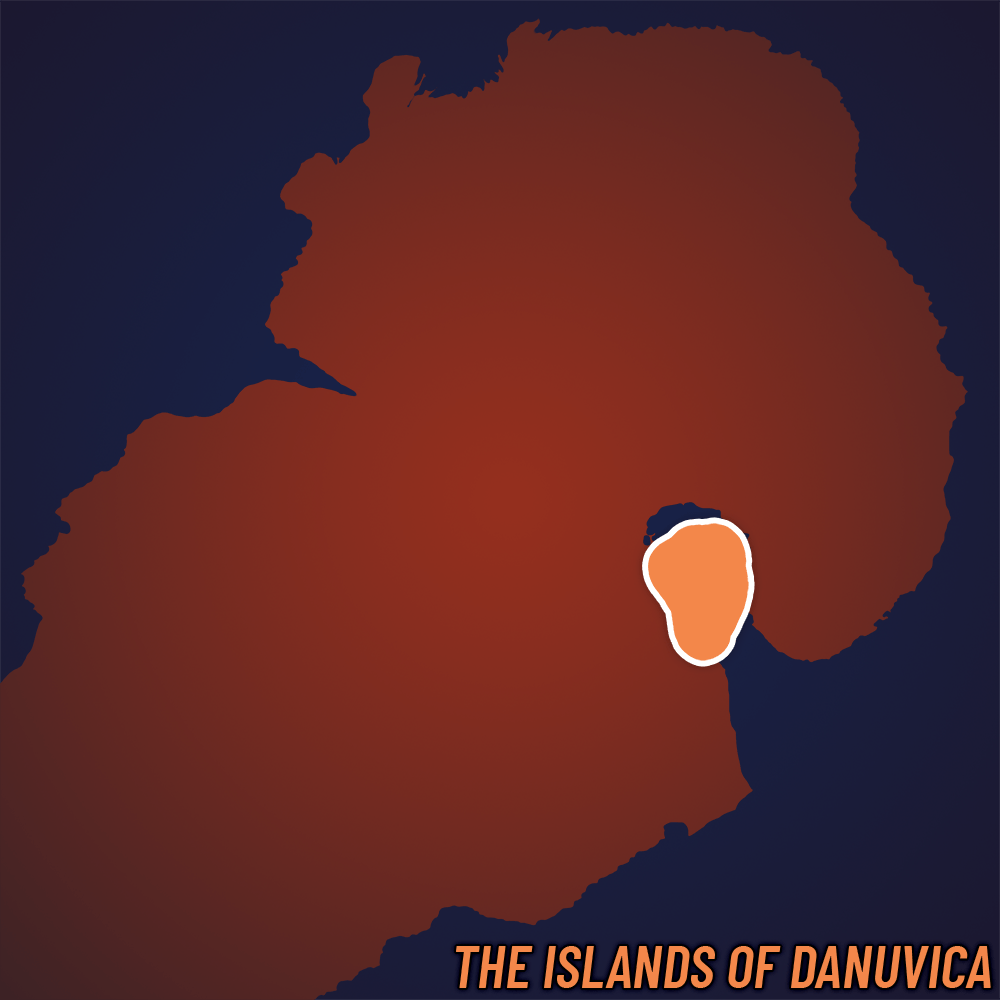
The Forgotten Islands of Danuvica are the most mysterious of all lands within the empire. Once home to an ancient people who disappeared from history entirely, early Tok nomads discovered these floating lands and fell deeply in love with the unknown origins of the ruins. Over just a few generations these Tok people abandoned all aspects of their old lives and subsumed entirely the culture, language, and architecture of this land they called Danuvica, living in and amongst the preserved ruins. They called themselves the Dawi. The island’s focal point and greatest ruin is the Temple of Knowledge; Considered the oldest Beanut Temple in the world, though it was built before the people of the empire even began frequent pilgrimages. It was the discovery of this temple, in fact, that led to the wild growth and construction of the other 11 formal temples around the world. Those who are unfamiliar with the weird ways of the Dawi can be caught starkly off guard when traveling to the islands; the lack of natural gods and idolization of an ancient people, their strange technology, and their unique language leave many other people feeling uncomfortable and weary.
Major Cultures:
The Grave Barrens
Only on the most official of empirical maps does the Grave Barrens even exist, and solely for the reasons of safety and regulation for the surrounding regions. A seemingly endless field of the dead and taboo that stretches to the assumed southern edge of the continent, of the few that know of its existence, even fewer dare to visit. Acting as the disposal ground for the unclaimed and tainted dead from the highly populated Imperial Crownlands, it is a mystery if the land further festered the dead or if their deposits is what caused the chaos in the first place. Whispers tell of a grand and terrifying temple, guarded by half dead Cyclops, animated lava monsters, and the occasional reanimated corpse, the heart of all dark magics is believed to source from the fabled “Temple of the Dead”.
Minor Cultures:

 The Beanut Lands