















DAWI
Eccentrics of the Forgotten Islands
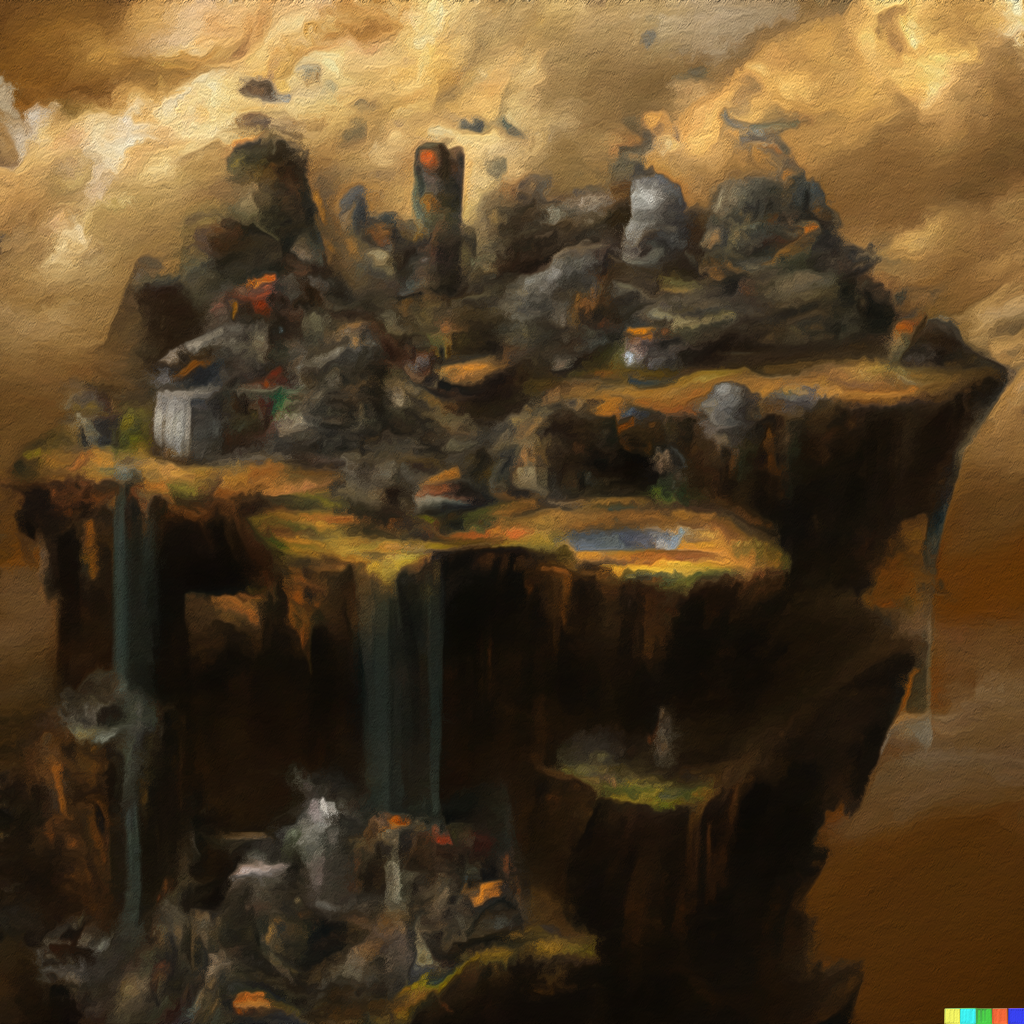
Some time in the past, long before the memory of the Tok people, the landmass to the southwest of the Torgali Jungle was inhabited by a mysterious people whose abilities and wisdoms far surpassed anything the Tok had seen before; even stranger was the mystery behind why this entire region erupted into the sky and what happened to the mysterious inhabitants. A small number of strong-headed and inquisitive Tok people were awed by the mystery of the land and ventured to scale the shattered landmasses to reach the highest floating islands. The islands offered little in terms of natural resources outside of their strange new inhabitants, like the sky bison, gryphons, and a wide variety of flying and gliding marmots; what it did offer in plenty, were the ruins of the previous people, with secrets hidden behind their mysterious language and scripture. Quickly the islands gained notoriety and drew those who were likewise amazed by the remains of the past peoples. Showing great respect and reverence for the ruins, the islanders began to dig into the shattered edges of the islands, building structures and services deep underneath the ruin. Quickly the islands became stratified; the surface ruins and structures occupied mostly by the scholars, archeologists, students, and elected governing members; the island cliff sides and caves occupied by the remaining population of laborers and non working populace, and below the islands hang a complex network of light wooden structures, housing vendors who farm the bay below and the surrounding air streams for various goods.
Over time the residents of the islands began to uncover some of the secrets of the previous people, deciphering and adopting their language, to the best of their capabilities. More importantly, they began to understand the way these people used to live and what brought them to great power. Now calling themselves the Dawi, after what they believe the previous people were called, they committed fully to adopting the lifestyles and ways of their chosen “ancestors”. The most sacred tradition the Dawi adopted was the idea that all good citizens must also be good soldiers. Each citizen member of Davunica, as the islands are known today, is required to serve the cities and their civil forces for up to half a century. This tradition is so ingrained in the Dawi, that even those that have left the islands feel responsible to serve their new homeland in whatever way they can, often as long standing and respected members of a city or royal guard. It is not only the ways of the past people that have transformed the Dawi, but the strange floating islands themselves, that the Dawi have resided on for generations.
They respect the traditions of their clans, tracing their ancestry back to the founding of their most ancient structures in the youth of the world, and don’t abandon those traditions lightly. Unlike most other people of the empire, the Dawi do not revere any gods or spirits, preferring to address the world and its issues with logic and invention. Many Dawi revere their unknown ancestors as some would gods, laboriously devoted to the writings of the past looking for any clues or hints to their glorious history. They have greatly committed to unlocking the secrets of these ancients, and many Dawi commit themselves to the life long pursuit of this knowledge, adopting a monk-like lifestyle denying themselves anything not adopted from these peoples

Preferred Classes

Cleric

Monk

Fighter

Paladin
Alignment
The Dawi are heavily consumed by their personal endeavors and have little energy to expend on societal niceties, leading to a more chaotic existence. Additionally, unless their personal goals lead them down the path of good or evil, most Dawi live a neutral lifestyle unimpeded by the concepts of greater good and evil.
Syntax
pronunciation
noun
plural
adjective
variants
(DAH-wee)
That Dawi is strong.
There are many Dawi.
That is a Dawin artifact.
Attributes
Base Speed
25 feet
Additionally, because of your Dawi Combat Training, you are not slowed while wearing heavy armor.
Attribute Modifiers

+2 Intelligence

+1 Wisdom
Unique Racial Features
Dawin Resilience
Generations of mining, metalworking, and alchemical experimentation have given the Dawi a particularly effective natural resistance to harmful toxins that might enter the bloodstream.
You have advantage on saving throws against poison, and you have resistance against poison damage.
Combat Training
Historically coming from nothing, the Dawi have built up a reputation as a people of both physical strength and intellectual strategy.
You have proficiency with the mace, greatclub, maul, and morningstar, and are not slowed while wearing heavy armor.
Tool Proficiency
Thanks to their Tok ancestry and because of Danuvica’s limited bounty, the Dawi hold resourcefulness and innovative crafting techniques in very high regard.
You gain proficiency with the artisan’s tools of your choice: (Smith’s Tools, Mason Tools, etc…)
Ruincunning
The Dawi are obsessed with ancient history, and discovering any morsel of information is seen as a great advancement for their people.
Whenever you make an Intelligence (History) check related to the origin of ruins, you are considered proficient in the History skill and add double your proficiency bonus to the check, instead of your normal proficiency bonus.
PHYSICALITY
The Dawi have a mysterious and poorly documented history, it is known that they are descendants of the ancient Tok, but they underwent drastic and severe changes after migrating to the “Forgotten Islands”.

Traits and Characteristics

Affected greatly by the wild magnetic and abnormal gravity fields of their homeland, Dawi stand well under 5 feet tall, significantly shorter than their historical ancestors. They are often so broad and compact that they can weigh as much as an adult Colonian, who stands nearly two feet taller. However, Dawi have retained the courage and endurance of the Tok ancestors and are easily a match for any of the larger folk.
Dawi have a wider range of skin tones than most others, ranging from pale tans and pinks to darker chestnuts and mahoganies. Their hair colors are similarly variant, ranging from rose blonde, vibrant red browns, and deep browns and black.
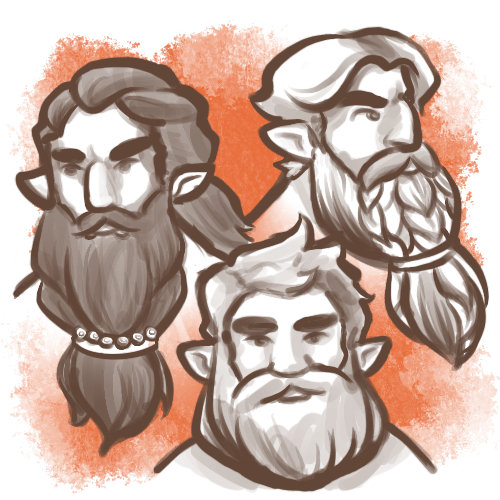
Dawi are often looked upon as eccentric because of some of their unusual fashion particularities that are fairly uncommon for other cultures of the Beanut Lands—or at least to the extent that the Dawi take it.
For instance, hair is often vibrantly dyed and is fashioned with jeweled ornaments, metallic rings, and caps. Techniques like braiding, twisting, and weaving decorative accoutrements into their hair is point of pride for Dawi fashion. Those who are blessed to grow beards can often take it to an especially ostentatious and even competitive level among the elite.
Conversely, those without beards will often express their personalities by a show of piercings on their face and ears, and elsewhere on their bodies. These can range anywhere from simple rings and jeweled studs to extravagant precious metal chains, heavy-weighted hanging ornaments, and even artistic gauged ear, lip, and tongue holes.
Dawi typically wear multilayered yet simply-colored garments. Notably, they accentuate their attire in a manner similar to how they adorn their hair and bodies, embellished with pendants, ribbons, jewels, and in particular, cultural accolades such as academic achievement medals, civic duty badges, esteemed military honors, and rank decorations.
Stature
Size
MEDIUM TOK (Humanoid)
4′ 0″ – 5′ 4″ (122 – 163 cm)
Body Types

240 – 275 lbs
(108 – 125 kg)

175 – 225 lbs
(79- 102 kg)

125 – 175 lbs
(57 – 79 kg)

125 – 150 lbs
(57 – 68 kg)

175 – 225 lbs
(79 – 102 kg)

(unusual)

(unusual)
Age
Adulthood
50 years
Lifespan
400 years
HOME LAND
The “Forgotten” Islands of Danuvica
Island Regions:
Kormitus
Description
Nornvirn
Description
Dagonerus
Description
Marinot
Description
Surface Regions:
The Shattered Bay
Description
The Brittle Spine Mountains
Description
CULTURE GROUPS
Danuvicans
The Danuvicians are the three sister peoples of the major Forgotten Islands of Danuvica. While they are actively part of the Beanut Lands empire, they still maintain the mildly isolationist ways of their people and make little effort to incorporate the outside world into their unique culture and language. They are distinctly grouped based on the Island they inhabit
Nostalgists
The Nostalgists are a pair of isolationist cultures who actively have little to no interaction with the empire.
Adoptists
When the Danuvican Islands joined the Beanut Empire many of the brightest and most inquisitive Dawin minds took advantage of the access to the interland knowledge pools and moved permanently to the many cities of the continent. A people familiar with sinking into a new culture, the adoptists have taken well to the customs and ways of the Imperial life

Danuvicans
Anyone who visits the strange islands of Danuvica can confirm the mystery and appeal felt in its presence, unlike any other place on the continent and unfamiliar in its geographic construction; one can get lost in the network of magic and engineering that keep the islands in the state they remain today. The islands are generally split into three divisions: the lower islands, focused around the industrial powerhouse of Dagonerus; the central islands, with the market capital island of Nornvirn serving as its nexus; and the high islands, with Kormitus standing as the defecto capital of Danuvica itself, serving as the largest island by both size and population. Only the strange singular island of Marinot, who have maintained a mostly isolationist standing, sits higher than Kormitus, and the two have wrestled for historical supremacy for many generations.

Physical Distinctions:
Kormites
Pronunciation: [CORE-mights]
Locale: Kormitus Island of Danuvica
Kormitus residents, the largest and most populous of the Danivica Islands, includes many of the smaller islands surrounding. They are very focused around the discovery of newer relics and their hidden knowledge, including constant research on their discovered temple. Was the first communtiy established.
Clothing and Style
description
Physical Distinctions:
Nornites
Pronunciation: [NOR-nights]
Locale: Nornvirn Island of Danuvica
The ‘Floating Markets’ of Nornvirn Island are a sight to be seen for any who search for the unknown or obscured knowledges; here the greatest of Danuvican adventures, discoverers, pirates, and treasure hunters display the majesty of the ancient world through the relics, literatures, and ancient baubles that cover every inch of the islands interconnecting bridges. Much like its neighboring islands, Nornvirn is more a collective of islands that have tied their allegiances to the primary island of Nornvirn. Standing as the largest island in the mid-sky,
Clothing and Style
description
Physical Distinctions:
Dagonites
Pronunciation: [DAG-o-nights]
Locale: Dagonerus Island of Danuvica
coming soon
Clothing and Style
description
Physical Distinctions:
Jibomites
Pronunciation: [ji-BOM-mights]
Locale: The Shattered Bay, The Brittle Spine, and the southern Mylovian Fen of the Brittle Bog
The collection of Dawin expats that live in the Mylovian Fen of the Brittle Bog, searching for hidden ruins amongst the watery regions surrounding the city. Also includes the Dawin of the Shattered Bay, the Brittle Spine mountains and the various coves and lagoons between them, a region they rediscovered after exploring the dangerous abandoned mines of Old Jibomi.
Clothing and Style
description
Danuvican Stats
Subgroups
Kormites
Nornites
Dagonites
Jibomites
Preferred Classes
Cleric
Monk
Danuvican Languages
Known
You have spent most of your life on the Islands, and so your native language is Dawin. However, studying history and other intellectual pursuits is of high importance, and you are proficient in Common, though it is a secondary language. Additionally, you are familiar enough with basic communication in both the sister languages of Tok and Loval, though you can not read or write in either.
[3] Native:
[2] Studied:
Learnable
Danuvican Unique Feature
Inquisitive Outlook
The Danuvicans are a curious people and they question even simple things more seriously than most other cultures
You gain proficiency in the Investigation skill, and may double your proficiency bonus on all Investigation skill checks.
Nostalgists
The Nostalgists distinguish themselves from the rest of Dawin society through one simple intention, the distinct distaste in forming a new unified world under a “foreign” banner, regardless of the perceived advantages. In every other way they are nearly indistinguishable from a Danuvican, but their obsessive commitment and devotion to unlocking the secrets of the past leaves little room for any other lofty endeavors. Turning sharply from any greater collaboration, the Nostalgists can really only be found in two places, the isolationist island of Marinot and the desolate wastes of the Grave Barrens, which likewise stand as the only two regions of the greater Beanut Lands to remain truly unincorporated.
Physical Distinctions:
Marinites
Pronunciation: [MAIR-en-nights]
Locale: Marinot Island of Danuvica
Residents of the small island of Marinot, the island is the sole region of Danuvica that did not accept inclusion in the Beanut Empire. The island is historically important as the key site responsible for the translation and discovery of the Dawin Language
Clothing and Style
description
Physical Distinctions:
Barrenites
Locale: The Grave Barrens and surrounding areas
The group of educational extremists that survive the dangers of the Grave Barrens in search of new knowledge
Clothing and Style
description
Nostalgist Stats
Subgroups
Marinites
Barrenites
Preferred Classes
Cleric
Fighter
Nostalgist Languages
Known
Language is a barrier to knowledge that no Nostalgist would allow to hold them back. Your native language is Dawi, but you are also fluent in Common, though not to the same level as a native speaker. You can communicate at a basic level in both Tok and its sister language, Loval, but can not read or write in either, unless you have studied it further. Because of your dedication to language studies, you also begin with 2 Language Points.
[3] Native:
[2] Studied:
Learnable
Nostalgist Unique Feature
Isolated Community
The Nostalgists are exclusive in most aspects but maintain ancient prescribed knowledge.
Attribute modifiers:
+1 Intelligence
+1 Wisdom

-4 Charisma
Adoptists
Physical Distinctions:
Locale: Various Locations
With renewed and reinforced access to a great world of ideas and cultures, many of the Dawin that studied and focused on distant texts and practices saw opportunity in the new united lands. Chasing their scholastic fancies to the edges of the continent, the Dawin flooded into the world, and were often accepted with open arms. While their expansive knowledges and fabrication techniques were a great boon to many cities, it was their rapid adoption of local practices and broad sense of having a deep pride and commitment to one’s own home that saw a wave of social cooperation break through in many cities overflowing from an influx of new citizens. While representing a small population, many of these early Adoptists played pivotal roles in the social cohesion of large cities; looking past race, religion, and standing to view each other as neighbors and friends who, together through hard work and devotion, will work to elevate all.
Clothing and Style
description
Adoptist Stats
Preferred Classes
Cleric
Paladin
Adoptist Languages
Known
As a Dawi of the world, you are bilingual, natively speaking both Dawin, the language of your ancestral homeland, and Common You can communicate at a basic level in both Tok and its sister language, Loval, but can not read or write in either.
[3] Native:
[2] Studied:
Learnable
Adoptist Unique Feature
Armored Citizen
Adoptists cling tightly to the ideals of a good citizen being a good soldier.
You may gain any one Armor Proficiency, and gain a +1 bonus while wearing armor of that class.
Naming Traditions
The Dawi are extremely traditionalist in their naming conventions and rarely stray from classic Dawin names. Interestingly, they have no linguistic gender preference, so Dawi of both sexes often share names.
Traditional First Names:
Adelmar, Albera, Bellinn, Branlin, Brumdin, Dagruna, Darmi, Esmira, Faldora, Gemnys, Griseld, Helg, Ildra, Joruna, Keldan, Lorma, Maelis, Melmi, Nalbera, Nalda, Orinn, Primara, Ragthrun, Ragna, Regdah, Sif, Thora, Tydahr, Tykam, Ursul, Valeska, Wandim, Xandra, Yrven, Zara.
Traditional Family Names:
Adrik, Baldrin, Buhak, Bumnirek, Dain, Dunhork, Eberk, Fargrim, Galdan, Glafdar, Glimli, Gromnack, Hargrim, Ingrim, Jorunn, Krag, Lolbrirk, Lodin, Mobrurr, Morgrim, Norin, Orin, Pikel, Ragni, Sten, Stokith, Thrumnir, Tunhann, Ulfar, Vondal, Wulfgar, Xandar, Yurim, Zanar.
 The Beanut Lands