















CANZIAN
Survivalists of the Sizzling Sands
Many say that Canzians resemble the grassland and desert cats with whom they share their Land. Scholars and storytellers alike have posed the theory that the first Tok who migrated to The Sizzling Sands were a small sect of Ma-Pak-Kura animists who had already taken on many of their jungle cat characteristics, and natural selection simply favored these traits. It can not be proven, however, as the Canzians never developed their own unique language or records the way their Lovalian brethren did.
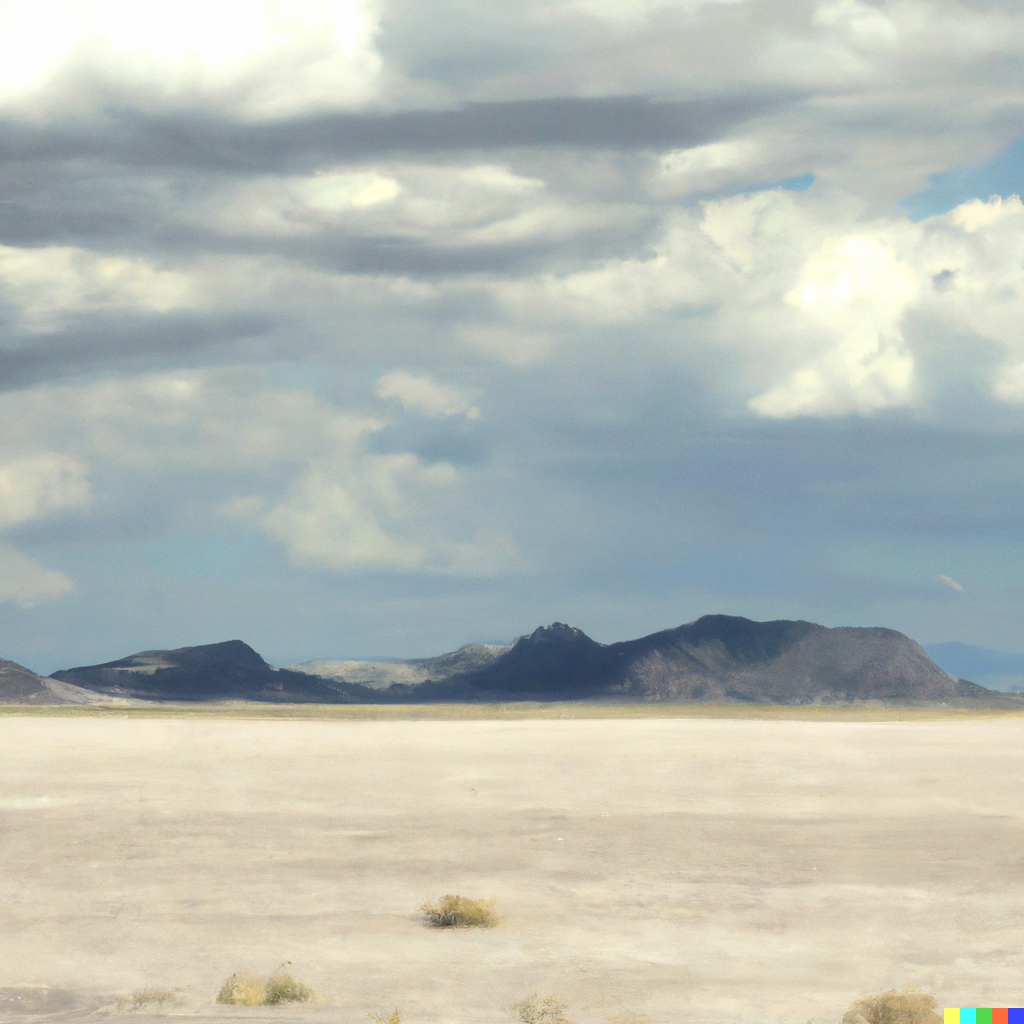
The Canzians are a historical fracture tribe of the original Tok clans, who set out looking for a new homeland after a period of turbulent times. Much like their Lovalian brethren (who ventured north) the Canzians set out west across a vast bay and established themselves in the coastal regions of the “Sizzling Sands”, developing new talents and cultures starkly different from their shared ancestors.
Canzians primarily live nomadic lifestyles, most commonly pastoral or mercantile, and frequently follow the natural migratory patterns of the local grazing wildlife. Most Canzians also follow a strict matrilineal society, leading back to their origins under the guardianship of the ‘Great Mother’, children adopt the clan names of their mothers, and the females of the clan most frequently fulfill the roles of leadership and education within larger clans. Acting as the ultimate and final voice within the clan, Clan Mothers are often selected for their modesty, wisdom, and temperance; traits like ambition and strength, while worthwhile, often lead to conflict and struggle against other clans.
They live life based around their family clans. Elders are respected for not only the wise words but also their wide range of experiences life has offered them. This respect even extends to the dead, who are revered as the wisest and most learned individuals of the clan. Ancestor worship extends all the way back to the ‘Great Mother’ herself and her burial site is regarded as the most holy place for the Canzians.
Trust and truthfulness are highly regarded by the Canzians and breaches of either of these within a tribe can result in strict punishment. Often resulting in acts of penance, the greatest of these punishments include temporary exile from a tribe for an extended period of self reflection and penance. The Canzians are not as forgiving when it comes to violent crimes, especially acts of murder. Traditionally, clan leaders greatly fear the further actions of this individual, not only the pain they may bring others, but the disrespect they will bring to the clan itself; these crimes almost always result in forced servitude under the clan leader, with little to no chance of ever changing your standing. Most Canzians rarely venture into the greater world having all they need in their hostile but rewarding homeland and knowing the treachery of strangers. Despite this fact, Canzians are widely regarded as welcome in foreign lands, their good-natured being and tendencies towards truthfulness and honesty lead them to being highly desired bodyguards and advisors.
Syntax
pronunciation
noun
plural
adjective
variants
(CAN-zee-ən)
That Canzian is strong.
There are many Canzians.
That is a Canzian artifact.
Southerners, Southlanders
PHYSICALITY

Physical Traits
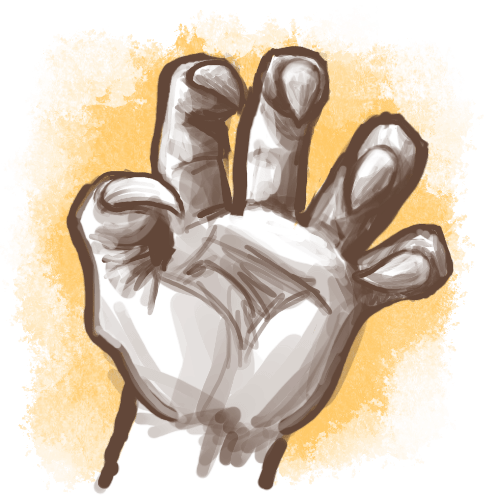
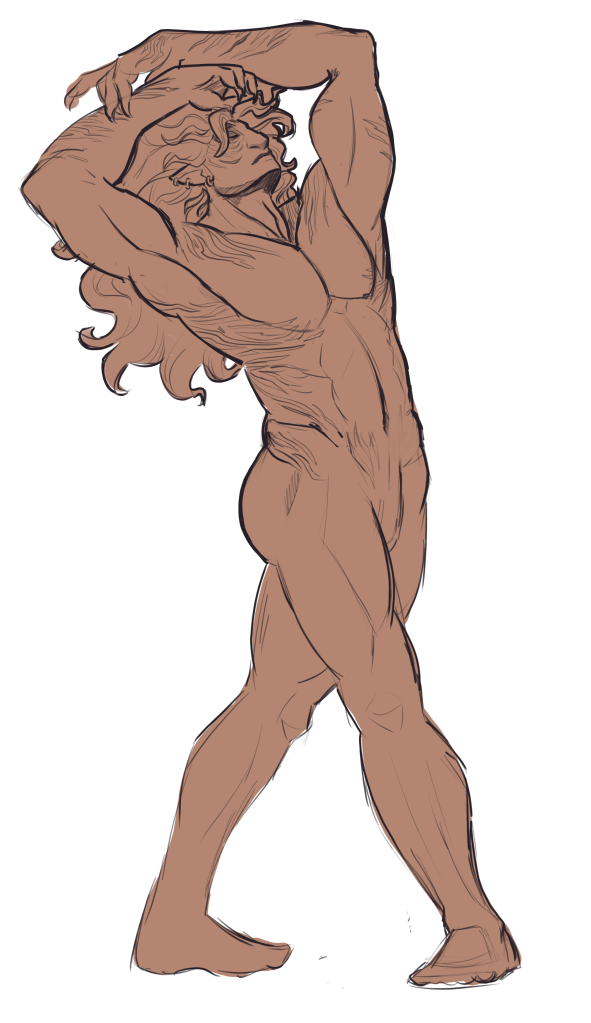
Canzians are typically over 6 feet tall, with many of the females standing over 7 feet. Thinner and more sleek than the Torgali, Canzians have developed many characteristics of the natural environment around them, most common in their sharp claw-like hands. These claws not only aid in hunting but in climbing the scarce but densely branched trees, allowing the Canzians to escape the brutal baking sun but to also allow for safety during rest from scavengers and hunting animals alike. Additionally men typically develop thick manes that run the length of their torso, aiding in protection from the sun.
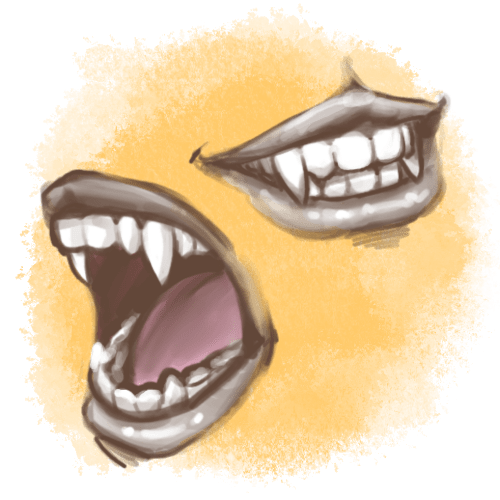
While they have retained a remnant of their Tok fangs, Canzian fangs are not quite as hardy, having developed into thin, elongated upper canines instead. Canzians are a visually diverse group, their hair and skin tones can range from soft tans and yellows to vibrant wild reds, oranges, and browns. Typically, their appearance will be tied heavily to the major nomadic lands their clan migrate to regularly. Some tribes even develop spots and patterning on their skin that aid in camouflage and identification amongst the greater Canzian people.
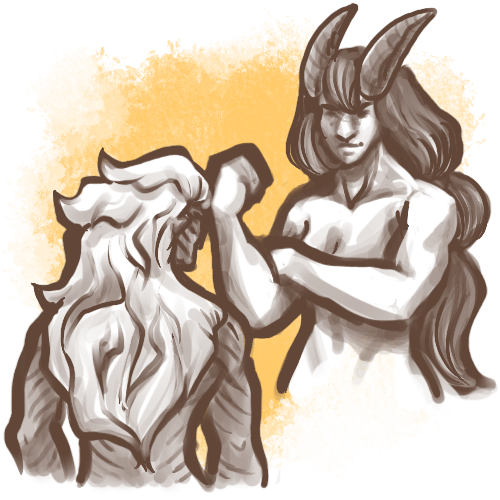
Upon reaching adulthood, some Canzian females will begin to grow a pair of majestic horns that serve as a remarkable testament to their heritage and way of life. These magnificent horns, which vary in size and shape, capture the essence of the Canzian lineage and reflect the diverse influences of their unique upbringing. For certain tribes, these horns are not simply a physical trait but rather a profound connection to The Great Mother of the Canzians herself, embodying the sacred bond between womanhood and divine power. In other groups, these regal horns symbolize the innate qualities of a natural-born leader, serving as an undeniable emblem of wisdom, strength, and guidance. Regardless of their clanship, any Canzian females with horns walk proudly, embodying their rich ancestry.
For more specific details on the different horn shapes and sizes for each region, see the Culture Group sections below.
Stature
Size
MEDIUM TOK (Male at Birth)
5′ 8″ – 6′ 10″ ()
LARGE TOK (Female at Birth)
6′ 6″ – 9′ 0″ ()
Body Types


(unusual)


(unusual)


(unusual)


(unusual)


175 – 225 lbs
(79 – 102 kg)

200 – 260 lbs
(91 – 118 kg)


120 – 150 lbs
(54 – 68 kg)


140 – 175 lbs
(64 – 79 kg)


140 – 200 lbs
(64 – 79 kg)
A character’s stature is not purely for roleplaying. In many instances, your height and weight can and will have mechanical implications. The character’s body type, however, is mainly for visual storytelling and narrative purposes.
Age
Much like their Primal Tok ancestors, Canzians have relatively similar lifespans to humans, reaching maturity around 14 years of age.
Adulthood
12 – 16 years
Lifespan
75 years
HOME LAND
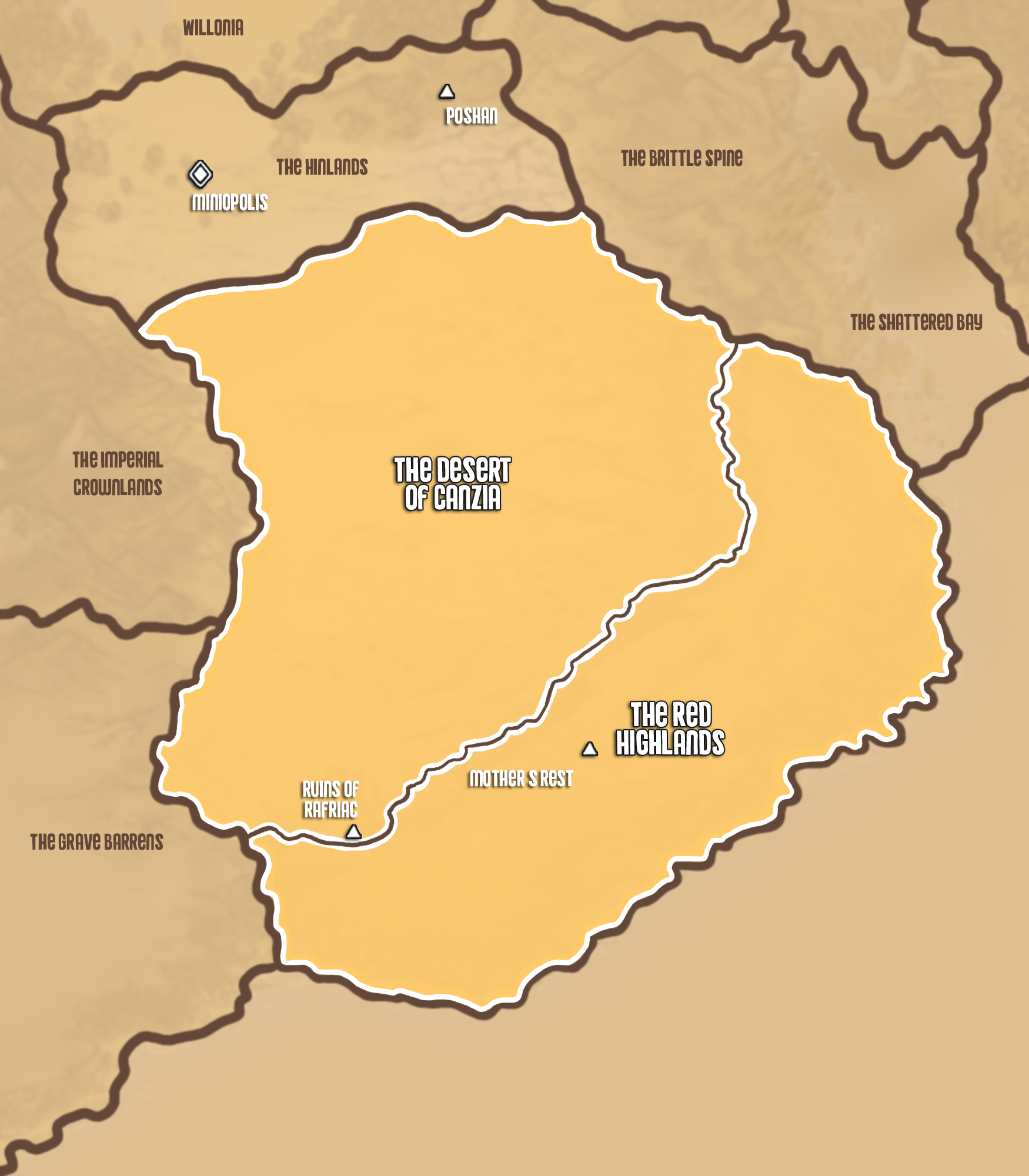
Canzia
Description
The Desert of Canzia
description
The Red Highlands
description
for more detailed information, visit the
Sizzling Sands page coming soon…
CULTURE GROUPS
Oasins
This group represents the vast majority of the Canzian people and consists primarily of pastoral, mercantile, and theocratic nomads of the Deserts of Canzia.
Mkase
The tribes who are often considered the ‘traditionalists’ of the Canzians, they have dedicated themselves to maintaining their ancestral holy sites in the southern Highlands.
Ukamimba
more info coming soon

Oasins
A few generations after the passing of the ‘Great Mother’ the ancestral lands of the Canzians came under rough circumstance, suffering great droughts, earthquakes, and landslides. Seeing this as a warning from the land itself, the majority of the Canzian clans moved from the turbulent highlands to the passive desert below. The migration over many generations led to the divergence of a new people, who have come to be known as Oasins. The Oasins make up the majority of the modern Canzian people, inhabiting the mysterious but strangely beautiful Deserts of Canzia. They, of all Canzians, stick most firmly to the ancestral ways of matriarchal migratory clanship. These clans now make a practice, for cultural, religious, and mercantile reasons, of following the migratory pattern of the ‘Wandering Oasis’ as it transitions about around the desert. Rarely living a life of luxury, it is common for Oasins to be thinner and leaner on average, due to their highly active lifestyles and their respect for food as a necessity.
Canzi
Physical Distinctions:
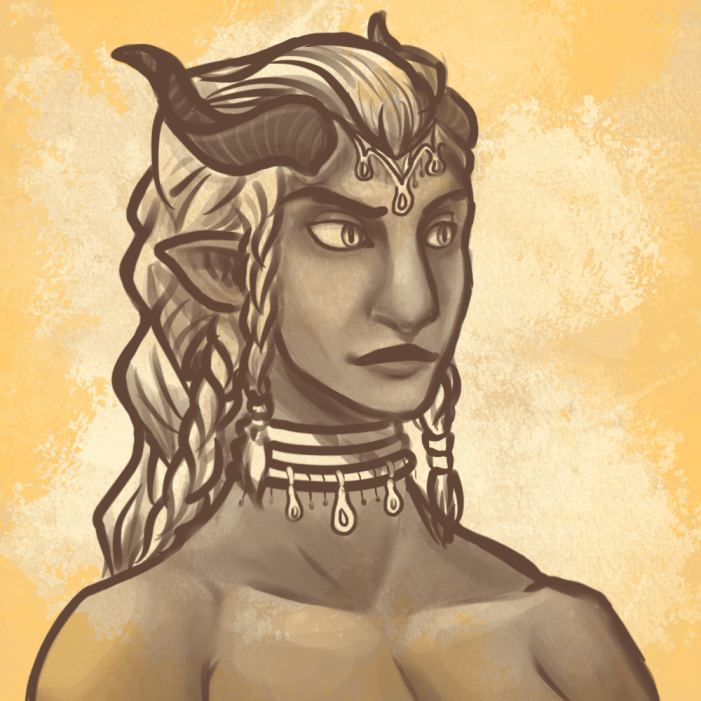
Regular exposure to the harsh desert sun has caused their complexions to be darker tones from tan to dark brown. Their hair is typically a lighter color. Manes are not as common, but they are not rare. All Canzi still develop very thick and full hair that runs a little further down their necks than other races. Occasionally you will see a Canzi with subtle, striped markings on their skin.
Females who grow horns sport ones that are very long and spiraled, much like an Eland, Angora, or Hartebeest.
Pronunciation: [KAHN-zee]
Locale: The Wandering Oasis, the Desert of Canzia
The Canzi are what most outsiders think of when imagining a Canzian, making up the majority of not only the Oasins, but the Canzian people all together. For most Canzi, their lives and migratory patterns are dominated by the ‘Wandering Oasis’, a holy site for the Canzian people. The Canzi make up some of the greatest artisans, artists, and thinkers in the Beanut Lands, committing the majority of their time to learning the crafts and ways of their family of tribe.
On the whole, Canzi clans frequently have a large herding population, who support the whole tribe, so they can survive in the harsher seasons. The Canzi tribes have developed rich collective cultures within their nightlife, and take the opportunity to show off and display this culture at any and all tribal meetings, be it a lowly market exchange or hallowed religious gathering.
While they have a strong spiritual connection to the traditions of their ancestors, as those are the reason they are still alive and active as a people to this day, the Canzi don’t put as much importance on the “blind faith” importance of traditional lifestyles, like many of the other Canzian tribes. Like many of their people, Canzi leadership usually passes through a long held matrilineal lineage. This is most likely because of their close relationship to their neighboring sister-tribes of Cerrans, who are more traditionalist, but the Canzi are far more open-minded to the progression of their people’s culture so they can adapt to the times.

Clothing and Style
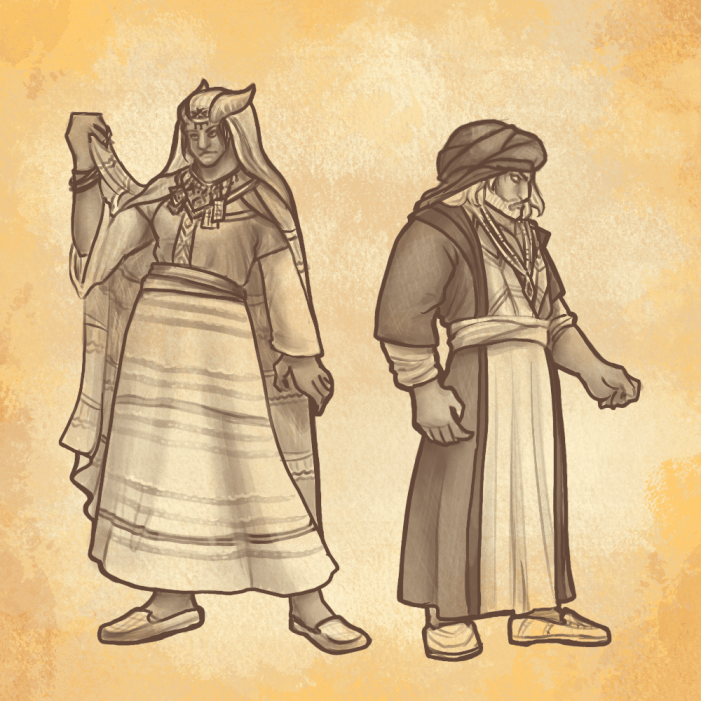
The Canzi take care in ensuring safety and comfort in a life of travel; most adults wear a long, loose-fitting unisex outer robe with full sleeves, both breathable and protecting from the harsh sun and sandy breezes. Men frequently wear a full head wrap covering down to the neck and a simple silk or hemp belt tied about the waist. Mens’ undergarments are typically white, and their robes may have a simple pattern, but any married men wear solid muted colors. Women typically wear bright patterned fabrics, including a simple head scarf or tie, and many wear equally vibrant belts, shawls, and capes. The leading women of a tribe will adorn their horns with jewelry or if capable will wear a traditional elaborate headdress comprised of precious metals, gemstones, and other exotic materials. Youths are generally allowed to dress as they please, however most are dressed to their parents taste until adulthood, around 16.
Cerrans

Physical Distinctions:
More clearly descended from their larger ancestors, the Cerrans often sport taller frames and longer canines than other Oasins.
Regular exposure to the harsh desert sun has caused their complexions to be darker tones from tan to dark brown. Their hair is typically a lighter color. Manes are somewhat common, and they will develop very thick and full hair just like all other Canzians. Occasionally you will see a Cerran with subtle, striped markings on their skin.
Similar to the Canzi, Cerran females who grow horns sport ones that are very long and spiraled, much like an Eland, Angora, or Hartebeest.
Pronunciation: [SEHR-renz]
Locale: The Wandering Oasis, The Desert of Canzia
The Cerrans are a highly regarded, traditionalist-centric sect of the Oasin people. These clans are run and maintained exclusively by a bloodline of women who can trace their matrilineal ancestors directly back to the ‘Great Mother’. Often, the people of these clans are composed predominantly of those with no ancestral importance, but their zealous commitment to the clan mothers, and generations of loyalty to the deep traditions offer many aspiring people the moniker of Cerran. This is a badge of great honor amongst the Oasins, and to a lesser extent the other groups of Canzians as well.
Outside observers would find it hard to differentiate a Canzi and Cerran clan, seeing as their day-to-day lives are very similar, as well as their physical characteristics being mostly undistinguishable. However, on a closer look it is clear that the Cerrans follow many routines and religious practices that their Canzi sisters don’t incorporate in their daily lives. Most notably, during times of collective pilgrimage, religious ceremonies, and great unrest, the Oasin people will look to the Cerrans with great expectation, trusting that their ongoing devotion to traditions and connections to the ancestors will aid in their pleas for help and guidance from beyond.
Clothing and Style
Cerran clothing is very similar to Canzi clothing, however it tends towards a more elaborate traditional style. Leading family men will wear very vibrant clothes and often accentuate with additional adornment, however when married they will adopt traditional muted clothing. Women have generations of exquisite fabrics and jewelry passed down from their ancestors. Even their traditional robes are often adorned with intricate thousand-bead patterns covering the collar, cuffs, and base.
Graug
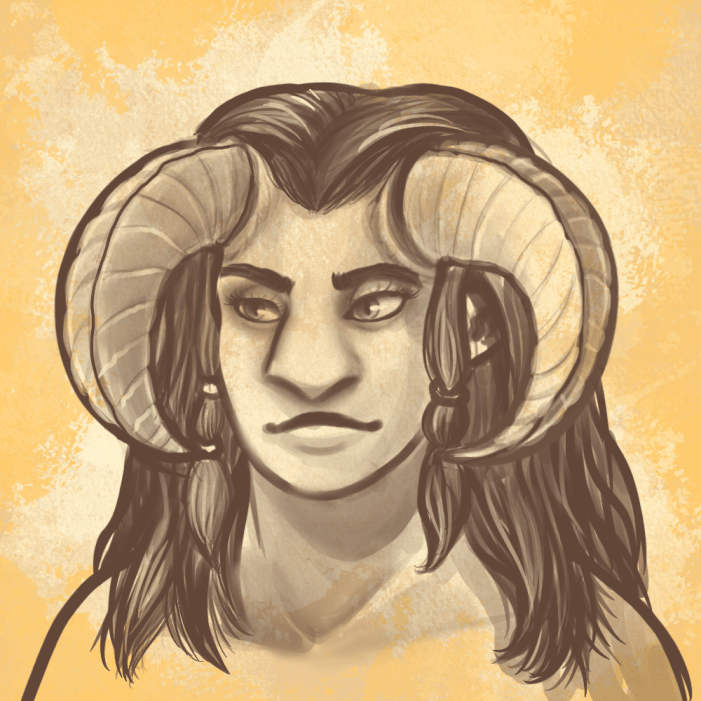
Physical Distinctions:
Perhaps the most physically unique Oasins, the Graug are noticeable by their shorter and wider snouts. Graug almost always have dark-colored hair.
Females who are blessed with horns sport very thick, rounded horns, much like that of a Mouflon, Barbary, or a Bharal.
Pronunciation: [grog]
Locale: The Desert of Canzia
The Graug are a long-thought forgotten clan of Canzian people; their major separation from the other Oasin people comes from their stark difference in nomadic routes. For many generations, the Graug have adapted to follow the natural migratory patterns of the native desert bighorns, rather than the path of the Oasis, like the majority of Oasins.
Early in their history they were notoriously lost in a historically devastating sandstorm that is said to have lasted for over two decades. Most clans assumed the worst. In truth, however, small populations of the lost Graug managed to remain. Those who survived eventually followed their bighorn herds back out of the sandstorm. With their population significantly diminished, and their herds on the brink of starvation, the Graug were forced to abandon many of their ancestral and matriarchal traditions, focusing more on their communities.
Because of this, the Graug were treated very much as a background element in the wider Canzian histories. Although they were forced to endure difficult conditions for many generations, these days they are not quite so destitute. As they have been adapting to this strange lifestyle unlike any other Canzians, their migratory routes have become almost second nature to them.
The Graug who remain today are comprised of small migratory family groups, none large enough to constitute as a clan in comparison to other Canzian clans, but they still remain steadfast, raising and maintaining their beloved bighorn herds, which often outnumber them 10-to-1.
Clothing and Style
The Graug clothing has traditions tying back to the earliest of Canzian times, but has made adjustments to match their highly active lifestyle. Men wear a traditional robe made from white fabric of silk from their youth. It is collarless, long-sleeved, and reaches down to the ankle. Some tie the dress with a simple white belt about the waist, and they typically wear long headwraps around the crown of their head. Women wear dresses that extend beyond their knees, with loose long sleeves which rest upon the wrist. The necklines are varied, with some going as far as to expose portions of the shoulder before continuing back into a full sleeve. They will often pair this dress with a loose fitting pair of pants made of lighter material to grant comfort in work, and a long patterned fabric that they loosely drape across the head and down across the shoulders.
Saltlicks

Physical Distinctions:
While Saltlicks are comprised of many excommunicated members of other clans, those who are born of Saltlick lineage are nearly unheard of. Those that have been seen seem to grow noticeably more body hair than other Canzians, and have darker skin tones with very noticeable striped skin patterns. They are rarely well-fed, so they are gaunt and thin. Their claws, however, are longer and sharper, helping them to catch prey that is essential to their already-improbable survival.
It is unheard of for a Saltlick-born Canzian female to grow horns.
Locale: The Salt Plains of the Hinlands
The Saltlicks are less of a distinct cultural group and more a temporary terminology assigned to those who have exiled themselves to the desert salt flats of the Poshan region. Most Canzians believe in the true power of penitence, believing that one must take time to learn from their mistakes. Not only this, but they believe that they must appeal to the ancestors for forgiveness as well, for their hard work and sacred memory is often damaged by foolish acts in the present. After earning forgiveness from one’s peers and ancestors, they once again have the opportunity to be welcomed back into the clan they had once wronged.
This deep belief in such acts stretches back to the time just after the Redmane exodus of the Highlands. After the unexplained events that led to the Wandering of the Oasis, one of the eldest and most pious Canzian clan Mothers, a direct descendant of the ‘Great Mother’, committed an act of shame. Fearing she had doomed her people to a future of eternal thirst, she exiled herself to a remote region of the norther desert, the Saltflats. In her grief, she hoped that such an area, desperately deprived of any hydration, would bring her the enlightenment of her elders, and if she did not receive that, she would pay for her crimes. Canzian mythos tells that in her last moments, baked by the sun and shriveled by the salt, she was visited by a vision of her grandmother who extended her hand in an act of forgiveness. Instantly the sky opened up and for a short few minutes a deluge descended from the skies bestowing the knowledge of water divination upon the clan mother.
Whether this is a true account or an allegory, it is clear that this tale is passed down by Canzian people for multiple reasons that stress the importance of their traditions: devotion to the sacred professions that sustain the clans (like water-divining, hunting, foraging, and leadership), or to prove that all Canzians, no matter what their station, are subject to the same laws of honor and duty.
Often times, if a Saltlick Canzian has been exiled for many years, they become disinterested in returning to their clan. If they have no intention of showing remorse, or feel that they will never be forgiven by their friends and family, it is likely they will simply shed the shackles Saltlick life entirely. Those who choose to do this will travel out into the world and take on the mantle of a Silkskin, leaving behind their Canzian ties, hoping to start fresh.
Clothing and Style
There is no distinct clothing or style for Saltlick people, aside from a variety of squalor. Most of them, because of their penance or exile, are stripped of any meaningful clothing or accessories that would distinguish them from other Canzian groups. Due to physical characteristics, though, other Canzians can usually tell what group a Saltlick once belonged to, but an outsider likely would not be able to tell two Saltlicks apart without speaking with them.
Longwalkers
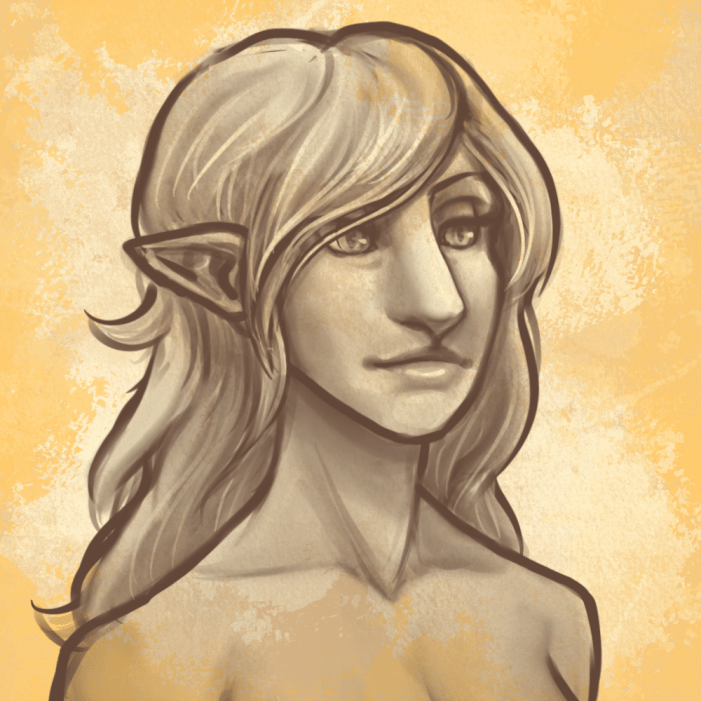
Physical Distinctions:
Similar to Saltlicks, the Longwalkers often sport the physical traits of their original tribe’s lineage, but those who are born into multi-generational Longwalker families often become less drastically feline. It is less likely for later-generation Longwalker females to grow horns, but it is not rare. These horn shapes and styles are based on their parents’ lineage, as Longwalkers do not have their own matrilineal heritage as a collective.
Locale: Various
The majority of the Canzians that live outside of the deserts internalize an instinctual longing for the sands because of the geographic disconnect from their people. With many of the Canzian traditions being large, collective events, these Longwalkers go to great lengths to maintain a strong connection with their history and ancestors.
While they may appear to be functioning as normal Imperial citizens on the day to day, Longwalkers have a long-standing tradition that compels them to commit one year of every decade to make a great pilgrimage with their family and friends. They will spend this time, not as a vacation, but as a cultural journey of spiritual reverence, traveling to one or more of the Canzian holy sites back in their ancestral lands. While such commitment often comes at great financial strain, the Longwalkers believe it worthy to maintain these truly Canzian relationships with their people, both living and departed.
Because they remain emotionally and spiritually devoted to these traditions, is it thought that this is the reason that many Longwalkers still exhibit many of the physical traits akin to the desert-native Canzians, though they may not have ever lived there themselves (outside of a pilgrimage year). Indeed, many Longwalkers will take this pilgrimage year as an opportunity to grow their family with those of truly Canzian heritage, explaining why a good deal of Longwalker families are composed of a single parent, with many children who are half-siblings.
Clothing and Style
While Longwalkers tend to find solace and comfort in wearing their traditional garments, it is not always practical for them to do so in other Lands where they may find themselves. In this case, a Longwalker will often adjust their wardrobe to stay true to their original clan’s heritage, while also making appropriate cultural and functional choices that will not ostracize them from their adopted home outside the Sizzling Sands. They always keep their traditional desert garments for their ancestral pilgrimage, though, where they will be of incredible use.
Notable Figures
Aksil Wildmane
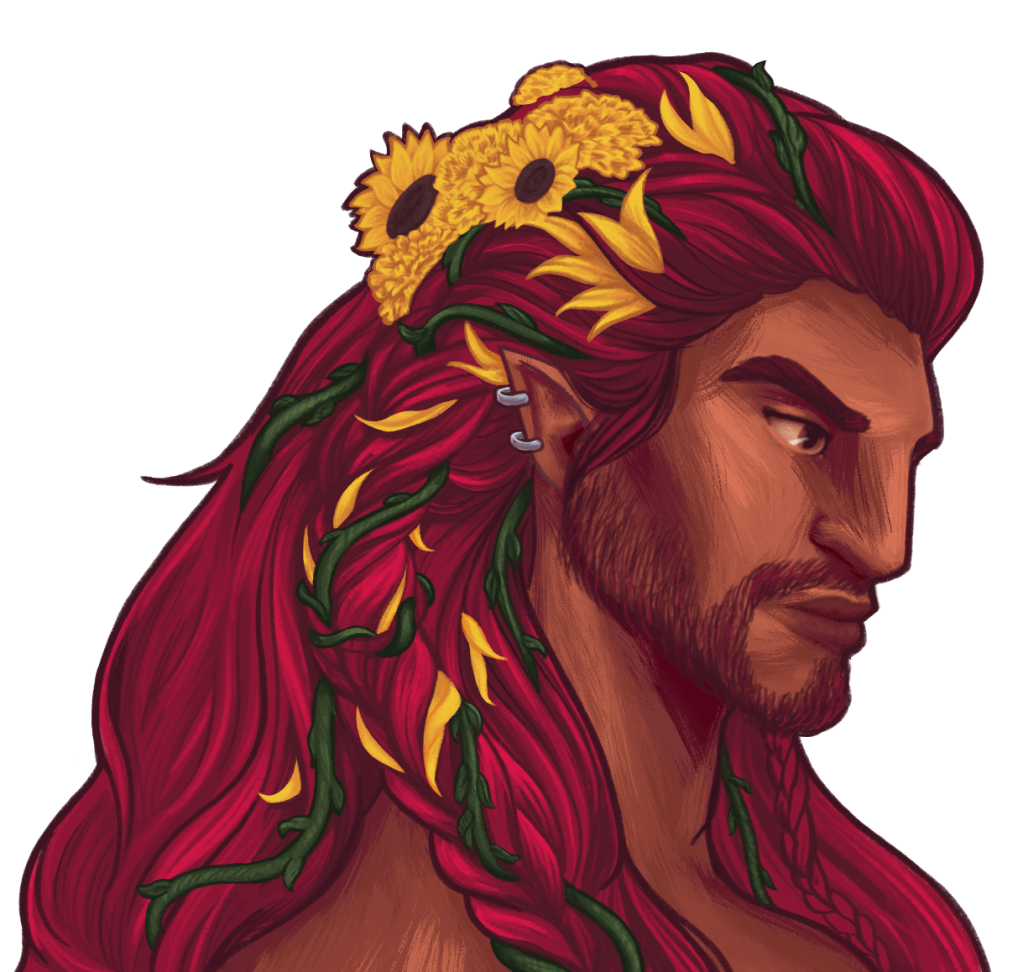
Once a stifled sorcerer who was conditioned to live in fear of his unpredictable powers, Aksil now lives a wildly different life than he had expected, but he still honors the teachings of his childhood mentor.
A Player Character from The Beanut Lands “Adventures” campaign.
Oasin Stats
Subgroups
Canzi
Cerrans
Graug
Saltlicks
Longwalkers
Preferred Classes

Ranger

Monk
Oasin Languages
Known
Learnable
Oasin Unique Feature
Friend of the Beasts
The Canzi people are very attuned to their companion animals, herds, and flocks.

Animal Handling
You gain proficiency in the Animal Handling skill, and may double your proficiency bonus on all Animal Handling skill checks.
Mkase
The Mkase live in the harsh and brutal ancestral lands of the Canzians, the Red Highlands. According to Canzian mythos, the original Torgali explorers wandered the highlands desperately seeking a place to call home, but couldn’t find a place suitable for long term habitation. They searched for decades, until one night as the sun had just begun to set, a pair of phoenix appeared on the horizon and led the wandering tribe to a stable high ground plateau where they could finally call home. These settlers would become the first Canzians.
Redmanes

Physical Distinctions:
As can be expected, Redmanes majorly grow hair in natural hues of red, from bright scarlet to deep sanguine. While these colors are not exclusive to Redmanes, it is rare to see a Redmane with a hair color more divergent than a warm shade of brown.
While all Redmanes usually stand taller and more muscular than any other Canzians, a bizarre and surprising genetic outlier lies in the Redmane females in particular. They are an average height taller than any other demographic in the entire Beanut Lands. They have been known to grow upwards of 9 feet tall. Most Redmanes (and traditionalist Canzians) attribute this to the direct genetic tie to The Great Mother herself.
Redmane females almost always develop horns, and they are large and dramatically curved, growing from just above the ears and rounding forward, like the horns of a Mouflon, Bighorn, or Argali.
Locale: The Red Highlands of Canzia
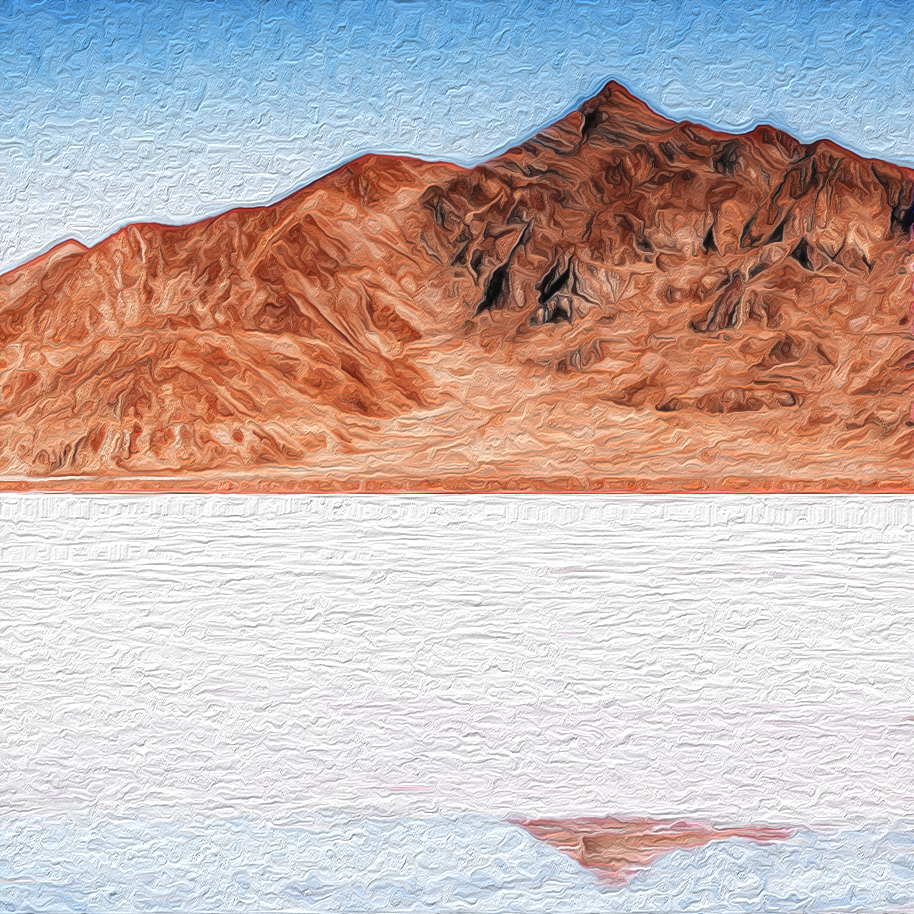
The Red Manes, a very physically distinct clan, are descended from the original Canzian settlers by all accounts. Like other Canzians, they are renowned for their exceptional survival skills, but the Red Manes are especially esteemed hunters who navigate the untamed wilderness of the Highlands with unparalleled expertise. Their strength and prowess in tracking elusive prey have earned them a reputation as formidable warriors and skilled providers for their community.
They hold their lineage in the highest regard, considering themselves the sentinels of the sacred
resting place of the esteemed Great Mother of Canzia, often referred to by outsiders as “The Temple of Strength.” With unwavering pride, they fiercely protect this hallowed ground that symbolizes their rich heritage. In a unique departure from other Canzian groups, though the Red Manes still exhibit a partially nomadic lifestyle, they also maintain permanent structures like the ones at Mother’s Rest. Because of this cultural center, they are one of the only Canzian groups to establish a physically constructed civilization in the otherwise vast and virtually indistinguishable landscape of the Sizzling Sands.
The Red Manes find solace and purpose in their connection to the land and their unwavering dedication to preserving the legacy of the Great Mother. Their role as guardians of the Temple of Strength and their continued commitment to their ancestral traditions make them a beacon of resilience, embodying the enduring spirit of their people.
Clothing and Style
Red Mane clothing has remained a tradition that is nearly unchanged from the times of the Great Mother, with only small concessions made for addressing newer times. Men wear white fabrics, typically in the form of a long collarless robe, a simple tunic paired with trousers, or the traditional garment of choice: a very long fabric at least 2 feet in width that is wrapped around the shoulders and upper portions of the body which drapes down below the waist. Women typically wear loose-fitting dresses (from a full wrap to a simple shoulder strap) that come down to the shin or ankle. Optionally, they may elect to wear lighter colors and clothing embellished with beads, embroidery, and other adornments, however these types of clothes are only ever seen at events of cultural significance. Some women, similar to the men counterparts, will choose to wear the ancestral clothing, which for women includes a complicated body wrapping technique weaving from one to four separate fabrics together to cover the body in an intricate wrap.
Ridgelanders
Physical Distinctions:
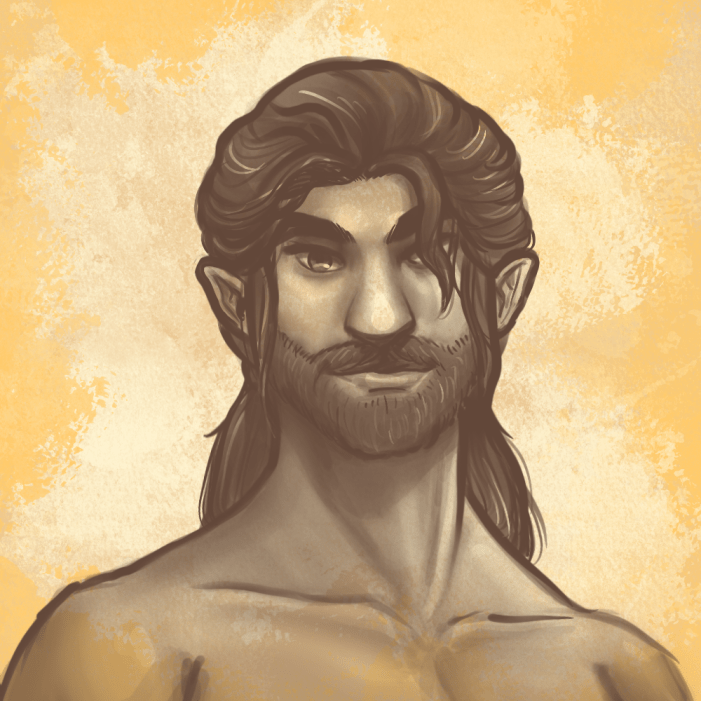
Ridgelander skin and hair colors are varied. Some clans who travel the dry badlands of the ridges have very dark skin and hair colors, while others who reside on cliff faces in the deep fissures of the canyons have lighter, more yellowed tones. Regardless of the complexions, these hardened people tend to live in some of the harshest environments of Canzia, and have developed thicker hair and manes, as well as longer canine teeth than the average Canzian.
Ridgelander females don’t often develop horns, but when they do, they are typically spiral in shape, growing primarily from the front part of the temples and angling upward and back over the skull, similiar in shape to that of a Kudu, Marhor, or Addax.
Locale: The Red Highlands of Canzia
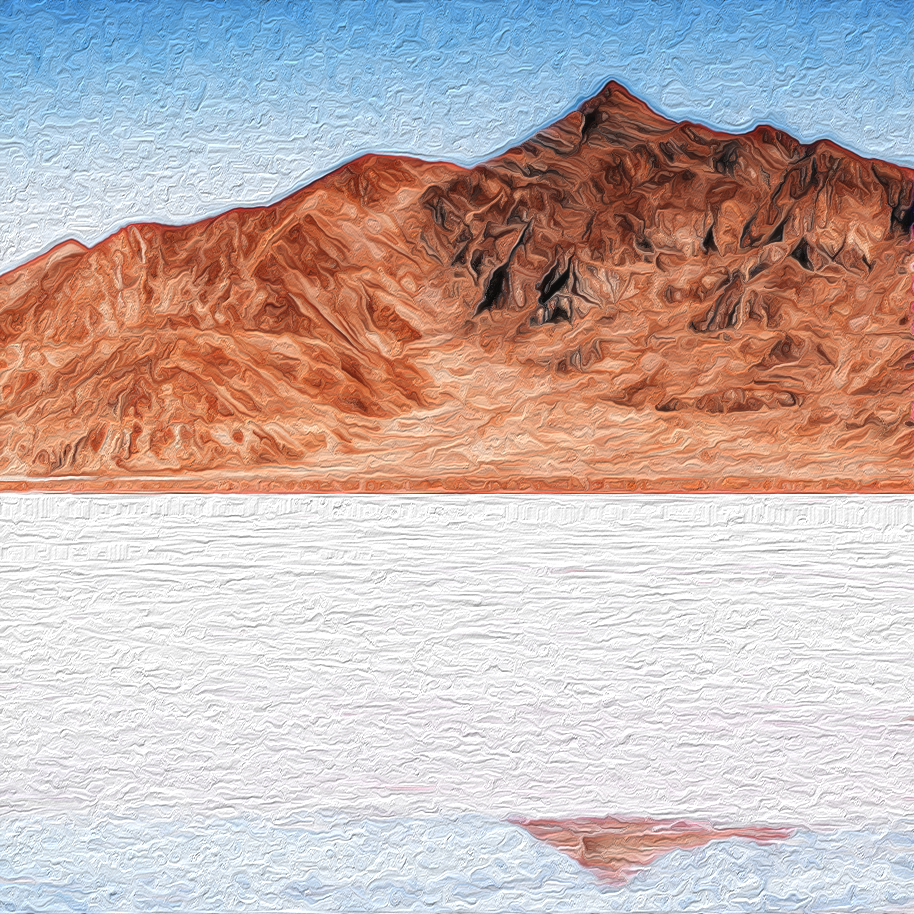
The Ridgelanders wander the arid desert grasslands that flank the great divide between the Highlands and the great deserts of Canzia. Originally made up of wayward Red Manes, Cerrans, and Canzi, these people are predominantly pastoral nomads whose flocks graze the dry desert grass that cover the land near the ridges separating the Red Highlands and the desert sands.
Most Ridgelander clans are made up of large, extended families, who have traveled together for generations, most rarely interacting with outsiders, spare the occasional trading event. Deep commitment to family, ancestral worship, and keeping familial bloodlines are often of great importance, and outsiders are often treated with great distrust. Due to this isolation, each tribe can have greatly differing traditions and practices from each other. Unlike most other Canzians, the Ridgelanders don’t always conform to matrilinear heritage, a practice that never seemed to gain popularity with this group. This is one of the only groups of Canzians in which you will see elders who are not women.
Clothing and Style
Having separated from greater Canzian-kind before many of the cultural norms were settled, Ridgelanders place little tradition on their clothing, prioritizing personal comfort, adaptability, and material availability. Clothing is assembled from a variety of materials, usually in their natural colors, including wool, linen, pelts, hides, and silks; and can differ from thin and lightly wrapped fabrics during the hotter seasons and rough thick leather pants and dense canvas ponchos during sandstorms or hard labor.
Ukamimba
Physical Distinctions:
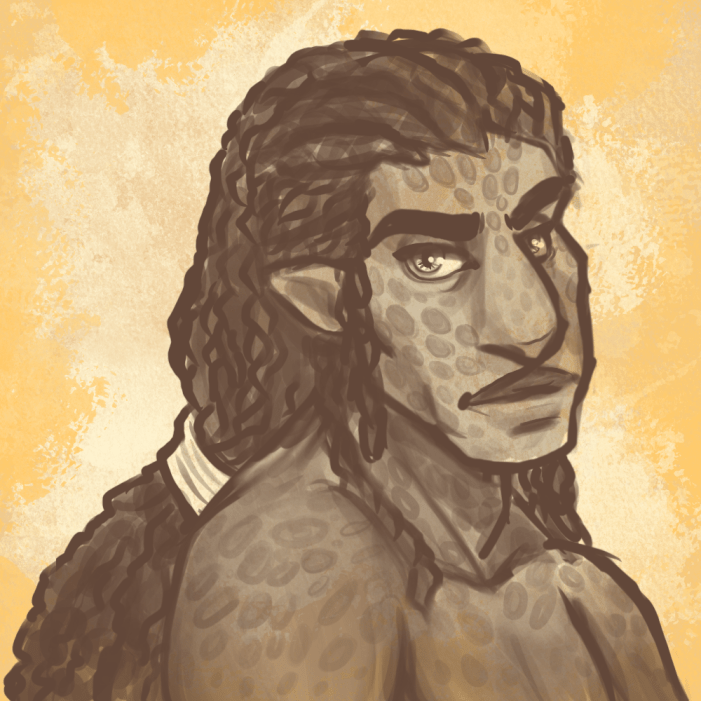
Ukamimba people are like most other Redlanders, as they tend to develop darker skin and hair tones due to their exposure to the sun. They, however, have developed distinctive rounded spots that are seen in no other Canzian subgroup of people. The level of contrast of these spots is varied, but it is only found in this specific regional group.
Ukamimba females develop horns quite commonly. The curvature of the horns is more spiraled rather than straight or rounded, growing nearly from the temples. They are shaped similarly to the horns of a Kudu, Markhor, or Addax, but they trail off the back of the head rather than upward or outward.
Pronunciation: [oo-kah-MIM-bah]
Locale: The Coastal Red Highlands of Canzia
The Ukamimba, a faction stemming from the Red Manes, manifested as a distinct group in the aftermath of the Red Highlands’ downfall, following the loss of the Great Mother. Ukamimba, derived from the Tok language, translates to “Star Children,” embodying their unique connection with celestial forces.
Diverging from their Canzi counterparts, the Ukamimba honed an unconventional migratory system grounded in constellations and stellar patterns. Preferring the celestial guidance of stars over the traditional practice of water divination, they veered from venturing into the heart of the desert, opting instead to settle in the coastal regions of the highlands. Their routes spanned from the northeastern reaches of the Brittle Spine to the southwestern expanses of the Grave Barrens. These coastal enclaves became the backdrop of their distinct lifestyle.
The Ukamimba, by and large, maintain a secluded way of life, preserving their cultural identity amidst the confines of their coastal communities. However, a select few individuals who have ventured beyond Canzia and encountered the broader Imperial world have garnered recognition as esteemed naval navigators and trusted travel guides. Drawing upon their profound understanding of the celestial realm, these Ukamimba lend their expertise to the vital task of charting uncharted waters and mapping new territories, bridging ancient wisdom and modern seafaring.

Clothing and Style
Men start wearing a simple wrap skirt around the age of 6, and continue doing so until the age of maturity, at which point they typically adopt a longer more formal skirt. This garment usually contains a serious of mirrored pleats and is fastened around the waist with a belt. Some men wear large aprons, pleated blouses, sheer blouses, sheer ankle-length overskirts, and beaded vests. Those that do heavier work will often wear full length pleated hide skirts and blouses. Those of higher standing will often have intricate patterns sewn into the linens and silk pleats of their clothing. Women similarly begin wearing wrap dresses around the age of 6 and continue until maturity; the typical style of dress for adult women runs from the ankle to just under the breast with straps that wrap over the shoulders, sometimes beaded and adorned with bird leaves and shells. Similar to men, women of higher standing may wear pleated dresses of elaborate colors and patterns. All Ukamimba people will frequently wear shawls, capes, and robes for comfort, fashion, and ritual. These shawls are often made of the finest woven linens and silks, are sometimes likewise pleated, and can be up to 15 feet long.
Notable Figures
Elar Starseer
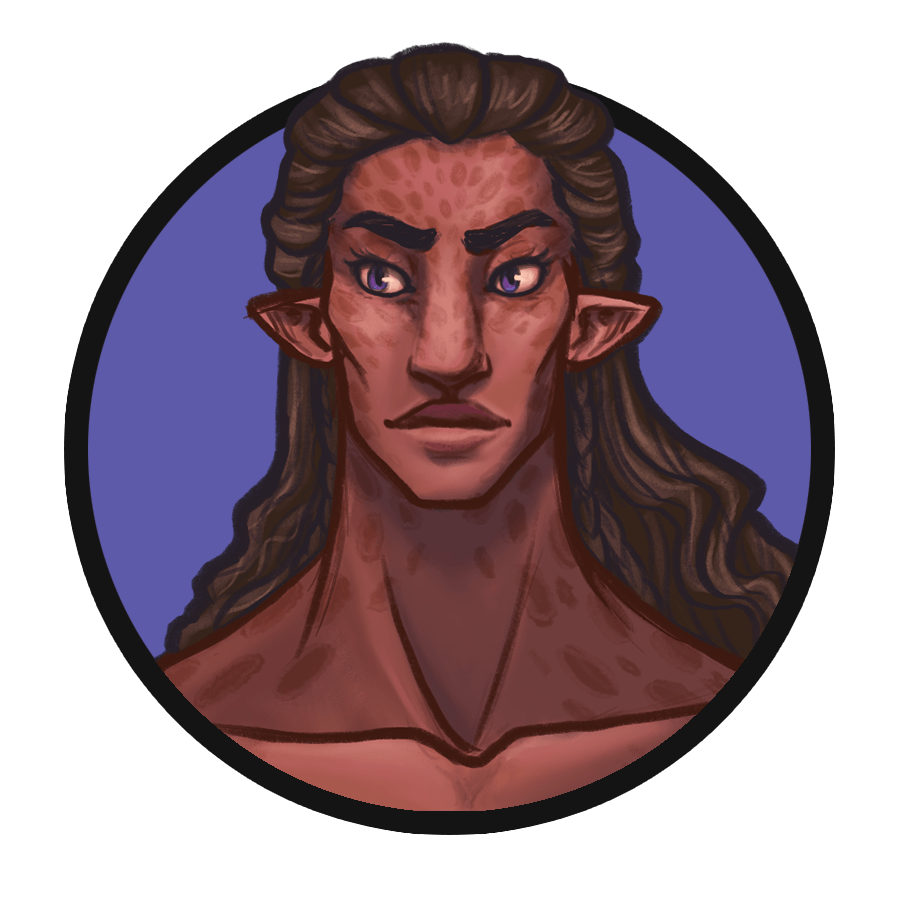
A monk whose aim was to travel the world and better themselves by experiencing the people, culture, and especially places of the world. They joined a mission to transport a distressed beanut in the “Wellspring” one-shot.
Redlander Stats
Subgroups
Redmanes
Ridgelanders
Ukamimba
Preferred Classes
Ranger

Barbarian
Redlander Languages
Known
Your native language is Tok. Because of this you can also communicate at a basic level in Tok’s sister language, Loval. Additionally, you are also familiar enough with Common to hold a basic conversation, though you can not read or write in either Loval or Common.
[3] Native:
[2] Studied:
<none>
Learnable
Redlander Unique Feature
Sun-Baked Survivalists
Pummeled by the harsh solar rays of the Highlands, Redlanders are experts at conserving their energy to extend their likelihood of survival.
You are comfortable in temperatures up to 100 and can roll with advantage on survival rolls to combat the effects of the heat, additionally your Death Save threshold increases by 2.
Silkskins
After acceptance within the empire, many Canzians took the opportunity to set up a more permanent residence in Imperial towns that commanded much of their business. At first many of these Canzians continued the traditions and values of their people, however the vastly different experience of Imperial life led many second-generation children and their descendants to feel a disconnect with the way of their ancestors, entirely unfamiliar with the landscape and nature of their ancestors. These Canzians who have abandoned the ways of old, whether by choice or circumstance, have come to be known as the Silkskins.
Imperials
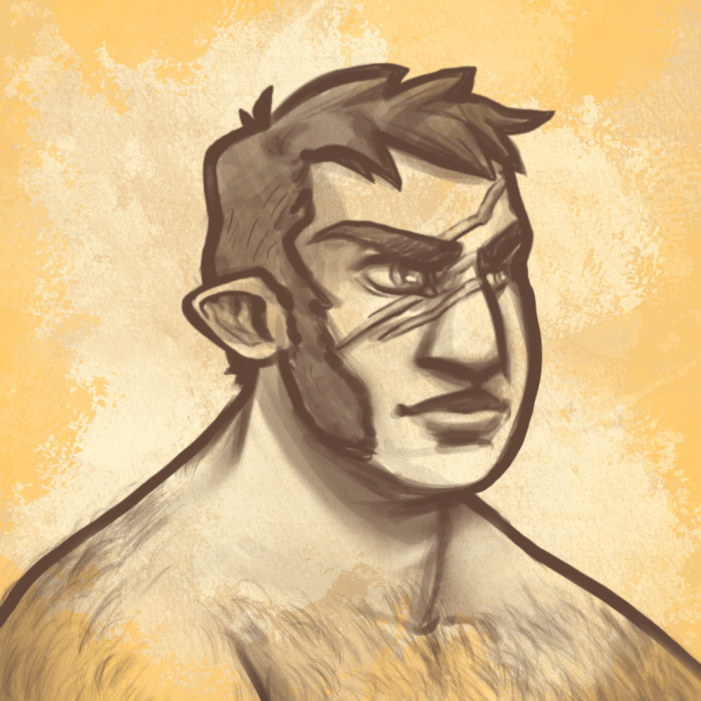
Physical Distinctions:
Each Silkskin Canzian can be drastically different to the next, having intermingled for generations with people from all across The Beanut Lands. It is not always easy to distinguish a Silkskin, unless they are of direct elder lineage or they possess any of the absolutely irrefutable Canzian traits, such as their feline eyes and noses, teeth, claws, skin markings, or their distinctly Tok ears. The average Skilkskin will have decidedly less feline features, such as smaller canine teeth and rounder pupils.
Locale: Various Locations
The Imperials have embraced the customs and traditions of the outside Beanut Lands, diverging from the path of their ancestors. Unlike traditional Canzians, who perceive themselves as part of a collective lineage, Imperials view themselves as individual tiles contributing to a grand mosaic: the world. While they recognize their distinctive perspective, they also understand the significance and value they bring to the greater Lands as generational descendants of Canzian migrants.
Among the Imperials, there are those who have chosen to reside in bustling cities, immersing themselves in professions that require diplomacy, mercantile, and manners. In contrast, there are Imperials who have ventured into other, more provincial territories, such as Willonia and the Heartlands, where flourishing farming communities are the backbone of society. Here, the survivalist instincts take on a new significance. While Imperials may have departed from the ancestral homeland, their Canzian heritage remains an integral part of their identity, influencing their endeavors and enriching the wider Beanut Lands they proudly call home.
Clothing and Style
Imperial Silkskins, as Canzian people who are likely born and raised in a Land outside Canzia, are most often seen in the clothing and fashions of their home region or settlement. Though some Imperials attempt to retain some of their cultural heritage through the use of traditional Canzian garments and accessories, this is likely only done for ceremonial reasons, and is often a very broadly-generic “Canzian” assumption of style that doesn’t truly embody any one clan or group in particular. Such generic Canzian garments are brightly colored and dyed cloth and silk pieces, such as ponchos, tunics, robes, and headwraps. Often, in an attempt to appear Canzian, they will also wear an abundance of jewelry, including multi-ring bangled bracelets and anklets, gaudy rings, ornamental necklaces, large earrings, and chain circlets.
Notable Figures
Oxo “The Scamp” Smoothcoat
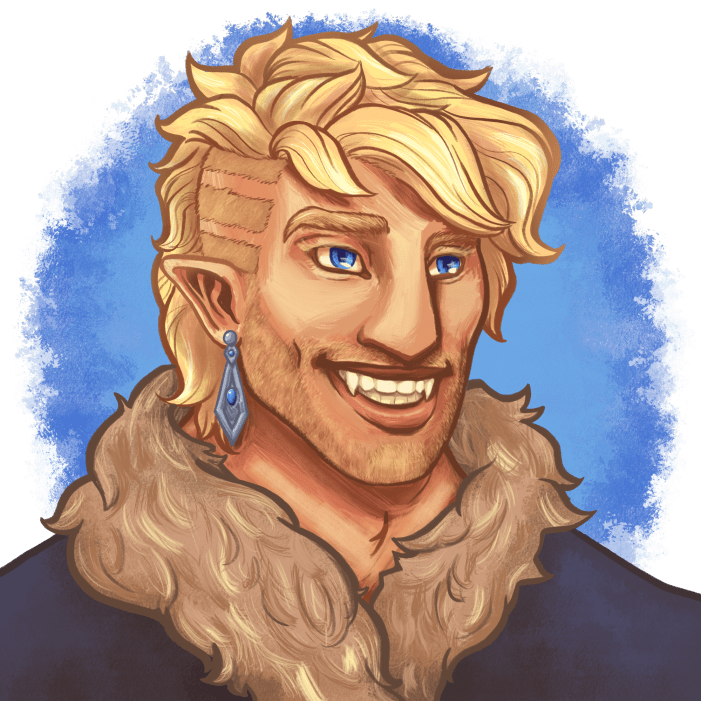
A renowned guide in the Nettle Forest who makes a living as a hunter and trapper of unique game with his wife, Jennsen “The Lady.”
Zaranites

Physical Distinctions:
Each Silkskin Canzian can be drastically different to the next, having intermingled for generations with people from all across The Beanut Lands. It is not always easy to distinguish a Silkskin, unless they are of direct elder lineage or they possess any of the absolutely irrefutable Canzian traits, such as their feline eyes and noses, teeth, claws, skin markings, or their distinctly Tok ears.
Pronunciation: [ZAIR-ra-nites]
Locale: Zaratan Bay of the Torgali Jungle
The Zaranites are much like the Saltlicks, in that they have adopted a moniker that doesn’t necessarily mean they share the same cultural origin. These are a group of Canzians who have taken on this title later in their lives. Unlike the Saltlicks however, no acts of penance is being committed here. instead, the Zaranites make up a community of retired, injured, and exhausted Canzians who voluntarily choose to settle down in peace and harmony in their final years. Making quite a journey into in the ‘Old World’, across the Shattered Bay to the east, and northward along Anura Beach, this ‘late life’ community is tucked away and blessed by the tranquil, tropical breezes of a paradise called Zaratan Bay. This community is renown for welcoming not only aging Torgali and Canzians, but also many Fangren elders as equals.
At Zaratan, you will find a fluid mix of cultures, even those outside the Torgali, Canzian, and Fangren people, who make up the majority of the population. These Zaranites have taken this time in their lives to explore rituals and beliefs that can be shared and appreciated as a collective community of people in the twilight years of their lives.

Clothing and Style
Zaranite clothing follows the typical style of their home in the Torgali Edgelands: The clothing is minimalist. The hot and wet climate and their active fast-paced lifestyles demand they sacrifice nothing for comfort. Men wear knee length body wraps, clasped or tied at the shoulder, women wear long body length skirts, fastened or tucked around the heart. For important religious and secular events where song and dance are, typically they will adorn themselves with ornament, intricately patterned clothing and decorative accessories meant for such events. These frequently include floral wreaths and capes, shelled and beaded jewelry, and elaborate face and body painting.
Silkskin Stats
Subgroups
Imperials
Zaranites
Preferred Classes
Ranger

Rogue
Silkskin Languages
Known
Your native language is Tok. Because of this you can also communicate at a basic level in Tok’s sister language, Loval. Additionally, you are also familiar enough with Common to hold a basic conversation, though you can not read or write in either Loval or Common.
[3] Native:
[2] Studied:
<none>
[1] Oral:
<none>
Learnable
Silkskin Unique Feature
Consummate Scholars
Silkskins are adept at scholastic endeavors when given the time to study.
You gain proficiency in one of the following skills:

Arcana

History

Nature & Beasts

Religion & Culture
NAMING CONVENTIONS
Canzian names are bright and sharp, evoking the natural power of the people. Clan names are of great importance, but also not permanent, if a Canzian were to spend a significant amount of time and effort amongst another clan they may go through a rite and accept their new clan’s name.
Traditional Feminine Names:
Amara, Arma, Bastet, Cadna, Calomne, Celine, Dalia, Dritoma, Elara, Ezamme, Fahima, Gazelle, Halima, Ige, Ishtar, Itamne, Jamila, Kalila, Kiadne, Kirrage, Leari, Leena, Maeshi, Mira, Nala, Nyla, Ocelotl, Pema, Prowl, Sadme, Sahara, Salroma, Sermez, Shira, Taanye, Tabi, Zahara, Ziale, Zidmara, Zogele.
Traditional Masculine Names:
Aktioz, Amiz, Ashur, Azizi, Bahir, Bemnir, Chadir, Crixus, Dakar, Driguz, Elar, Faris, Ghazi, Greor, Hakim, Ishaq, Kagos, Kadir, Krarte, Lycus, Malik, Nemas, Oryan, Ozo, Pasha, Pioz, Qadir, Rigos, Soga, Tegher, Tomez, Trios, Xaktis, Yron, Yxen, Zion.
Traditional Clan Names:
Autumneye, Boldcaller, Bronzemane, Cindercoat, Dawnmask, Flametail, Lavacliff, Longtooth, Moonbreath, Plainward, Proudwind, Redroar, Smoothhorn, Spiritclaw, Stalksilent, Stormdrifter, Sunstride, Tigerfang, Wildsong, Wiseguides
 The Beanut Lands