
















FANGREN
Protectors of the Wild
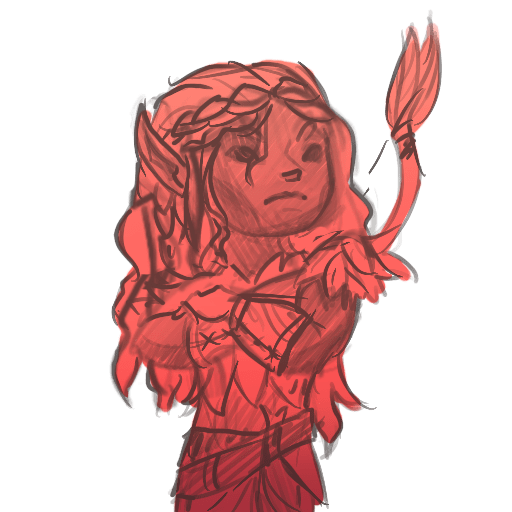
Most Fangren dwell in small forest villages hidden among the trees. Fangren hunt game, gather food, and grow vegetables, and their skill and magic allow them to support themselves without the need for clearing and plowing land. Deeply ingrained within Fangren culture are animist traditions that stretch back to their origins; families often align themselves with an ancient natural god, of varying name and power. The Fangren pantheon is a mess of multi-named gods and differing traditions, but each family god is warmly welcome within the mythos and only adds to the diversity of the pantheon. While families may strongly devote themselves to a particular god, they are rare to insult or harang another’s god. They are talented artisans, crafting finely worked clothes and art objects. Their contact with outsiders is usually limited, though Fangren merchants make a good living by trading crafted items for metals and other foreign delights. Fangren encountered outside their own lands are commonly traveling minstrels, artists, or sages. Nobles of all races compete for the services of Fangren instructors to teach swordplay or magic to their children.
Despite their limited outside contact, many Fangren take up adventuring out of wanderlust. Since they are so long-lived, they can enjoy centuries of exploration and discovery. They dislike the pace of Colonian society, which is regimented from day to day but constantly changing over decades, so they find careers that let them travel freely and set their own pace. Fangren also enjoy exercising their martial prowess or gaining greater magical power, and adventuring allows them to do so. Some might join with rebels fighting against oppression, and others might become champions of worthy causes.
Preferred Classes

Druid

Monk

Sorcerer

Ranger
Alignment
Fangren, like their Sylvan sistren, strongly lean towards an unregimented, free, “chaotic” lifestyle. Their strong communal nature leads most Fangren to favor good, but there are many Fangren who prefer the power and freedom that comes with a fluid versatile alignment.
Syntax
pronunciation
noun
plural
adjective
variants
(FANG-gren)
That Fangren is strong.
There are many Fangren.
That is a Fangren artifact.
Fangs
Attributes
Base Speed
30 feet
Attribute Modifiers

+2 Wisdom

+1 Constitution
Unique Racial Features & Abilities
Darkvision
Accustomed to twilit groves and glades and the night sky, you have superior vision in dark and dim conditions.
You can see in dim light within 60 feet of you as if it were bright light, and in darkness as if it were dim light. You can’t discern color in darkness, only shades of gray.
Mask of the Wild
The Fangren are adept at using natural cover to stay out of sight.
You can attempt to hide even when you are only lightly obscured by foliage, heavy rain, falling snow, mist, and other natural phenomena.
Fae Ancestry
Your Sylvan lineage has blessed you with a resistance to some adverse magical effects.
You have advantage on saving throws against being charmed, and magic can’t put you to sleep.
Versatility
The absence of what most would consider ‘civilization’ doesn’t mean that the Fangren don’t have a passion for developing their skills. Life is more about just surviving.
You gain proficiency in two skills of your choice.
Protectors of the Wild
Most Fangren dwell in small forest villages hidden among the trees. Fangren hunt game, gather food, and grow vegetables, and their skill and magic allow them to support themselves without the need for clearing and plowing land. Deeply ingrained within Fangren culture are animist traditions that stretch back to their origins; families often align themselves with an ancient natural god, of varying name and power. The Fangren pantheon is a mess of multi-named gods and differing traditions, but each family god is warmly welcome within the mythos and only adds to the diversity of the pantheon. While families may strongly devote themselves to a particular god, they are rare to insult or harang another’s god. They are talented artisans, crafting finely worked clothes and art objects. Their contact with outsiders is usually limited, though Fangren merchants make a good living by trading crafted items for metals and other foreign delights. Fangren encountered outside their own lands are commonly traveling minstrels, artists, or sages. Nobles of all races compete for the services of Fangren instructors to teach swordplay or magic to their children.
Despite their limited outside contact, many Fangren take up adventuring out of wanderlust. Since they are so long-lived, they can enjoy centuries of exploration and discovery. They dislike the pace of Colonian society, which is regimented from day to day but constantly changing over decades, so they find careers that let them travel freely and set their own pace. Fangren also enjoy exercising their martial prowess or gaining greater magical power, and adventuring allows them to do so. Some might join with rebels fighting against oppression, and others might become champions of worthy causes.

Preferred Classes
Druid
Monk
Sorcerer
Ranger
Alignment
Fangren, like their Sylvan sistren, strongly lean towards an unregimented, free, “chaotic” lifestyle. Their strong communal nature leads most Fangren to favor good, but there are many Fangren who prefer the power and freedom that comes with a fluid versatile alignment.
Syntax
pronunciation
noun
plural
adjective
variants
(FANG-gren)
That Fangren is strong.
There are many Fangren.
That is a Fangren artifact.
Fangs
Attributes
Base Speed
30 feet
Attribute Modifiers
+2 Wisdom
+1 Constitution
Unique Racial Features & Abilities
Darkvision
Accustomed to twilit groves and glades and the night sky, you have superior vision in dark and dim conditions.
You can see in dim light within 60 feet of you as if it were bright light, and in darkness as if it were dim light. You can’t discern color in darkness, only shades of gray.
Mask of the Wild
The Fangren are adept at using natural cover to stay out of sight.
You can attempt to hide even when you are only lightly obscured by foliage, heavy rain, falling snow, mist, and other natural phenomena.
Fae Ancestry
Your Sylvan lineage has blessed you with a resistance to some adverse magical effects.
You have advantage on saving throws against being charmed, and magic can’t put you to sleep.
Versatility
The absence of what most would consider ‘civilization’ doesn’t mean that the Fangren don’t have a passion for developing their skills. Life is more about just surviving.
You gain proficiency in two skills of your choice.
PHYSICALITY
The Fangren, a noble and resilient race, have adapted to their forested environment, forsaking their ancestral wings for a form better suited to their surroundings. With a deep connection to nature and rich cultural traditions, the Fangren embody the spirit of living in harmony with the natural world as it is. Similar to their fellow Bodren, they are descendants of the ancient Fae who have shed their wings in favor of more advantageous adaptations for their forest homeland. This wild and natural Land is a dark and lush woodland in which these Fangren people are able to blend in with their earthen skin tones and hair colors, which may seem more mundane when compared to their Sylvan sistren.

Fangren Physical Traits
Fangren are slightly smaller than humans, ranging on average from 4 feet to just over 5 feet tall. Fangren complexions range typically from silvery soft olive to dark pine greens, sandy tan to deep umber browns. The same versatile colors that are found in nature can be seen in the colors of their hair as well, which is most often soft and fine. Few Fangren are seen to be doing any widely-accepted hair care routines, but they have their own unique particularities when it comes to self expression.
The Fangren have some deep traditions surrounding the cutting and styling of ones hair. Some traditionalist religious groups minimally style their hair in the resemblance of great ancestors, but the majority leave their hair to grow as it wills.

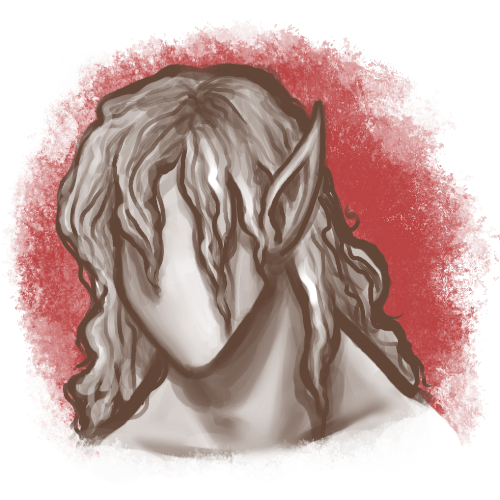
Some will incorporate meaningful parts of nature into their hair both as a stylistic choice, and as camouflage in their hostile environment. Only in moments of great importance, such as burials, weddings, and appointments of high position, will Fangren deign to style their hair in what might be considered a ‘traditional sense’. In fact when a Fangren is exiled from their community, run out of a territory, or is found committing a heinous act against the Forest itself, they may be forced to cut their hair short, a lasting mark that they must begin again from a false youth and should be treated thusly.
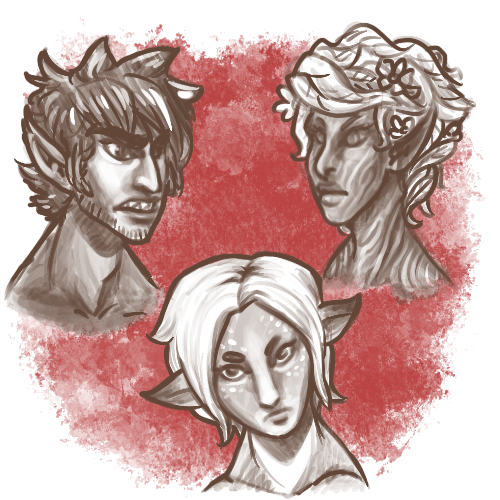
More than just their ranges of diverse natural skin and hair colors, the Fangren are also unparalleled masters of physical self-alteration. Of all the races in the Beanut Lands, Fangren are the most in love with changing their own physical bodies in order to fully express their potential to be one with the world. You will often see Fangren scouts and druids who have taken on sharp teeth and long nails, or furry ears, fuzzy body hair, and leathery skin in order to combat the winter cold; Hunters and fighters may harden their skin with scales or armored carapace in order to survive against similarly protected predators; The more passive have been known to take inspiration from the flora of their regions, instead altering their skin with bark-like toughness, or they grow verdant, plant-like hair that appears to be made of leaves or vines.
Stature
A character’s stature is not purely for roleplaying. In many instances, your height and weight can and will have mechanical implications. The character’s body type, however, is mainly for visual storytelling and narrative purposes.
Size
MEDIUM SYLVAN (Humanoid)
3′ 11″ – 5′ 6″ (50 – 66 cm)
Body Types

(unusual)

(unusual)

(unusual)

125 – 140 lbs
(57 – 64 kg)

140 – 160 lbs
(64 – 73 kg)

80 – 125 lbs
(36 – 57 kg)

125 – 150 lbs
(57 – 68 kg)
Age
The shortest-lived of the Sylvan people, it is suspected that the unforgiving environment of the Nettle Forest is to blame for the evolutionary half-length lifespans of the Fangren when compared to their Bodren sistren.
Adulthood
60 – 80 years
Lifespan
400 years
HOME LAND
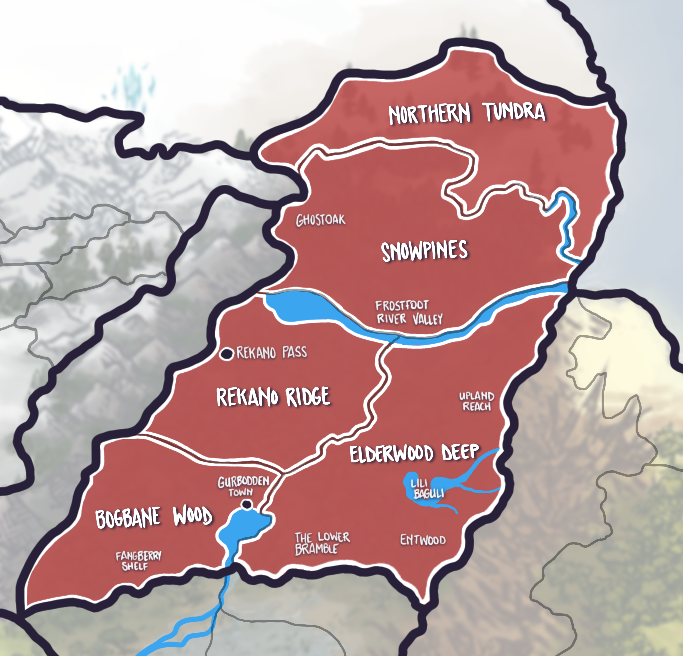
The Nettle Forest
The forest is home to a variety of ecosystems, ranging from temperate woodlands in the east to frozen tundras in the north. It remains a mysterious and alluring place, drawing in adventurers and explorers from all over the Beanut Lands.
Bogbane Wood
The southwestern quarter of the Nettle Forest, featuring lush and dense woods upon solid ground. Its proximity to the Brittle Bog to the south brings a humid and seasonal climate.
Elderwood Deep
Boasting a dense and diverse ecosystem that is unrivaled by any other in the Nettle Forest, this temperate region, located in the lower eastern portion of the forest, is situated south of the Frostfoot River and north of the Brittle Bog
Rekano Ridge
A region situated in the western half of the Nettle Forest. Despite its proximity to the Bearded Crescent, Rekano Ridge would be almost indistinguishable from the rest of the Nettle Forest were it not for its rocky foothills.
Snowpines
The Snowpines region is located north of the Frostfoot River and is characterized by its cold and wet taiga biome. Here, the Fangren tribes live in small, nomadic groups, moving from place to place in search of food and shelter.
Northern Tundra
The Northern Tundra is the northernmost region of the Nettle Forest, situated on the border of the White Wastes. This frigid tundra is characterized by its vast open spaces, punctuated by small groves of trees, but very little foliage. It is a place of stark beauty, with glittering snow and ice formations creating a stunning landscape.
Culture Groups Overview
Tangleroots
The Tangleroots are the largest cultural group of the Fangren, likely making up the majoity of Fangren people and representing the vast swath of peoples that live within the heart of the Nettle Forest.
Fangriverfolk
A tribal people who live in Bogbane Wood, near the cliffs flanking either side of the Fangberry River, and make sport and ritual vaulting across the river at its most dangerous crossings.
Lilia
Fangren who settled in the eastern valley of Elderwood Deep, and cleared land to master the arts of horticulture, herbalism, and tame the odd creatures of the woods.
Reki
People of the Rekano Ridge region, primarily living in the Rekano Pass. Strange and eerie, these people have a special reverence for death
Branchwalkers
A group of tribes that cover a vast region of the southern Bogbane wood and Elderwood Deep, renowned for their canopy culture they live and reside in the high tree lines of the region.
Wetwoods
The Wetwoods are a broad culture, stitched together from numerous small and isolated peoples that inhabit the lowland forests and coastal regions that are created at the merging of the Fangren Forest and Bog. Originally refering primarily to the people of Gurbodden, the term has stretched to include all the Fangren people who live in this less dense region of the forest; their close relationship with the Deltren people of the bog and inclusion of some shared Bodren traditions have seperated them from the Tangleroot people. In present day the Wetwood people now occupy an area stretching from Fangberry Lake at Gurbodden all the may out to Bontmoc and Kucberg, and are tied together by their shared traditions of ancestral worship and asceticism.
Snowpines
North of the Frostfoot River that bisects the upper regions of the Fangren Forest, live the Snowpines people. Made up of smaller tribal clans in a loose trade federation, the Ghostoak, Garmorwin, and Frostfoot people survive as masters of hunting and trapping in the frost covered lands they call home.
Ghostoak
Live in the highland taiga regions that serve as the major trade connection between the Lovalian and Fangren people.
Garmorwen
Live in the northern most regions, constantly cloaked in snow storms, they are renown for their stoic and unshakable nature and are the largest traders of rare large game furs and other animal based goods.
Frostfoots
these people call the bankside regions of the river home and are lauded for their complex geometric patterns they carve and sculpt out of the frozen river during winter months.
More information on the gameplay elements of
Culture Groups can be found in the sidebar below.
Tangleroots
Physical Distinctions:
description
Fangriverfolk
Locale: the southern Nettle Forest, primarily Gurbodden and near the Fangberry River
Blurb

Clothing and Style
Description
Physical Distinctions:
description
Lilia
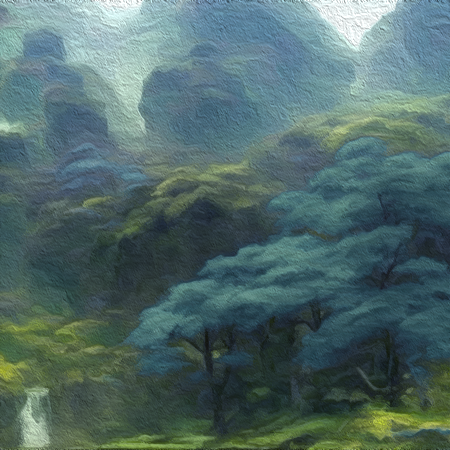
Locale: Lili Baguli Valley, Elderwood Deep region of the Nettle Forest
the Petalians of Everpetal and Riverpetal in particular have developed a close relation with the floral arts
Clothing and Style
description
Notable Figures
Faelen Dusrock
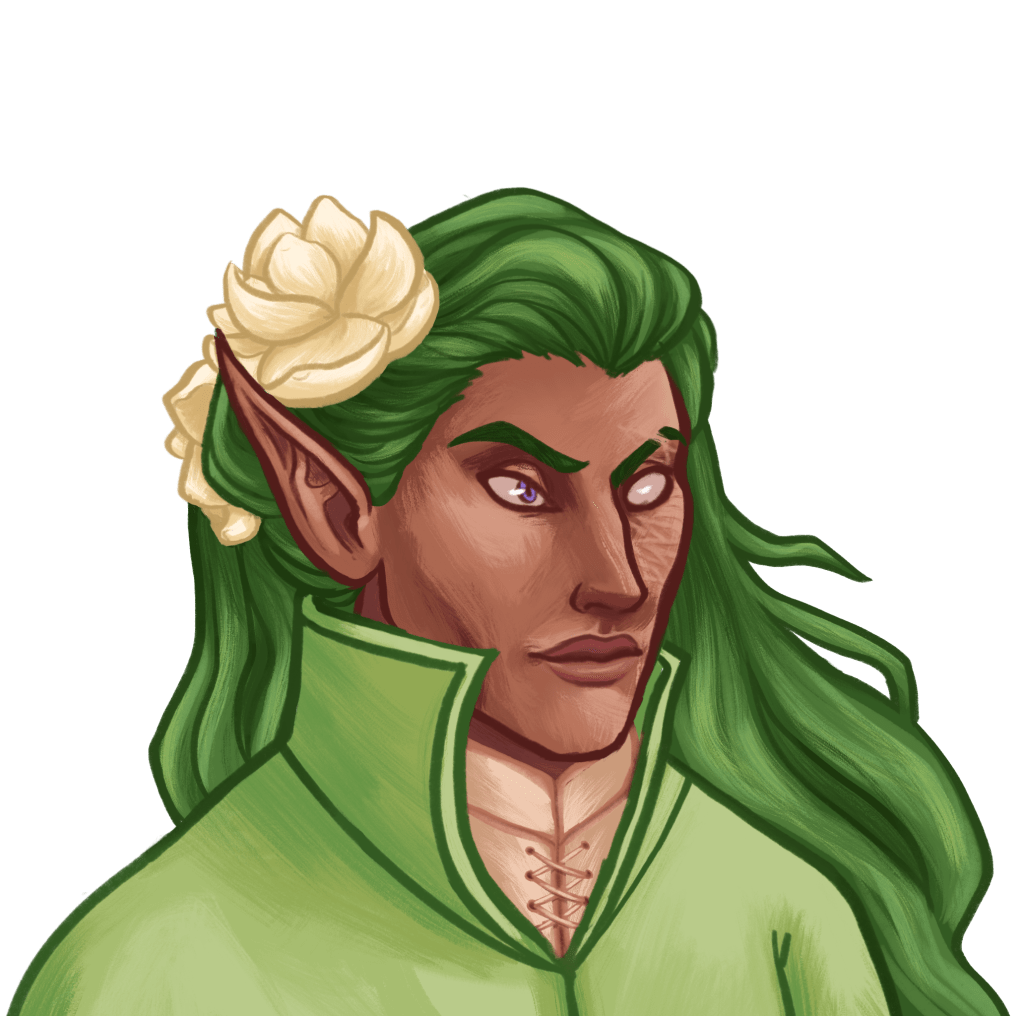
A reserved and mysterious bramble companion-turned-cleric who knew how to shake that booty on the dance floor, and who loved pickles so very very much
A previous Player character from the Adventures campaign. See the Cast page for more information.
Physical Distinctions:
description
Reki
Locale: Rekano Ridge region of the Nettle forest
Blurb
Clothing and Style
Description
Physical Distinctions:
description
Branchwalkers
Locale: The southern remote regions of the Nettle Forest, primarily Bogbane Wood and Elderwood Deep
Blurb
Clothing and Style
Description
Tangleroot Stats

Preferred Classes

Class
Class
Tangleroot Languages
Known
Details
[3] Native:
[2] Studied:
[1] Oral:
Learnable
Familiar:
Foreign:
Exclusive:
Tangleroot Unique Features
Master Menders
The Tangleroot people are very attuned with the body and remedying any malady.

Medicine & Herbology Proficiency+
You gain proficiency in the Medicine & Herbology skill, and may double your proficiency bonus on all Medicine & Herbology skill checks.
Wetwoods
Physical Distinctions:
description
Locale: Various
Blurb
Clothing and Style
Description
Wetwood Stats
Preferred Classes
Class
Class
Wetwood Languages
Known
Details
[3] Native:
[2] Studied:
[1] Oral:
Learnable
Familiar:
Foreign:
Exclusive:
Wetwood Unique Features
Fae Step
flavor
You can cast the Misty Step spell once using this trait. You regain the ability to do so when you finish a short or long rest.
Snowpines
Physical Distinctions:
description
Ghostoak
Locale:
Blurb

Clothing and Style
Description
Physical Distinctions:
description
Garmorwen
Pronunciation: [gar-MORE-wen]
Locale:
Blurb
Clothing and Style
Description
Physical Distinctions:
description
Frostfoots
Locale:
Blurb
Clothing and Style
Description
Snowpine Stats
Preferred Classes
Class
Class
Snowpine Languages
Known
Details
[3] Native:
[2] Studied:
[1] Oral:
Learnable
Familiar:
Foreign:
Exclusive:
Snowpine Unique Features
Natural Camouflage
flavor
When you attempt to hide amongst nature, or using the Mask of the Wild trait, you may roll the Hide check with advantage.
Naming Conventions
Like the Bodren, Fangren similarly take historic Fae names, however their clan names are frequently translated to amalgams of Common words that evoke their connections to nature.
Traditional Feminine Names
Adriel, Briarleaf, Caladwen, Cuundael, Degan, Dongillys, Elowyn, Faeliinyth, Feralin, Galbthilith, Ganrhelen, Glimmersong, Hawthorne, Ilyndra, Juniper, Kirsdiir, Kyndra, Laurelindra, Melisara, Milbrinthil, Nateael, Nalindra, Ophelion, Parwlin, Pyralis, Quenya, Raelis, Sylvari, Thalindra, Uthelis, Virelith, Xyndara, Ysera, Zephyrella
Traditional Masculine Names
Adranthir, Aleolin, Athrnnir, Baerdol, Baelorn, Caelithor, Celmirn, Delmorn, Elethadan, Eldrathir, Endrdinor, Erthiel, Faerendir, Galenmir, Haelindor, Hindulain, Ithilian, Jarethorn, Kaelendil, Larethor, Mirandel, Naelendir, Ophelion, Paelandor, Quaelithor, Raelinor, Rinndil, Rinthor, Silvendir, Thranduil, Uthorian, Virendal, Waelithor, Xyndrin, Ysrael, Zephyrion
Traditional Family Names
Barkwind, Duskrock, Elmgrove, Fernshade, Forestthorn, Forestvale, Greenstone, Lichengrove, Lumberrun, Mosswood, Oakendale, Pineblossom, Pinewing, Roserock, Sagethorn, Seeddale, Shadydale, Shadypool, Softbranch, Timbersky
 The Beanut Lands