















FAEKIN
Children of the Air
Faekin tales tell of a great war in that land that forced them from the ancestral grounds, cursing the Faekin southlands with death and rot. Having been driven from the Lands and forced into a tiny plot of land in the northern area of the mountains, most of the Faekin fled the continent for thousands of years. The Fae of the Glen were the only recorded Fae residents of the continent for all that time, until records from Colonian history show dealings with reclusive Bodren and Fangren, who are commonly considered to be descendants of the Fae who adapted to their environments over the ages.
Faekin have a well-earned reputation for their vibrant spirits, gregarious personalities, and love of revelry. Most Fae are driven by two simple desires; to see and sample the world’s every pleasure; they venture far and wide collecting new delights of life that they can add to their ancestral glen. Aspects of all cultures and people are present in their homelands and have each influenced the culture of the Faekin. While their spontaneity and whimsy sometimes put them at odds with more stoic peoples, Fae rarely let the moodiness of others hinder their own happiness. Their interaction with outsiders often comes in the form of tricks, traps, riddles, and endless storytelling of the glory of their homelands. Highly desired as storytellers, performers, and artists, Faekin can often find work anywhere they travel, but almost never settle down for a job that would consume more than a month of their life. Their free and whimsical nature fights against a permanently settled lifestyle, especially one outside of their ancestral homelands. Faekin typically live up to around 1000 years, but can live well beyond this age if powerful enough, and there is no defining moment of adulthood, as their culture typically reveres pleasure and luxury over propriety and maturity. From birth to the moment of their death, Fae are known to delight in what other races might consider childish fancies and tricks, and yet the Fae have such a deep connection with the world’s natural magic that even the youngest of them can exhibit ageless wisdom.

Preferred Classes

Rogue

Sorcerer
Bard

Ranger
Alignment
Fae delight in living a life free of the mantle of law. Many gravitate toward being good, but some have devious streaks and enjoy causing chaos and dismay.
Syntax
pronunciation
noun
plural
adjective
variants
(FAY-kin)
That Faekin is strong.
There are many Faekin.
That is a Faekin artifact.
Fae, Fey, Fairies, Faefolk
Attributes
Base Speed
20 feet
Attribute Modifiers

+2 Charisma

+1 Dexterity
Unique Racial Features
Flight
Your race’s unique wings allow you to harness the power of flight.
You have a flying speed double to your walking speed. You can’t use this flying speed if you’re wearing medium or heavy armor.
Fae Magic
Your connection to your primal Fae bloodline allows you to perform unique Fae spells, regardless of whether you are otherwise skilled in magic
Starting at 3rd level, you can cast the Faerie Fire spell with this trait.
Starting at 5th level, you can also cast the Enlarge/Reduce spell with this trait.
Once you cast Faerie Fire or Enlarge/Reduce with this trait, you can’t cast that spell with it again until you finish a long rest. You can also cast either of these spells using any spell slots you have of the appropriate level.
Intelligence, Wisdom, or Charisma is your spellcasting ability for these spells when you cast them with this trait (choose when you select this race).
Magic Resistance
Due to your inherent exposure to Fae magic, you have developed a natural resistance to adverse magical effects.
You have advantage on saving throws against spells and other magical effects.
Reveler
Faekin love a good jolly.
You have proficiency in the Performance and Persuasion skills, and you have proficiency with one musical instrument of your choice.

Physicality
This unique race of people came into the lands from the west in ancient times, and originally kept to themselves. Their free spirits and love for nature led them to settle in the western mountains and forests.
Unique Racial Traits
Diminutive in size, the Faekin are second smallest only to the Hinfolk. They stand just under 3 feet up to 4 feet tall, not including their wings which account for a taller appearance when extended. As flying beings, their frames tend to be on the thinner side.
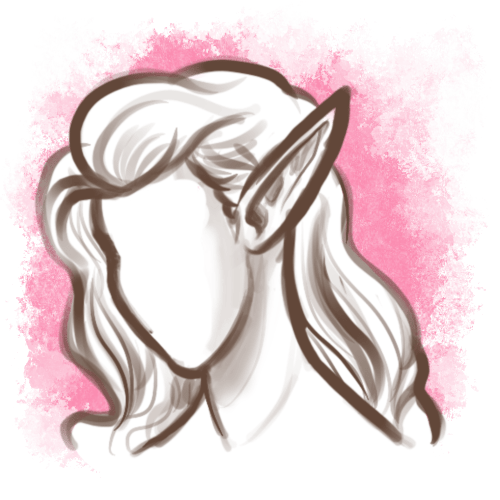
Having changed very little from their ancient Sylvan lineage, the Faekin and their sistren all possess longer ears than any other race of the Beanut Lands. Faekin ears in particular are very sharply pointed often at a nearly-straight, 90° angle off the skull.
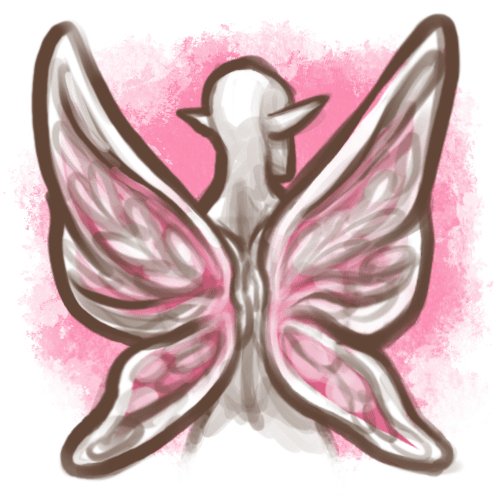
Inherently synchronous with their fellow flying creatures in nature, Faekin have kept their wings for tens of thousands of years. A Faekin’s wings are as much a part of their personal expression as a part of their physical body. They will often dye and decorate their wings for style. Faekin have no leaves on their wings. Indeed, oral legends tell that there once were those known as the “Otherfae” with leaves on their wings, but they were cursed and shunned from society.
More specific details on the typical wing shapes and sizes for each Culture Group can be found in the sections below

Faekin skin tones are very diverse in hue and complexion, from deep and bold, (purples, crimsons, and blues) brighter hues, (teal, and golden) all the way to pastels (flowery pinks, willowy green, and soft, sunny yellows). They have eye colors just as varied, from milky midnight blue, to verdant greens, and burning orange-reds. Faekin naturally have very light colored hair, but rarely keep their original color. Typically Faekin hair is soft and thin, but it is not unusual for Fae in harsher environments to develop thicker, textured hair as well. Much like their wildly-varying and often foreign clothing styles, Faekin dye their hair every color imaginable and change the color frequently to match their style and current temperament.
Stature
Size
SMALL SYLVAN (Humanoid)
2’10” – 4’1″ (X – Xcm)
Body Types

(unusual)
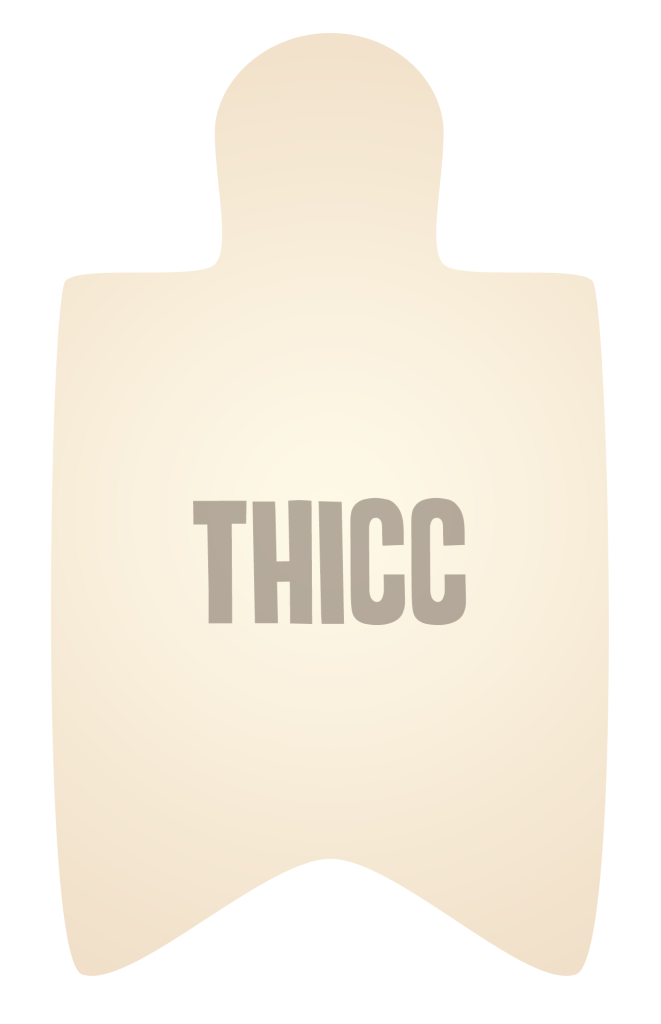
(unusual)
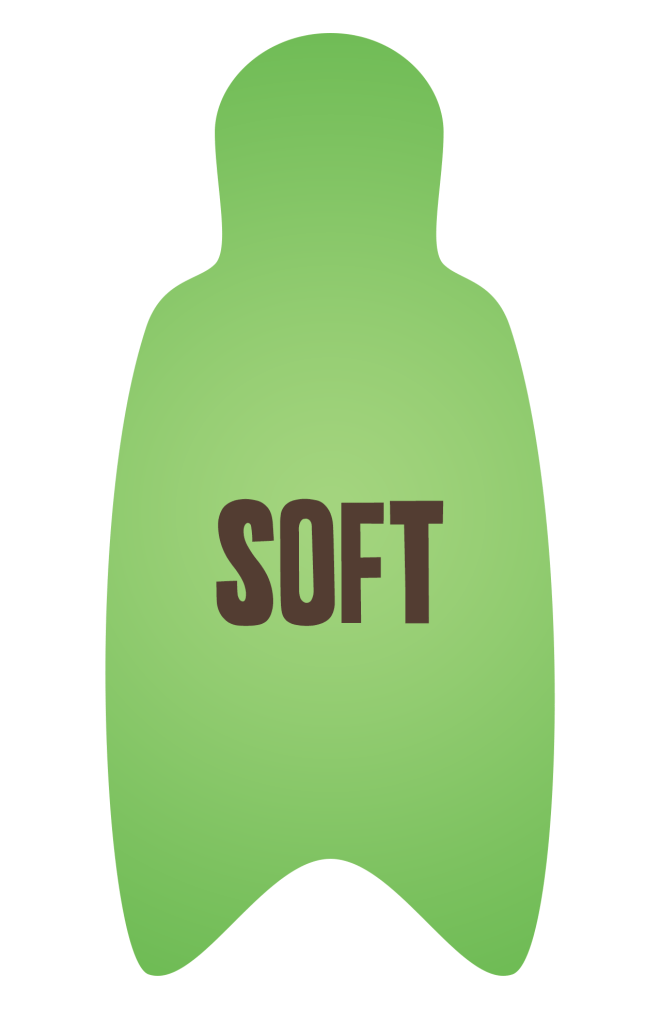
35 – 45 lbs
(16 – 20 kg)

30 – 40 lbs
(10 – 18 kg)

35 – 45 lbs
(16 – 20 kg)

20 – 30 lbs
(9 – 14 kg)

30 – 40 lbs
(10 – 18 kg)
Age
Adulthood
It is typical for a Faekin to mature to full size in about 20 years, but they never reach an age of true ‘adulthood’ the way other people do. They instead allow their whims to guide them, whether it is to fickle fancies or profound wisdom, regardless of their age.
Lifespan
1000 years
Homeland
The Harmonious Glen
Though it is currently the smallest Land in terms of size, The Harmonious Glen is only a fraction of the size it once was. This gorgeous valley is sequestered in the northern half of the Crown Valley, and is divided into four main regions:
Mushroom Woodlands
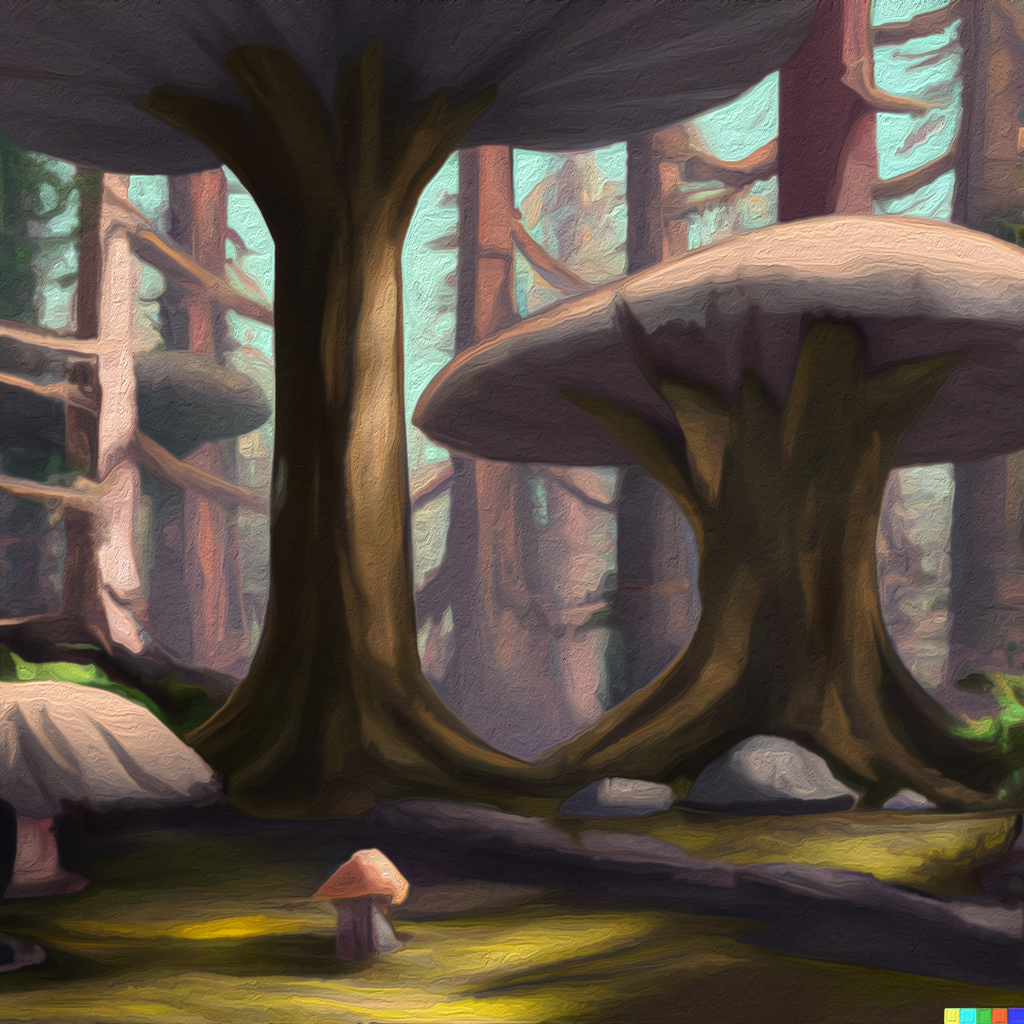
The most distinctive region of the Glen, the Woodlands is the easternmost area, and the primary place for travelers to enter the Glen (if anyone makes it all the way in). Characterized by its giant, tree-like mushrooms, the forests of this region also boasts a large diversity of evergreen and deciduous trees.
Vale of Nature
Largely wild and unmolested natural land, the southern Vale is home to many of the free-spirited and pleasure-seeking folks. Its lower altitude means it contains the majority of the freshwater lakes and ponds of the Glen.
Meadows of Beauty
Rolling, verdant grasslands shaped and grown into beautiful and breathtaking flower fields and intricately grown Sylvan structures, the Meadows is home to a great deal of Glenfolk culture and society.
Grotto of Power
Tucked away in the mountainous western edge of the Glen is the smallest region, but one of the most influential. It houses the greatest population of ambitious Faekin, who come here to practice and perfect a myriad of physical, mental, and arcane skills.
for more detailed information, visit the
Torgali Jungle page coming soon…
Culture Groups Overwiew
Glenfae
The Glenfae make up the limited remaining cultures of the once great Fae lands, divided predominantly by geographic separation
Freefae
As their name implies, these were originally a guild collective of the Fae artists, merchants, experts, and advisors that lived the majority of their life outside the Glen but still would call it home. As time went on, it grew to include larger permanent communities of Fae who likewise live outside the Glen but maintain many traditional Fae customs.
Grimfae
The Grimfae are long standing community of Faekin who spend the majority (or the entirety) of their lives living in the Grimlands. Prized as advisors and scholars amongst the high noble Grimkin families, they are frequently muses to or subjects of the greatest Grimkin dramas and comedies.
More information on the gameplay elements of
Culture Groups can be found in the sidebar below.
Glenfae
Glenfae develop wings that resemble those of butterflies, with bright colors and clear patterns. While they often move around within the Glen and assimilate with each other, most Fae have a proclivity for one section of the Glen. Though any of these traits can be seen on Fae anywhere in the world, the physical distinctions below are more likely to be seen in the Fae who inhabit each region.
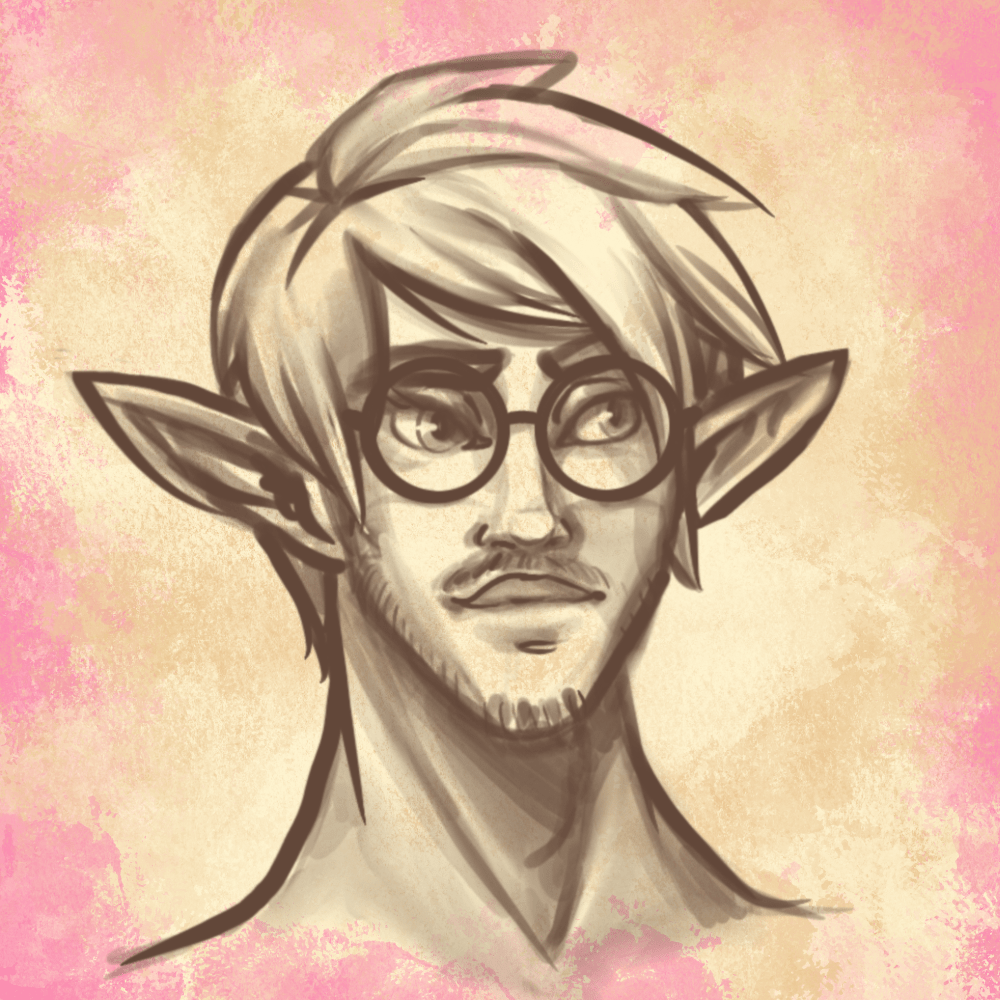
Physical Distinctions:
Woodfolk have a three-sectioned wing shape. The upper two triangular sections are often joined, while the lower, single section is a downward-angled triangular shape.
Spending a great deal of time in the shaded woodlands, Woodfolk often develop lighter skin tones, and are less likely to be found dyeing their hair from its natural light color.
Woodfolk
The Mushroom Woodlands
Of all the Glenfae, the Woodfolk tend to be the least interested in unfettered celebration and extroversion. This does not, however, dilute the fact that they are just as passionate about the things that drive them. Many Woodfolk make their homes in the Mushroom Woodlands because they long for the uninterrupted peace to explore their academic and creative inspirations.
Clothing and Style
Woodfolk are the original children of the forest, undoubtedly the pioneers from whom the other, younger races of Sylvan people developed their love for incorporating the natural world into their wardrobe. Woodfolk often adorn themselves in pieces woven from the tiniest sinews of vines and stems, the thinnest threads of tree branches, and blades of grass and weeds to create beautifully natural clothing that allows them to be one with nature. Though many, less crafty Woodfolk have admittedly incorporated more modern-day linens, fabrics, and textiles into their garments to increase the longevity of any clothing they choose to wear, most of the Woodfolk still retain a very distinctly earthen quality to their outward appearances. You will often see a Woodfolk Fae accentuate their fashion with a garland necklace or bracelet of freshly grown flowers, a chunk of tree bark with a particularly adorable fungus growing from it, or a laurel of collected bird leaves. It is not unusual to see a Woodfolk Fae wearing a mushroom cap or a crown of acorns atop their head.
Notable Figures
Olivia
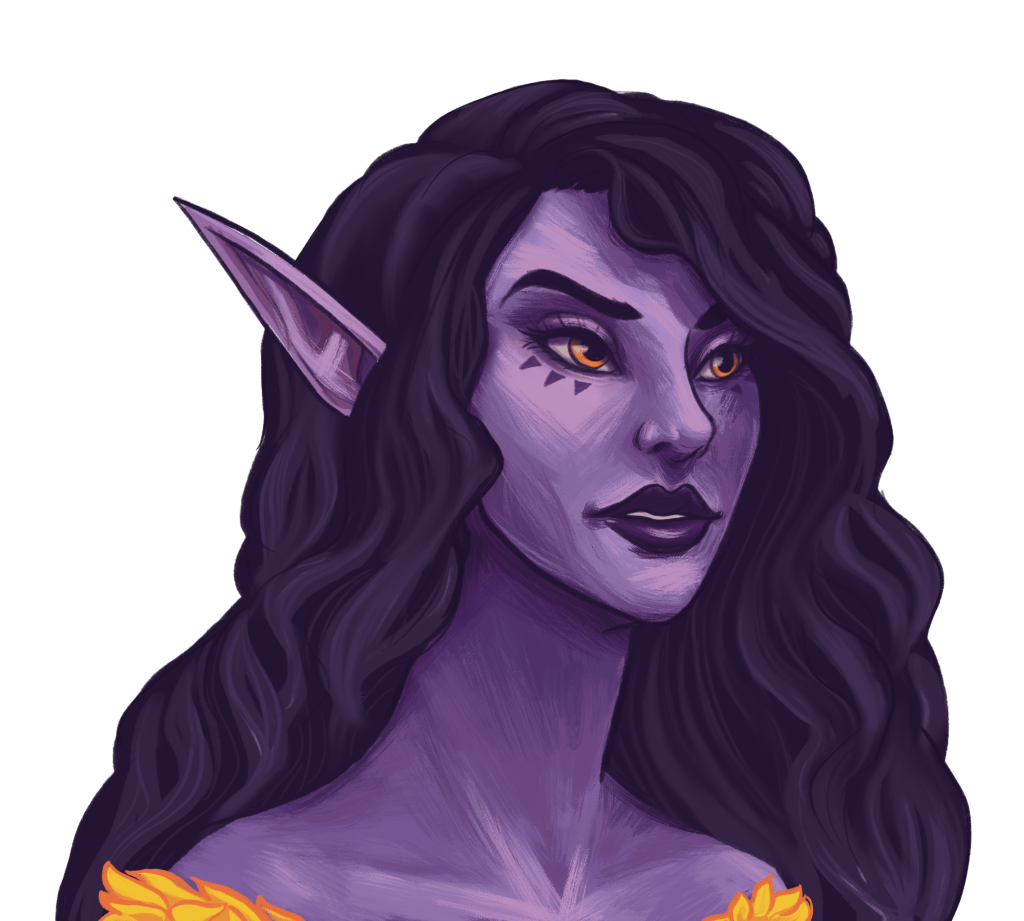
Originally from the Mushroom Woodlands, this Glenfae voluntarily left her beloved home seeking answers to the secrets that completely upturned her life.
A Player character in the Adventures campaign. See the Cast Page for more information.

Physical Distinctions:
Much like their wild and showy nature, the Prairiefae have wings that are naturally ostentatious with highly detailed patterns. Their upper wings are likely the widest and most noticeable of all the Fae. Their lower wings usually have a ‘tail’ on the bottom.
In the sunny meadows, these Fae have developed the brightest natural skin colors. It is almost impossible to know the natural hair color of a Prairiefae, as they are constantly changing the color based on trends.
Prairiefae
The Meadows of Beauty
Undoubtedly the most socially-driven of the Glenfae, the Prairiefae have established a long-standing and highly intriguing mix of politics, diplomacy, celebrations, and trickery. Those who bask in the glory of lavish parties, high society, Fae fashions, and dramatic stories make their home in the northern Meadows of Beauty.
Clothing and Style
description
Physical Distinctions:
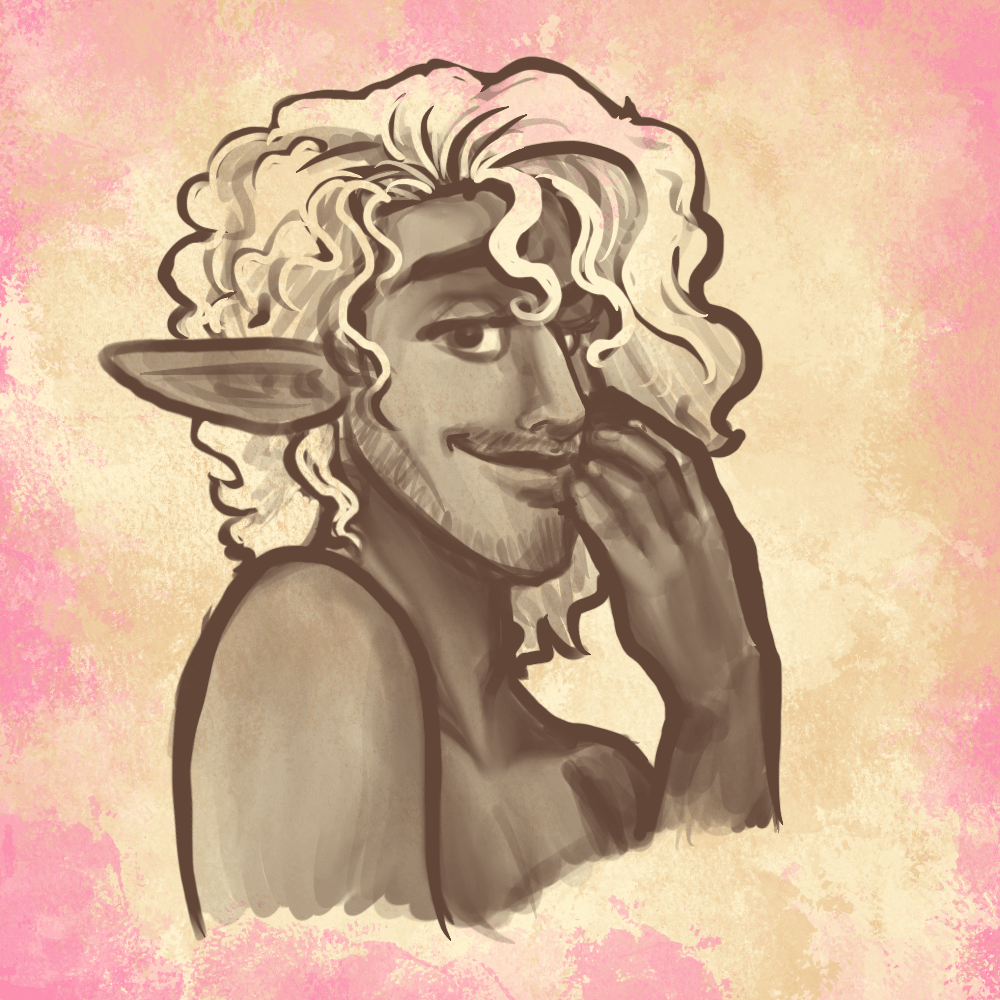
Those of Mistkin lineage often sport what appears to be one large triangular wing on each side, with no separated sections. Their wings rarely point above the height of the head.
Mistkin are most likely to have tattoos and other decorative skin treatments. They like absorbing art techniques from cultures all across the world according to their desires, and are even known to take on some animal characteristics.
Mistkin
The Vale of Nature
The Mistkin of the Vale are seen as the most uncontrolled and whimsical Fae. Even to the rest of the Glenfae, they are considered to be a little on the wild side. Never allowing themselves to be tied to anything that bores them, the Mistkin are the very epitome of chaotic. They express themselves without shame or embarrassment, paying no mind to what others think of them. While they tend to have many more children than the other Glenfae, as could be expected, their nature also tends to resort in violent, passionate conflicts.
Clothing and Style
While it may seem odd to the outside world, the Mistkin are most comfortable in nothing but the skin they were born with. Due to their very confident and showy nature, the Mistkin only choose to wear any clothing at all if it accentuates their best features. It is not uncommon to see Mistkin draped in sheer fabrics or very light coverings simply to leave a little more to the imagination. Even during the colder times of year, Mistkin choose to huddle around fires and indoors simply to avoid the need to don warm clothing to keep out the chill.
Physical Distinctions:
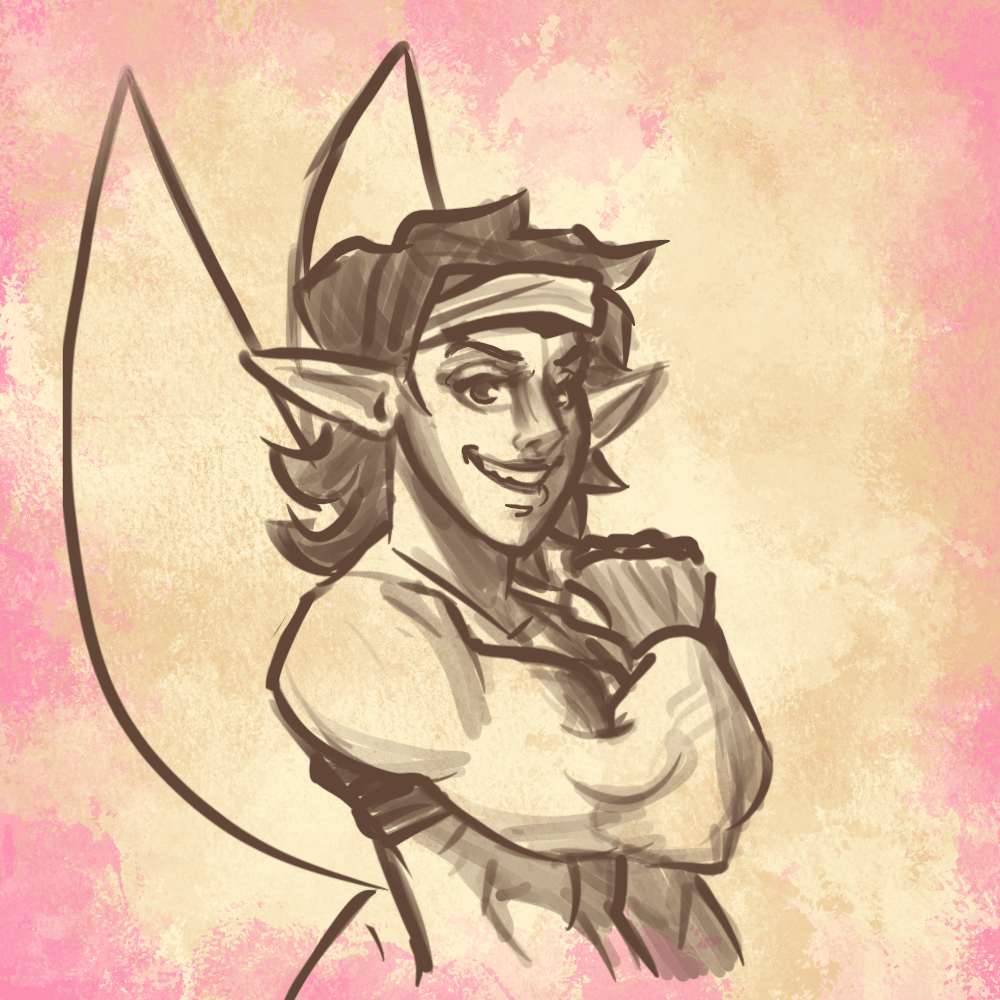
These Faekin have simpler wings, with a clearly defined upper and lower section. The upper section is often pointed and extends far above the height of the head. The lower section is rounder and distinctly smaller. Usually one bright or bold color with a distinctive, darker colored outline.
Sceptarians often sport bolder and darker colors of skin. They are likely to dye their hair a drab or neutral color, or leave it its natural light color. Sceptarians’ ears protrude at a less prominent angle away from the head.
Sceptarians
The Grotto of Power
Clothing and Style
description
Glenfae Stats
Subgroups
Woodfolk
Prairiefae
Mistkin
Sceptarians
Preferred Classes
Rogue
Sorcerer
Glenfae Languages
Known
As a Glenfae, AeroSylvan is your native dialect, which means you are also fluent in basic Sylvan as well. You are familiar enough with Common to speak, read, and write in it. You are familiar enough with the intricacies of the Sylvan root language to communicate at a basic level in both VerdiSylvan and MerSylvan, though you may have difficulty with clear understanding, and can not read or write in them.
[3] Native:
[2] Studied:
[1] Oral:
Learnable
Glenfae Unique Features
Glen Magic
flavor
You gain the Druidcraft cantrip starting at 1st Level
Freefae
Freefae typically have wings that are semitransparent and multi-layered, much like those of insects or typical fantasy fairy-style wings. They are most often a neutral cool color, but they can be just as brightly colored and intricately patterned as any of the other Faekin. Freefae have developed shorter ears, but they are still thin and pointed.
Physical Distinctions:
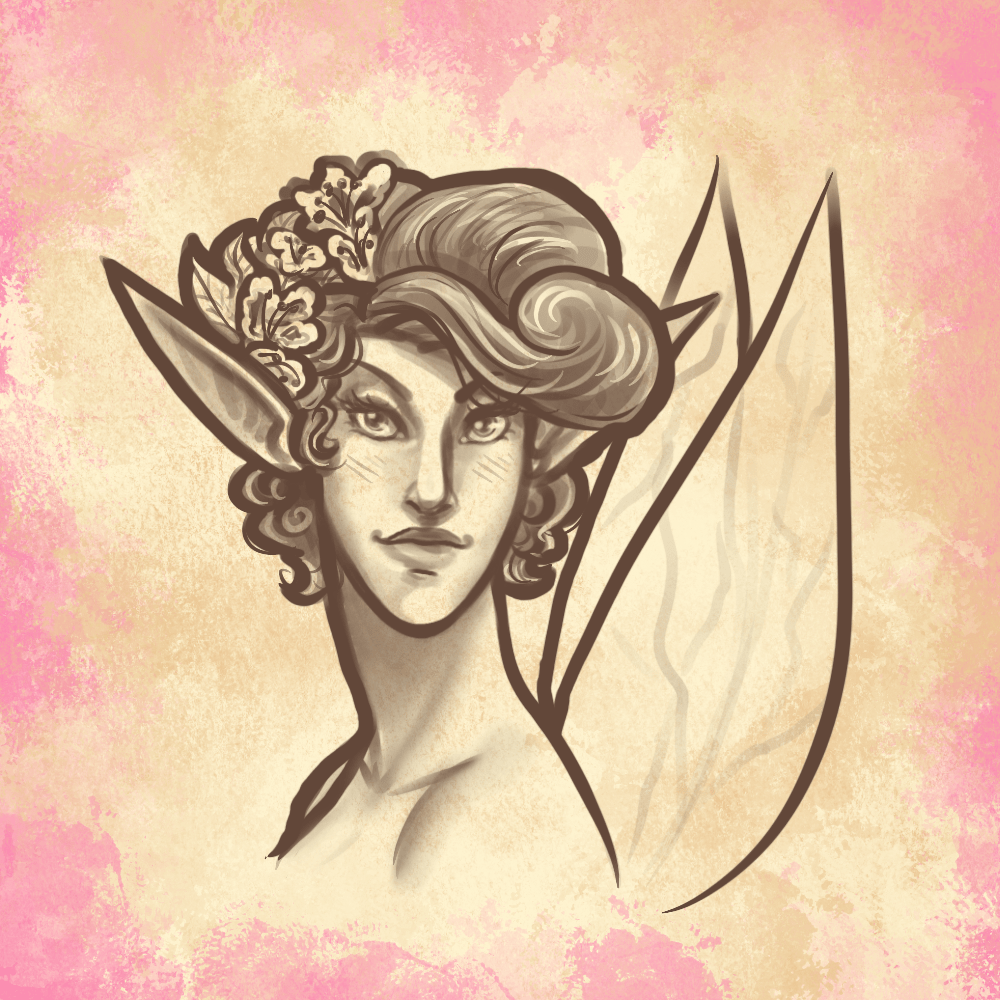
Twintailers often have six long and thin wings, three on each side. Though they may not be as dramatically colored as their Glenfae sistren due to their transparency, Twintailer wings are still diverse and colorful, but it is harder to notice these colors.
Twintailers
The Heartlands
Clothing and Style
description

Physical Distinctions:
The Imperial Fae have four nearly clear wings, separated into a distinct upper and lower wing on each side. Oftentimes, the only noticeable decoration on their wings is the vessels that run through the membrane, unassuming pastel colors; however, when they catch the light, the wings have a pearlescent sheen.
Their ears are less prominent than any other Faekin’s. Sometimes, the angle is more in line with the head, causing them to look smaller from the front
Imperials
Various Locations
Clothing and Style
description
Freefae Stats
Subgroups
Twintailers
Imperials
Preferred Classes
Rogue
Bard
Freefae Languages
Known
You are bilingual in both Sylvan and Common. You are familiar enough with the intricacies of the Sylvan root language to communicate at a basic level in any Sylvan dialect, though you may have difficulty with clear understanding, and can not read or write in them.
[2] Studied:
<none>
[1] Oral:
Learnable
Freefae Unique Features
Masters of the Stage
Traveling Fae bards have filled the halls and taverns of the Beanut Lands for millenia

Performance Proficiency+
You may double your proficiency bonus on all Performance skill checks.
Grimfae
Physical Distinctions:
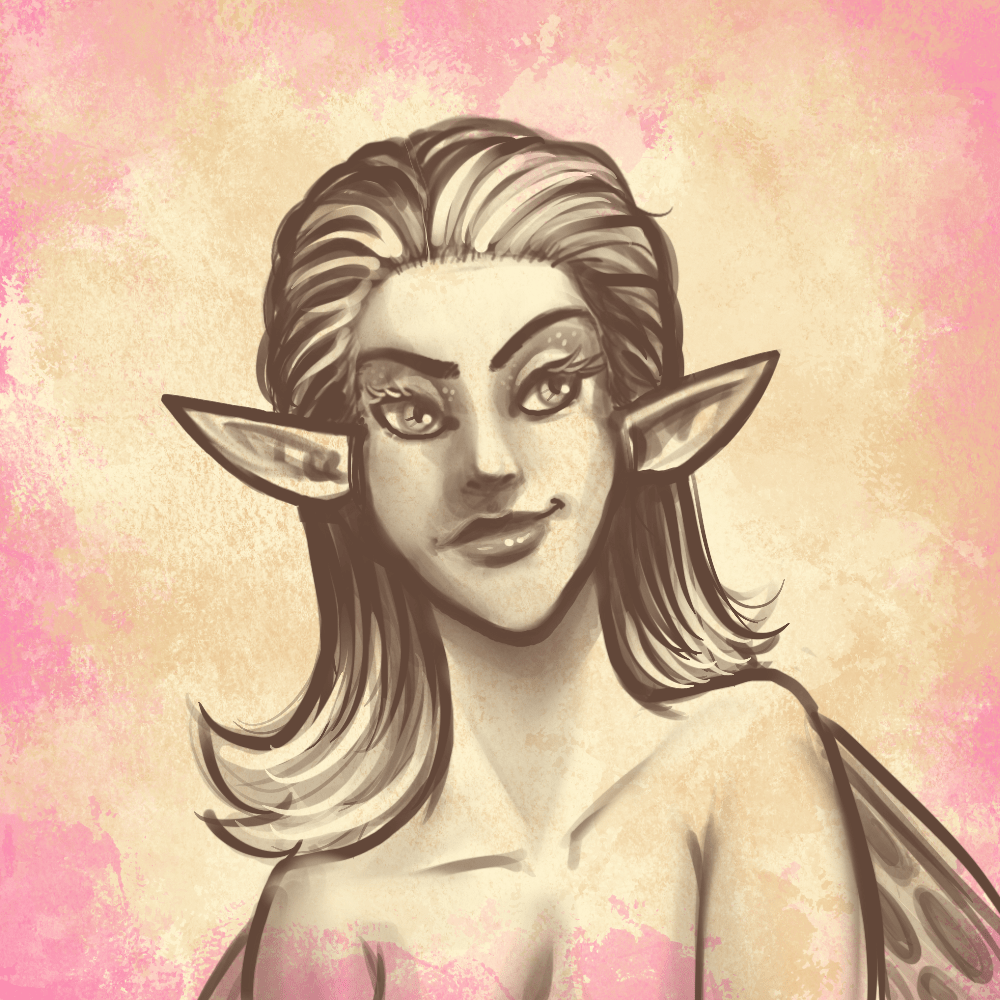
Grimfae have large and often dust-sprinkled wings that resemble those of moths. They range in colors and patterns from the dull and dim to bright and ostentatious. Their lower wings are often much longer than other Fae wings. Some of them sport thin, wispy tendrils.
Grimfae, much like the Grimkin, typically have pale skin and eye colors, due to their lack of sunlight. Their ears are often more downturned, sometimes the point is even at a downward arc
Waldovia, the Steplands, and Lumina of the Grimlands
Clothing and Style
description
Grimfae Stats
Preferred Classes
Rogue
Ranger
Grimfae Languages
Known
As a Fae living in the Grimlands, you are a true polyglot. You have three native languages: Sylvan, Common, and Grim-Tongue. You are also well-versed in Grim-Hand, the exclusive somatic dialect of the Grimkin, though you may not understand nuanced conversations. You are familiar enough with the intricacies of the Sylvan root language to communicate at a basic level in any Sylvan dialect, though you may have difficulty with clear understanding, and can not read or write in them.
[3] Native:
[2] Studied:
Grim-Hand
[1] Oral:
Learnable
Grimfae Unique Features
Darkvision
Your time in the Grimlands have given you new vision. You have superior vision in dark and dim conditions.
You can see in dim light within 60 feet of you as if it were bright light, and in darkness as if it were dim light. You can’t discern color in darkness, only shades of gray.
Naming Traditions
The Faekin look to express their uniqueness in all aspects of life, especially when it comes to their names. Many regularly change their names as life progresses and they become different people. Surnames or Clan names are incredibly infrequent, as few Faekin want to tie their existence to anyone but themselves. The Fae who are known to take last names are typically ones who wish to incorporate themselves into another group’s customs. Imperial Fae often take a second name related to their trade or lifestyle, and the Grimfae may take on distinctly Grimkin-style surnames such as “Flutterhush” or “Flamefame”.
Traditional Feminine Names:
Amethyst, Araynore, Benesia, Blossom, Bluebell, Bryleth, Cupcake, Daisywing, Daxina, Emberlyn, Faeryn, Forsythia, Glimmerbell, Gullie, Honeydew, Irisa, Juniper, Keyvyre, Lavender, Liathana, Libby, Meadowlark, Nymphadora, Orchid, Oseld, Poison, Quilleaf, Rainbow, Rosie, Stardust, Strawberry, Tulip, Valvyre, Violet, Wave, Willowisp, Yarrow
Traditional Masculine Names:
Adren, Alabaster, Astro, Briogan, Cedarleaf, Dewdrop, Dandelion, Emberwing, Fernglimmer, Gossamer, Hudic, Indigo, Jasper, Kelyarus, Kaleidoscope, Liri, Lumis, Moonbeam, Nectar, Oregano, Oakthorn, Peanut, Pistachio, Puddlejump, Quicksilver, Rainsong, Stardust, Tanglethorn, Thejeo, Tidal, Trumpet, Underleaf, Valerian, Wewen, Whisper
 The Beanut Lands